

Kenya has emerged as a significant producer and exporter of fresh herbs, leveraging diverse climatic zones that support cultivation of Mediterranean, tropical, and temperate varieties. The country's horticultural sector generates substantial foreign exchange through premium herb exports to European and Middle Eastern markets.
From aromatic basil thriving in warm lowlands to robust rosemary flourishing in highland regions, Kenya's geographic diversity creates ideal conditions for commercial herb production. Both small-scale farmers and large export operations capitalize on year-round growing seasons and proximity to international air freight hubs.
Understanding which herbs prosper in specific regions, market demand dynamics, and export requirements positions growers for success in this lucrative agricultural sector. This comprehensive analysis explores Kenya's herb industry from cultivation through commercialization.
Essential Industry Insights
- Kenya grows 15+ commercial herb varieties from basil to tarragon
- Export market values basil at KES 300-600 per kilogram
- Central highlands provide optimal conditions for most herbs
- GlobalGAP certification essential for export market access
- Quick-maturing coriander delivers harvest in 3-4 weeks
- Year-round production possible through climate zone selection
- Local demand growing alongside thriving export opportunities
Export Premium Kenya Herbs Globally
Partner with Certified Fresh Herb Exporters →Major Herbs Cultivated in Kenya: Comprehensive Overview
Kenya's herb industry encompasses diverse varieties serving culinary, medicinal, and industrial applications. Commercial cultivation focuses primarily on export-oriented culinary herbs while traditional medicinal herbs maintain cultural and local market significance.
Basil: Leading Export Earner
Basil dominates Kenya's herb export sector, commanding premium prices between KES 300-600 per kilogram in international markets. Multiple varieties including sweet basil, purple basil, and Thai basil thrive in Kenya's warm, sunny conditions.
The crop matures rapidly with first harvests occurring 8-10 weeks post-planting. Continuous harvesting over several months maximizes productivity from single plantings. Basil demands consistent moisture and warm temperatures above 15°C, conditions readily available across most Kenyan growing regions.
Export markets particularly favor uniform leaf size and vibrant green coloring. Greenhouse cultivation enables quality control meeting stringent European supermarket specifications. Outdoor production in warmer regions provides cost advantages though requires more intensive pest management.
Coriander (Dhania): Rapid Returns
Coriander's exceptionally fast 3-4 week growth cycle makes it attractive for farmers seeking quick revenue generation. Both leaves and seeds find extensive culinary application in Kenyan cuisine, ensuring robust local demand alongside export opportunities.
The crop prefers cooler highland conditions, performing optimally at elevations above 1,500 meters. Successive plantings every two weeks maintain continuous supply meeting market requirements. Coriander's shallow root system enables dense planting maximizing land utilization.
Local market absorption remains strong with every Kenyan kitchen utilizing fresh coriander regularly. This domestic demand cushions price volatility compared to purely export-dependent herbs.
Parsley: Consistent Performer
Both curly and flat-leaf parsley varieties prosper throughout Kenya's highland regions. The herb tolerates diverse growing conditions, requiring only adequate sunlight and regular irrigation. Harvest cycles repeat every 8-10 weeks with plants producing multiple cuts before requiring replacement.
European markets absorb substantial Kenyan parsley volumes with demand remaining stable throughout seasons. The herb's durability during transportation and extended shelf life make it suitable for both air freight and sea shipment to select destinations.
Parsley cultivation requires minimal specialized knowledge, making it accessible to beginning herb farmers. Consistent market demand and relatively stable pricing support reliable income generation.
Thyme: Multi-Purpose Value
Thyme serves triple duty in culinary applications, medicinal preparations, and essential oil production. This versatility creates multiple market channels protecting growers from single-market dependency. The hardy perennial nature reduces replanting frequency, lowering establishment costs.
Kenya cultivates common thyme, lemon thyme, and other specialty varieties. The herb thrives in well-drained soils with moderate water requirements. Highland regions provide ideal temperature ranges for optimal oil content and flavor development.
Export markets increasingly seek organic thyme, creating premium opportunities for certified producers. The herb's concentrated flavor means smaller volumes satisfy end-user requirements, reducing per-kilogram shipping costs.
| Herb Variety | Harvest Time | Ideal Region | Market Price Range |
|---|---|---|---|
| Basil | 8-10 weeks | Warm lowlands, greenhouses | KES 300-600/kg (export) |
| Coriander | 3-4 weeks | Highland regions | KES 100-200/kg (local) |
| Parsley | 8-10 weeks | Highland, mid-elevation | KES 200-400/kg (export) |
| Thyme | 12-14 weeks | Highland regions | KES 250-500/kg (export) |
| Rosemary | 16-20 weeks | Cool highlands | KES 300-550/kg (export) |
| Mint | 6-8 weeks | Moist areas, shade | KES 150-300/kg (local) |

Optimal Growing Regions and Climate Requirements
Kenya's varied topography and climate zones create distinct advantages for herb cultivation. Matching specific herbs to appropriate regions maximizes productivity while minimizing input requirements.
Central Highlands: Premium Herb Territory
Kiambu, Nyeri, Murang'a, and surrounding highland counties offer ideal conditions for most commercial herbs. Elevations between 1,500-2,400 meters provide moderate temperatures, reliable rainfall patterns, and fertile volcanic soils.
These regions excel for Mediterranean herbs including rosemary, thyme, oregano, and sage. Cool nights and warm days concentrate essential oils and enhance flavor profiles demanded by export markets. Proximity to Nairobi's Jomo Kenyatta International Airport facilitates rapid herb shipment to European destinations.
Water availability from rivers and reliable rainfall reduces irrigation costs compared to drier regions. However, excess rainfall during certain periods requires covered growing structures or drainage management preventing waterlogging.
Rift Valley: Year-Round Production Hub
Naivasha, Nakuru, and surrounding Rift Valley areas benefit from consistent temperatures and established horticultural infrastructure. Large-scale commercial herb farms concentrate in these regions, leveraging proximity to Lake Naivasha for irrigation water.
The area's moderate altitude supports diverse herb cultivation from tropical basil to temperate rosemary. Greenhouse proliferation enables controlled environment production meeting exact export specifications. Established pack houses, cold storage facilities, and export logistics support commercial herb operations.
Competition for water resources occasionally creates challenges during dry periods. Sustainable water management practices including drip irrigation and water recycling maintain production viability.
Coastal Regions: Tropical Herb Specialization
Mombasa and coastal lowlands suit tropical herbs including lemongrass, Thai basil, and certain mint varieties. Higher temperatures and humidity favor these heat-loving species while challenging temperate herb cultivation.
The region's unique climate creates niche opportunities for herbs difficult to cultivate in cooler highlands. However, distance from Nairobi's international airport increases logistics costs and complicates fresh herb export requiring rapid transportation.
Eastern Regions: Arid-Adapted Herbs
Semi-arid eastern counties suit drought-tolerant herbs including aloe vera, certain sage varieties, and other adapted species. Lower land costs and minimal irrigation requirements create entry opportunities for resource-constrained farmers.
Limited export infrastructure and market access challenge commercial scaling in these regions. However, medicinal herb cultivation for domestic processing presents viable alternatives to fresh export markets.
Highland Zone (1,500-2,400m)
Best For: Rosemary, thyme, sage, oregano, parsley
Advantages: Cool climate, fertile soils, airport proximity
Challenges: Occasional excess rainfall
Mid-Elevation (1,000-1,500m)
Best For: Basil, coriander, mint, chives
Advantages: Balanced temperatures, good infrastructure
Challenges: Water management during dry spells
Coastal Lowlands (0-500m)
Best For: Lemongrass, Thai basil, tropical varieties
Advantages: Year-round warmth, unique niches
Challenges: Distance from export hubs, pest pressure
Export Market Dynamics and Opportunities
Kenya's herb export industry targets primarily European Union markets with growing diversification into Middle Eastern and Asian destinations. Understanding market requirements, certification needs, and quality standards proves essential for export success.
European Market Dominance
European Union countries absorb over 90% of Kenya's herb exports, with Netherlands serving as primary entry point and distribution hub. Dutch auction markets and direct supermarket supply chains connect Kenyan herbs to continental European consumers.
British supermarkets maintain substantial direct sourcing relationships with Kenyan exporters. French, German, and Scandinavian markets demonstrate growing demand for certified organic herbs supporting premium pricing.
European importers prioritize consistent quality, reliable supply, full traceability, and compliance with maximum residue level standards. Meeting these requirements separates successful exporters from those unable to access premium markets.
Middle East: Emerging Opportunities
Gulf Cooperation Council countries including UAE, Saudi Arabia, and Qatar import increasing herb volumes from Kenya. Geographic proximity enables shorter air freight times and reduced spoilage compared to European shipments.
Middle Eastern consumers favor specific varieties including mint, coriander, and parsley for traditional cuisines. Premium restaurant and hotel demand supports quality-focused positioning rather than commodity pricing.
Less stringent certification requirements compared to EU markets lower entry barriers. However, payment terms and business practices require careful navigation protecting exporter interests.
Asian Markets: Future Growth Potential
Asian destinations including China, Singapore, and Malaysia represent emerging opportunities for Kenyan herb exporters. Growing middle-class populations and western cuisine adoption drive demand for fresh herbs.
These markets currently receive limited Kenyan herb volumes due to distance, freight costs, and market unfamiliarity. However, strategic exporters establish footholds positioning for future growth.
Competition from closer Asian herb producers including Thailand and Vietnam requires clear differentiation through quality, consistency, or unique varieties.
Export Success Factors: Successful Kenyan herb exporters maintain GlobalGAP certification, implement comprehensive traceability systems, invest in post-harvest cooling infrastructure, establish reliable logistics partnerships, and maintain consistent communication with overseas buyers throughout seasons.
Commercial Cultivation Practices and Requirements
Successful commercial herb production requires systematic approaches encompassing variety selection, infrastructure investment, quality management, and harvest protocols meeting export specifications.
Greenhouse vs Open Field Production
Greenhouse cultivation delivers superior quality control enabling consistent production meeting export standards. Protected environments reduce pest pressure, manage moisture levels precisely, and protect crops from extreme weather.
Modern greenhouse units measuring 8m x 30m cost approximately KES 250,000-400,000 depending on materials and technology level. Metallic structures with proper ventilation and drip irrigation systems justify premium investment through enhanced productivity.
Open field production offers lower establishment costs and suits hardy herbs including rosemary, thyme, and oregano. However, quality variability increases and weather vulnerability creates supply unpredictability challenging export commitments.
Irrigation and Water Management
Drip irrigation systems deliver water directly to plant roots, minimizing waste while maintaining optimal soil moisture. This technology proves particularly valuable in water-scarce regions or during dry seasons.
Water storage capacity of at least 10,000 liters per greenhouse unit ensures production continuity during supply interruptions. Rainwater harvesting infrastructure reduces operational costs while supporting sustainability objectives.
Consistent moisture management prevents stress-related quality issues including reduced leaf size, wilting, and premature bolting affecting marketability.
Pest and Disease Management
Integrated pest management combining cultural, biological, and minimal chemical interventions maintains herb quality while meeting export market residue limits. Regular scouting identifies problems early when intervention remains most effective.
Common herb pests including aphids, whiteflies, and spider mites require monitoring and control preventing damage and contamination. Biological controls including predatory insects provide sustainable management aligning with organic production protocols.
Fungal diseases threaten herbs in high-humidity environments. Adequate spacing, proper ventilation, and preventive fungicide applications (where permitted) protect crop health.
Quality Standards and Grading
Export herbs undergo rigorous quality assessment covering leaf size, color uniformity, pest damage, disease presence, and contaminant detection. Grade A export quality commands premium pricing while substandard produce faces rejection or severe discounting.
Sorting and grading facilities separate premium export material from local market grades. This infrastructure investment proves essential for commercial export operations though small-scale farmers may utilize cooperative facilities.
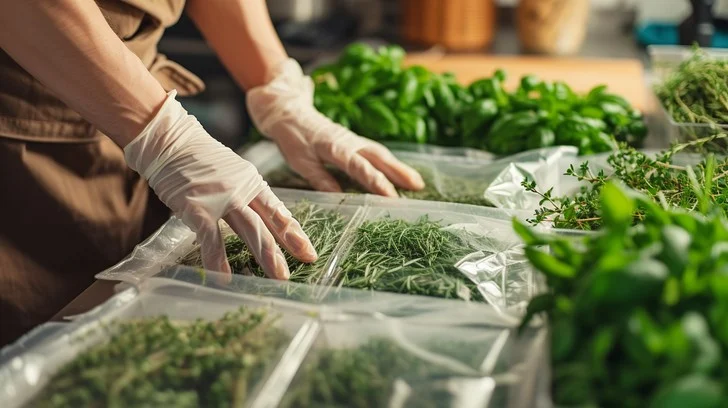
Cold chain maintenance post-harvest preserves quality during transportation. Rapid cooling within hours of harvest, refrigerated transport, and airport cold storage prevent deterioration maintaining premium product characteristics.
| Production System | Initial Investment | Quality Level | Best Applications |
|---|---|---|---|
| Smart Greenhouse | KES 300,000-500,000/unit | Premium export grade | Basil, herbs for EU markets |
| Basic Greenhouse | KES 150,000-250,000/unit | Export/premium local | Most culinary herbs |
| Shade Net | KES 80,000-150,000/unit | Local/regional export | Coriander, mint, parsley |
| Open Field | KES 20,000-50,000/acre | Local market | Hardy herbs, medicinal |
Local Market Demand and Distribution Channels
Domestic Kenyan herb demand continues expanding driven by urbanization, restaurant growth, and increasing consumer sophistication. Understanding local market dynamics provides revenue diversification beyond export dependency.
Supermarket Supply Chains
Major supermarket chains including Carrefour, Naivas, Chandarana, and Quickmart stock fresh herbs targeting urban consumers. These retailers demand consistent weekly supply, proper packaging, and competitive pricing.
Supermarket margins typically run 30-40% over farm gate prices. However, guaranteed offtake volumes and reliable payment justify lower net returns versus direct retail sales.
Requirements include food safety compliance, product liability insurance, and delivery schedule adherence. Smaller producers often access supermarkets through aggregators handling logistics and quality assurance.
Hotel and Restaurant Direct Sales
Hospitality sector herb consumption remains substantial, particularly in Nairobi, Mombasa, and tourist destinations. Hotels, restaurants, and catering companies purchase directly from farmers or specialized distributors.
These buyers prioritize consistent quality and reliable supply over absolute lowest pricing. Relationship-based selling rewards quality producers with premium positioning and payment reliability.
Chefs increasingly seek specialty herb varieties unavailable through mainstream channels. Niche cultivation of tarragon, lemon verbena, or specialty basils accesses these premium buyers.
Fresh Produce Markets and Retailers
Traditional markets including Nairobi's Wakulima Market and regional wholesale centers distribute herbs throughout Kenya. While margins remain modest, volume throughput supports viable operations.
Independent vegetable retailers, often operating from roadside stalls or residential deliveries, constitute substantial aggregate demand. These fragmented buyers access herbs through market intermediaries rather than direct farm purchases.
Online and Direct Consumer Sales
E-commerce platforms including Jumia Food, Kilimall, and farm direct delivery services connect herb producers to urban consumers. This channel offers premium pricing but requires marketing investment and logistics capabilities.
Social media marketing through Facebook, Instagram, and WhatsApp groups enables direct customer relationships. Community-supported agriculture models and subscription boxes create recurring revenue though require consistent communication and service delivery.
Market Diversification Strategy
Successful herb farmers balance export commitments with local market sales. Export contracts provide volume offtake and premium pricing while domestic channels absorb production exceeding export specifications or provide seasonal backup during reduced international demand. This diversification reduces business risk and stabilizes cash flow.
Certification Requirements and Quality Standards
Accessing premium export markets mandates compliance with international certification schemes demonstrating food safety, environmental stewardship, and social responsibility. Understanding these requirements guides necessary investments.
GlobalGAP Certification Essentials
GlobalGAP represents the gold standard for fresh produce exports to European markets. This certification covers good agricultural practices including pesticide management, worker safety, environmental protection, and traceability systems.
Certification costs approximately KES 200,000-300,000 for initial audit and setup including consultant support. Annual renewal fees of KES 50,000-100,000 maintain certification status.
The certification process requires comprehensive documentation of all farm activities, chemical applications, worker training, and food safety protocols. Established record-keeping systems prove essential for successful audits.
KEPHIS Phytosanitary Certification
Kenya Plant Health Inspectorate Service certification ensures exported herbs meet plant health standards preventing pest and disease transmission. KEPHIS inspectors examine each export shipment, issuing phytosanitary certificates required for international shipment.
Registration with KEPHIS enables export privileges. The process involves facility inspection, procedures review, and demonstration of pest management capabilities. Ongoing compliance monitoring ensures continued export authorization.
Organic Certification Premium
Organic certification from recognized bodies including EU organic, USDA organic, or local equivalent opens access to premium organic markets. Certified organic herbs command 30-50% price premiums over conventional production.
Organic compliance requires three-year transition periods, detailed input documentation, and prohibition of synthetic pesticides and fertilizers. Inspection costs and premium input expenses offset partially through premium pricing.
Additional Market-Specific Requirements
Certain markets require supplementary certifications including HACCP for processing facilities, Fair Trade certification for ethical trading, or specific buyer quality assurance programs.
Understanding target market requirements before production enables proper planning. Retrofitting certification compliance after establishment costs substantially more than building compliant systems from project inception.
Traditional Medicinal Herbs: Cultural Heritage
Beyond commercial culinary herbs, Kenya maintains rich traditions of medicinal plant use spanning diverse ethnic communities. These traditional herbs serve local healing practices while attracting research interest for pharmaceutical development.
Indigenous Knowledge Systems
Communities including Marakwet, Kalenjin, Kikuyu, and others preserve extensive knowledge of medicinal plant applications. Traditional healers utilize over 100 plant species treating conditions from common ailments to complex chronic diseases.
Documentation efforts by researchers aim to preserve this knowledge before generational transmission breaks down. However, commercial exploitation concerns and intellectual property questions complicate knowledge sharing.
Common Medicinal Herbs
Aloe vera ranks among Kenya's most commercially viable medicinal herbs. The succulent thrives in semi-arid regions, producing gel valued for cosmetic and medicinal applications. Processing facilities transform raw aloe into cosmetic ingredients, health drinks, and pharmaceutical preparations.
Other medicinal herbs including moringa, neem, artemisia, and various indigenous species see cultivation for local processing or export as raw materials. This sector remains less developed than culinary herb exports but offers growth potential.
Regulation and Safety Considerations
Medicinal herb commerce faces regulatory oversight ensuring consumer safety and quality standards. The Kenya Pharmacy and Poisons Board regulates medicinal plant products, requiring registration and compliance with manufacturing standards.
Standardization challenges limit commercialization of many traditional preparations. Variable potency, contamination risks, and lack of clinical efficacy data restrict formal market integration.
Economic Viability and Profitability Analysis
Herb farming economics depend on production scale, market channel selection, certification status, and operational efficiency. Understanding investment requirements and realistic return expectations guides business planning.
Small-Scale Entry Economics
Quarter-acre operations utilizing greenhouse or shade net structures require initial investments of KES 200,000-400,000 covering infrastructure, irrigation, initial inputs, and working capital. Monthly operational expenses including labor, inputs, and utilities approximate KES 30,000-50,000.
Small-scale farmers focusing on local markets achieve profitability within 3-6 months. Export market access extends breakeven timelines to 12-18 months due to certification costs and infrastructure requirements.
Medium-Scale Commercial Operations
One-acre commercial farms with 10-15 greenhouse units demand investments approaching KES 3-5 million including infrastructure, certification, cold storage, and working capital. These operations target export markets requiring full compliance with international standards.
Revenue potential reaches KES 1-2 million monthly from basil production alone, assuming average prices and production levels. Diversification across multiple herb varieties spreads risk and smooths seasonal demand fluctuations.
Contract Farming Opportunities
Contract arrangements with established exporters reduce market risk for small and medium producers. Exporters provide seedlings, technical support, and guaranteed offtake at predetermined prices, eliminating marketing uncertainty.
Contract terms typically specify quality standards, delivery schedules, and pricing formulas. While contracts may offer below-spot-market prices during strong demand periods, they provide stability during market downturns.
Frequently Asked Questions About Herbs in Kenya
Future Outlook for Kenya's Herb Industry
Kenya's herb sector demonstrates strong growth trajectories supported by increasing global demand for fresh herbs, expanding organic markets, and the country's competitive advantages in year-round production and air freight logistics.
Technology Integration
Smart greenhouse systems incorporating sensors, automated irrigation, and climate control enable precision farming maximizing productivity per square meter. These technologies reduce water consumption, optimize nutrient application, and minimize pest pressure through environmental management.
Mobile technology platforms connect farmers to market information, technical advice, and buyer networks. Digital traceability systems using blockchain or similar technologies enhance transparency meeting increasing consumer demands for supply chain visibility.
Value Addition Opportunities
Processing fresh herbs into dried products, essential oils, or herbal extracts creates value addition opportunities. These processed products command premium pricing, extend shelf life enabling broader geographic distribution, and reduce transportation costs per unit value.
Local processing facilities capturing value currently transferred to international processors remain underdeveloped. Investment in food-grade processing infrastructure could substantially increase sector earnings.
Sustainability Imperatives
Environmental consciousness among international consumers drives demand for sustainably produced herbs. Water conservation, soil health management, biodiversity protection, and renewable energy adoption become competitive differentiators rather than optional add-ons.
Carbon-neutral production certifications and regenerative agriculture practices attract premium buyers willing to pay for environmental stewardship. Forward-thinking herb farmers integrate sustainability from planning stages rather than retrofitting practices later.
Strategic Success in Kenya's Herb Industry
Kenya's herb sector offers substantial opportunities spanning small-scale local market supply through large-scale export operations. Success requires matching appropriate herbs to suitable growing regions, understanding target market requirements, and investing in necessary quality infrastructure.
The diversity of profitable herbs enables entry at various capital levels and market focuses. Quick-return crops like coriander suit cash-constrained beginners while premium export herbs justify larger investments delivering higher returns.
Certification compliance separates export-capable operations from purely domestic suppliers. GlobalGAP, KEPHIS, and market-specific requirements demand systematic approaches but unlock premium pricing and stable demand.
Market diversification across local and export channels, multiple herb varieties, and direct and contracted sales reduces business risk. No single market or crop should dominate revenue, enabling businesses to weather periodic market disruptions.
Continuous learning, adaptation to changing market requirements, and willingness to invest in quality improvement position herb farmers for sustained success. The industry's growth trajectory supports confident entry for properly prepared producers.
Whether supplying fresh coriander to local restaurants, exporting premium basil to European supermarkets, or cultivating specialty herbs for gourmet chefs, Kenya's herb industry accommodates diverse business models and ambitions. Strategic planning, quality focus, and market intelligence separate thriving operations from struggling ventures in this dynamic agricultural sector.