
Pinkerton Avocado: Taste, Season, Ripeness & How It Compares to Hass
It stays green when ripe, has a smaller seed than almost any other variety, and comes into season right before Hass. Here's the full picture on one of avocado farming's most underrated commercial varieties.
- The Pinkerton Avocado: Origin & History
- Physical Characteristics & Appearance
- Taste, Texture & Oil Content
- How to Tell When a Pinkerton Is Ripe
- Pinkerton vs Hass: A Direct Comparison
- Season, Availability & Storage
- Nutritional Profile
- Growing the Pinkerton: Tree Characteristics
- Commercial Production & Wholesale Supply
- Frequently Asked Questions
- Pinkerton stays green when ripe — colour is NOT a ripeness indicator
- Originated in California in 1959; patented 1975 — likely a Hass × Rincon cross
- Very small seed = exceptionally high flesh-to-seed ratio
- Oil content ~19% at full maturity — comparable to prime Hass
- Takes ~14 days to soften after harvest (longer shelf life than Hass)
- Season: February to July — before peak Hass season begins
The Pinkerton Avocado: Origin and History

The Pinkerton avocado has one of the more quietly dramatic origin stories in commercial horticulture. Around 1959, a seedling appeared spontaneously among established Hass avocado trees on the John Pinkerton Ranch in Saticoy, California — a small town in Ventura County that sits in one of California's most productive avocado-growing corridors. Nobody planted it deliberately. It simply grew, as chance seedlings sometimes do, from a seed that happened to fall in particularly good soil.
What that seedling produced, once it matured, turned out to be something worth preserving. The fruit was elongated, green-skinned, and offered a flesh-to-seed ratio significantly better than most avocados the Pinkerton family had grown. It was officially recognised, named for the family, and patented in 1975 — nearly 16 years after it first appeared. That long gap between discovery and commercialisation is itself telling: in avocado agriculture, a variety has to consistently produce quality fruit across multiple seasons before it earns commercial recognition.
The exact genetic parentage of Pinkerton remains unconfirmed, though the consensus among avocado researchers is that it represents a natural hybrid of Rincon and Hass avocados. Growing as a seedling among Hass trees makes Hass as a parent highly plausible. The Guatemalan genetic heritage that Pinkerton exhibits — in its pebbly skin, cold tolerance, and growth characteristics — aligns with both Hass and Rincon parentage. Today, Pinkerton is classified as a Type A variety of Guatemalan genetic descent.
Physical Characteristics and Appearance
Identifying a Pinkerton avocado at a market or in a delivery is straightforward once you know what to look for. The most distinctive feature is its shape: Pinkerton avocados are elongated and pear-shaped with a pronounced, thickish neck at the stem end. This neck is more prominent than on virtually any other commercial avocado variety, making it the most reliable visual identifier even before you look at the skin.
The skin is pebbly — similar in texture to a Hass avocado — and medium-thick. Unlike Hass, which is notoriously difficult to peel because the flesh clings to the skin, Pinkerton's skin separates more cleanly from the flesh, making it easier to peel by hand. This is a genuine advantage for food service applications where speed of preparation matters.
Fruit size runs larger than Hass, typically 14 to 16 ounces per fruit. The flesh is pale yellow-green, creamy in appearance, with a smooth, dense consistency. But the feature that most distinguishes Pinkerton from other avocados is the very small seed at its centre. The seed is disproportionately small relative to the fruit's overall size, giving Pinkerton one of the highest flesh-to-seed ratios of any commercially grown avocado. In practical terms, this means buyers and processors get significantly more usable avocado per piece purchased — a commercially material advantage.
Taste, Texture and Oil Content

The Pinkerton's flavour profile sits in a very agreeable place for most avocado consumers. The flesh is creamy and nutty, with a smooth texture that confirms its high oil content even before you check the numbers. Some people detect a slight sweetness that is absent in Hass — a subtle difference that makes Pinkerton particularly pleasant eaten fresh with nothing more than a squeeze of lemon and a pinch of salt.
At full maturity, Pinkerton achieves an oil content of approximately 19%, measured at the same point that Hass achieves comparable oil readings. This is significant because it places Pinkerton firmly in the premium-quality avocado tier — not a watery, flavour-diluted variety, but a genuinely rich, satisfying eating experience. The dry matter content reaches around 29% at harvest when the fruit is fully ready to pick, aligning with the standards used in California and New Zealand to determine commercial harvest maturity.
One important caveat: most taste assessments of Pinkerton conclude that it does not quite match the depth and complexity of a fully mature, well-grown Hass fruit at peak ripeness. This is worth noting honestly. Hass at its best — high oil, properly ripened, in season — is a richer eating experience than Pinkerton. But for much of the year, particularly in spring when Hass quality can be inconsistent as the season transitions, Pinkerton's reliable flavour and oil content make it the stronger commercial choice for consistent quality.
The oil content science explained: Avocado quality is measured partly by dry matter content, which is a proxy for oil concentration. Pinkerton needs to reach 18.9% dry matter before it will ripen properly after harvest — the minimum point at which oil content meets the US legal standard of 8%. Consumer taste tests place acceptable flavour for Pinkerton at 20% dry matter and above. At the 29% dry matter that peak-season Pinkerton achieves, the oil content reaches approximately 19% — the level at which the flavour is richest and the texture most satisfying. Fruit harvested below these thresholds will ripen but taste flat and watery.
How to Tell When a Pinkerton Avocado Is Ripe
This is the single most commercially important thing anyone handling Pinkerton avocados needs to know: Pinkerton avocados do not change colour when they ripen. They stay green. The transition from hard-unripe to perfectly-ripe to overripe happens entirely within the same green skin. This fundamentally changes how you assess ripeness — and misunderstanding this causes more Pinkerton avocados to be eaten too early or discarded unnecessarily than any other factor.
🟢 How to Check Pinkerton Ripeness: Step-by-Step
Ignore the skin colour entirely
Green does not mean unripe. A perfectly ripe Pinkerton looks identical in colour to an unripe one. Never use skin colour alone to assess a Pinkerton.
Check the neck area first
The neck (pronounced thickened stem end) softens before the body. Apply gentle pressure there first. If it yields slightly, the fruit is approaching readiness.
Test the body with gentle palm pressure
Cup the fruit in your palm and apply even, gentle pressure. A ripe Pinkerton yields slightly — it gives without feeling mushy. If completely firm, allow more time. If your fingers sink in, it's past peak.
Allow approximately 14 days from harvest at room temperature
Pinkerton takes significantly longer to soften than Hass. Where Hass reaches eating readiness in 4–7 days after harvest, Pinkerton typically needs around 14 days at room temperature. Plan accordingly when ordering or purchasing.
The 14-day softening window is actually a commercial advantage once understood. It gives buyers, distributors, and retailers significantly more handling time between harvest and the moment when the fruit must be sold or consumed. Cold storage (4–8°C) extends this window further, meaning that Pinkerton's logistics flexibility exceeds Hass considerably. For food service operators managing fresh produce inventory, this is a meaningful operational benefit.
Pinkerton vs Hass: A Direct Comparison
| Characteristic | 🥑 Pinkerton | 🥑 Hass | Advantage |
|---|---|---|---|
| Shape | Elongated pear with prominent neck | Oval / egg-shaped | Pinkerton — easy ID |
| Skin when ripe | Stays GREEN | Turns dark purple-black | Hass — clear visual cue |
| Skin texture | Medium pebbly | Medium-rough pebbly | Similar |
| Seed size | Very small | Moderate | Pinkerton — more flesh |
| Flesh-to-seed ratio | Very high | Good | Pinkerton wins |
| Fruit weight | 14–16 oz (larger) | 6–12 oz (smaller) | Pinkerton — more per fruit |
| Oil content (mature) | ~19% | ~18–20% | Comparable |
| Flavour depth | Creamy, nutty, slight sweetness | Rich, nutty, complex | Hass at peak |
| Peel ease | Easier — skin separates cleanly | Harder — flesh clings | Pinkerton wins |
| Harvest season | February–July (earlier) | May–October | Pinkerton — fills gap |
| Softening time | ~14 days (longer logistics window) | 4–7 days | Pinkerton — logistics benefit |
| Tree size | Compact, manageable | Medium-large | Pinkerton — easier harvest |
| Wind resistance | Strong — vigorous limbs | Standard | Pinkerton wins |
| Market share (US) | Niche — growing | ~95% of US consumption | Hass — established market |
| Cold tolerance | Similar to Hass | Moderate | Comparable |
Season, Availability and Storage
Pinkerton's harvest season runs from approximately February through July, with peak commercial availability falling between April and June. This seasonal window is one of the variety's most commercially significant characteristics — it begins before the Hass season reaches full volume, filling an important supply gap in fresh avocado markets that are otherwise more dependent on southern hemisphere sources during the Northern Hemisphere spring.
In California, the historical origin of the variety, Pinkerton trees begin yielding commercial fruit from late winter and continue through early summer. In East African production regions — Kenya's Murang'a, Kirinyaga, and Meru counties — Pinkerton can extend its season slightly into July due to equatorial climate patterns, providing extended availability for European and Middle Eastern export markets.
Early-set fruit on Pinkerton trees is rounder in shape and matures before the later-set fruit, which is more elongated. This natural shape variation within a single tree's season is worth understanding for buyers who might encounter slightly different-shaped Pinkerton fruit at different points in the season — both are the same variety, simply reflecting different points of fruit set on the same tree.
Storage recommendations for Pinkerton avocados: Unripe Pinkerton should be stored at room temperature (18–22°C) for approximately 14 days until soft. Do not refrigerate before ripening — cold storage below 12°C significantly slows the enzymatic ripening process and can cause cold damage that affects flavour. Once ripe (yields to gentle pressure at the neck), refrigerate at 4–8°C and consume within 3–5 days. Cut Pinkerton retains its colour well when stored in an airtight container with the stone intact and a squeeze of lemon or lime juice over the exposed flesh surface.
Pinkerton Avocado Nutritional Profile
| Nutrient | Per 100g | Health Benefit |
|---|---|---|
| Total fat (mainly monounsaturated) | ~15–19g | Heart health, cholesterol management, fat-soluble vitamin absorption |
| Potassium | ~485mg | Blood pressure regulation, muscle function, heart health |
| Fibre | ~6.7g | Digestive health, satiety, blood sugar regulation |
| Vitamin K | ~21µg | Blood clotting, bone mineralisation |
| Vitamin E | ~2.1mg | Antioxidant protection, immune function, cellular health |
| Folate (B9) | ~81µg | Cell division, DNA synthesis, pregnancy health |
| Vitamin B6 | ~0.26mg | Protein metabolism, neurotransmitter synthesis, immune function |
| Magnesium | ~29mg | Bone health, muscle contraction, energy production |
| Protein | ~2g | Cell repair, energy supply, muscle maintenance |
| Calories | ~160 kcal | Calorie-dense whole food — satisfying and nutritionally rich |
Like all avocados, Pinkerton's nutritional value is dominated by its fat content — but the fat quality matters enormously. The overwhelming majority of Pinkerton's fat is oleic acid, the same monounsaturated fatty acid that makes olive oil nutritionally celebrated. Oleic acid is associated with reduced inflammation, improved cholesterol profiles, and better cardiovascular outcomes. The high fat content also makes Pinkerton an excellent vehicle for fat-soluble vitamins — Vitamins A, D, E, and K are all absorbed more effectively when consumed with fat.
Growing the Pinkerton: Tree Characteristics and Requirements
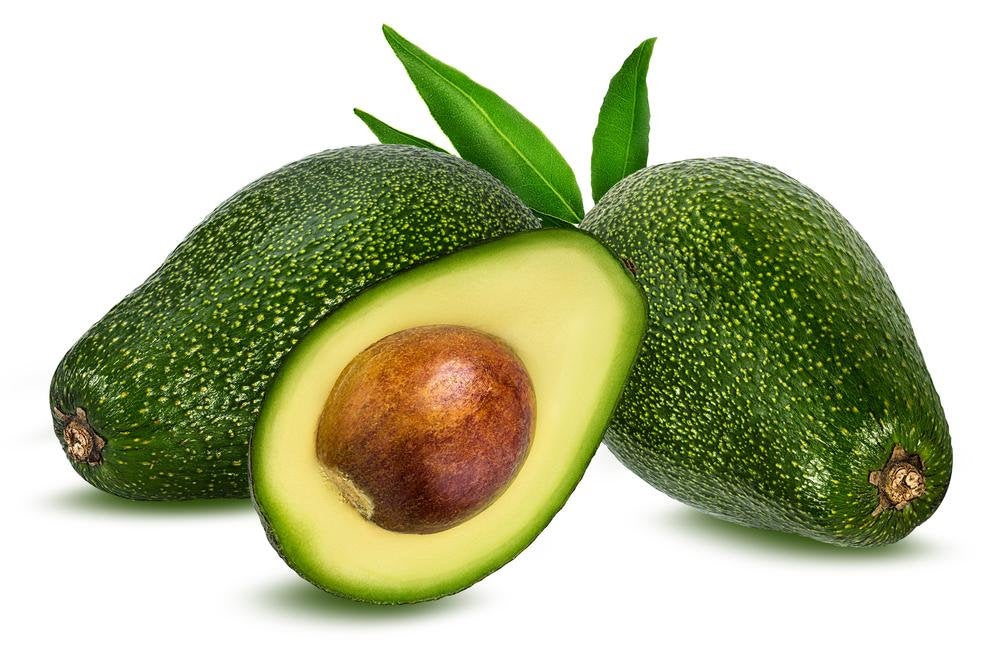
The Pinkerton tree has a reputation among growers for being one of the more manageable commercial avocado varieties. It is described as a medium spreading tree — compact relative to the yields it produces, which matters for orchard density calculations and harvest ease. Trees that sprawl widely or grow very tall increase labour costs significantly; Pinkerton's growth habit keeps operational costs more manageable per kilogram of fruit produced.
Type A Pollination Requirements
Pinkerton is classified as a Type A avocado, which refers to the timing pattern of its flowers' male and female phases. Type A flowers open as female (receptive to pollen) in the morning and as male (releasing pollen) in the afternoon. Type B varieties do the opposite. In climates with mild, stable temperatures, a single Type A tree can pollinate itself adequately. But for maximised commercial yields, planting Pinkerton near Type B varieties — Edranol, Fuerte, or Bacon — significantly increases fruit set by ensuring male pollen is available when Pinkerton's flowers are in their female phase.
Climate and Cold Tolerance
Pinkerton has cold tolerance comparable to Hass — it can handle occasional frost events that would damage less hardy varieties, though it is not frost-proof. Its Guatemalan genetic heritage contributes some cold resilience. In Kenya's highland growing regions (above 1,500m elevation), Pinkerton performs very well, with the altitude providing natural temperature moderation that suits the variety's preferences for warm days and cooler nights.
Wind Resistance
Pinkerton trees have notably stronger limbs than Hass, giving them better natural wind resistance. In coastal or exposed growing locations where wind can cause fruit drop and branch damage on Hass trees, Pinkerton's structural robustness is a genuine advantage. This characteristic contributed to its adoption in South African coastal production zones and in Kenya's higher-altitude areas where seasonal winds affect other varieties.
Pinkerton bloom pattern: Pinkerton trees bloom earlier than most other avocado varieties and sustain flowering over an unusually long period. This extended bloom window has an interesting practical consequence: fruit set at different points in the bloom period produces avocados that ripen at different times. Early-set fruit is rounder and matures first; late-set fruit is more elongated and matures later in the season. This staggered maturation extends the commercial harvest window on a single tree, giving growers more flexibility in scheduling harvest and deliveries.
Commercial Production and Wholesale Supply
Pinkerton never achieved the dominant market position of Hass — but it was never competing for the same role. While Hass became the global avocado standard, Pinkerton developed a distinct commercial niche built on three specific advantages: its early season, its small seed, and its extended post-harvest shelf life. These three factors make it commercially attractive to a specific segment of buyers who need quality avocado supply in spring, maximum usable flesh per piece, and logistics flexibility.
California remains the primary historical production zone, where Pinkerton is cultivated commercially in Ventura, San Diego, and Santa Barbara counties. Outside the United States, South Africa has adopted Pinkerton as a significant commercial variety for export to European markets, where its early season and extended shelf life suit the long shipping times involved in sea freight from the Cape. Israel grows Pinkerton commercially, as does Chile. In East Africa — particularly Kenya — Pinkerton is an emerging variety among farmers targeting premium European and Middle Eastern export channels who value the variety's season timing and flesh ratio.
For wholesale and bulk buyers, Pinkerton's advantages are concrete. The small seed means that, pound for pound, Pinkerton delivers more usable flesh than most alternatives. For food processors, guacamole producers, and food service operations that pay by the case rather than the kilogram of finished flesh, this flesh ratio difference directly affects input cost per unit of output. The 14-day softening window also means that buyers can place orders for delivery on a longer planning horizon without the urgency that Hass's faster ripening creates.
Buying Pinkerton avocados in bulk: FrutPlanet sources and exports Pinkerton avocados from Kenya's highland production counties — Murang'a, Kirinyaga, and Meru — where elevation and climate produce fruit with high oil content and consistent quality across the February–July season. Our export-grade Pinkerton is available with full KEPHIS phytosanitary documentation, GlobalG.A.P. certification, and scheduled container and air freight delivery to European and Middle Eastern markets. Contact our wholesale team for current availability, pricing, and minimum order quantities.