
Mushroom Farming: How to Start, Best Varieties, Setup Costs & Profit Potential
The global mushroom market is worth $54.9 billion and growing at 9.7% annually. Here's everything you need to know — from substrate to first harvest, from backyard to commercial scale.
- Why Mushroom Farming Is Worth Considering
- Best Mushroom Varieties to Grow for Profit
- Substrate Selection & Preparation
- Step-by-Step: From Setup to First Harvest
- Optimal Growing Conditions & Environment
- Yield Benchmarks & Profit Calculations
- Mushroom Farming in Kenya: The East African Advantage
- Selling Your Mushrooms: Market Access Channels
- Scaling from Small to Commercial Operation
- Frequently Asked Questions
- Global mushroom market: $54.9B in 2021, projected $115.8B by 2030
- Oyster mushrooms yield up to 25% of substrate weight — fastest ROI variety
- First harvest possible in 3–4 weeks from inoculation
- Small farm (200 bags) can generate KES 20,000–37,500/week in Kenya
- Agricultural waste — straw, maize stalks, coffee husks — makes viable substrate
- 3–5 flushes per growing bag before substrate is exhausted
Why Mushroom Farming Is Worth Considering
Mushroom farming occupies a unique position in modern agriculture. It is simultaneously one of the most accessible entry points for first-time farmers — requiring no land, minimal capital, and no specialist equipment for small-scale operations — and a serious commercial enterprise that scales to industrial volumes for those who master the technical requirements.
The economics are compelling at every level. Unlike most agricultural crops, mushrooms can be harvested in weeks rather than months. The substrate on which they grow is typically cheap agricultural waste — straw, sawdust, corn stalks, coffee husks — that would otherwise be discarded. The growing environment can be an unused room, a shipping container, a shaded structure, or a purpose-built controlled-atmosphere facility. And because mushrooms grow vertically on stacked shelves or hanging bags, the space efficiency per square metre is extraordinary compared to conventional field crops.
The global demand picture is equally encouraging. The $54.9 billion global mushroom market of 2021 is projected to reach $115.8 billion by 2030 — a near-doubling driven by rising health consciousness, the plant-based food revolution, and mushrooms' growing profile as a functional food with documented immune-supporting, anti-inflammatory, and adaptogenic properties. Both fresh mushrooms (89.5% of market revenue) and processed forms (dried, powders, tinctures) are growing simultaneously, giving producers multiple market access points for the same crop.
Best Mushroom Varieties to Grow for Profit
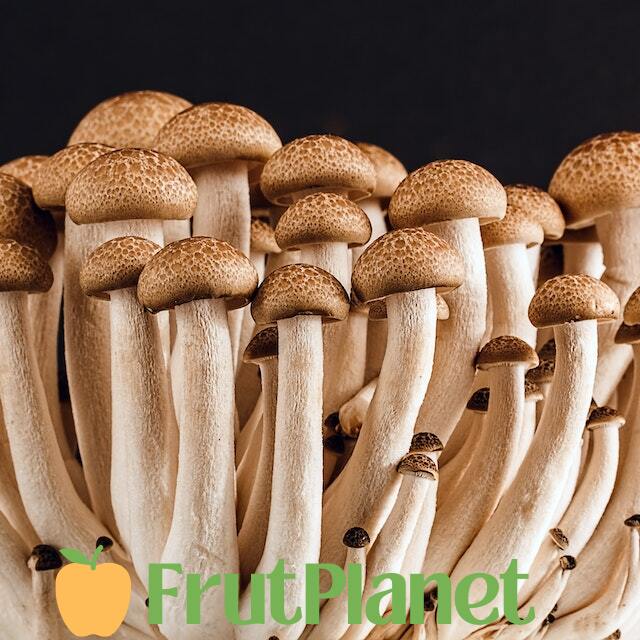
The choice of mushroom variety is the single most consequential decision a new mushroom farmer makes. It determines your substrate requirements, growing timeline, technical difficulty, yield potential, and market positioning. Here is how the most commercially significant varieties compare.
Oyster Mushroom
Fastest growing. Widest substrate tolerance. 3–4 weeks to first harvest. Up to 25% substrate yield. Multiple flushes. Ideal for East African climates.
Button Mushroom
Highest market demand globally. Requires composted manure substrate. Stricter temperature control (16–20°C). 5–8 weeks to first harvest. Strong commercial market.
Shiitake
Highest retail price premium. Grows on hardwood sawdust. 4–6 weeks colonisation. 5–10% substrate yield. Strong demand in health food and restaurant sectors.
Reishi
Premium medicinal mushroom. Dried and powdered for supplements. Slow growth (90–120 days). High export value. Growing demand from nutraceutical sector.
King Oyster
Dense, meaty texture. Long shelf life. Ideal for restaurant and gourmet markets. Requires cooler temperatures (15–18°C). Premium pricing over regular oyster.
Lion's Mane
Highest-priced specialty variety. Neuroprotective functional properties. Grows on hardwood. Demanding conditions. Strong demand from premium health channels.
The beginner's verdict: For anyone starting in mushroom farming — particularly in East Africa — oyster mushrooms are the correct starting point in nearly every case. The combination of fast growth, wide substrate tolerance, forgiving conditions, strong local demand, and multiple harvest flushes per bag creates the best risk-adjusted return for new operations. Master oyster mushrooms first, then layer in shiitake or specialty varieties once your production systems are established and your market relationships are proven.
Substrate Selection and Preparation: The Foundation of Yield
Mushrooms do not grow in soil. They grow on substrate — a nutrient medium that provides the carbon, nitrogen, and minerals that fungal mycelium needs to colonise and produce fruit bodies. The choice and preparation of substrate directly determines your yield, contamination risk, and operational cost. It is the most technically important decision after variety selection.
| Substrate Material | Best For | Cost Level | Preparation | Kenya Availability |
|---|---|---|---|---|
| Wheat / Rice Straw | Oyster, Straw mushroom | Low | Pasteurise (70°C, 1–2 hrs) | Excellent |
| Maize Stalks | Oyster mushroom | Very Low | Chop + pasteurise or lime treat | Excellent |
| Hardwood Sawdust | Shiitake, King Oyster | Low–Medium | Sterilise (121°C, 2–3 hrs) | Good |
| Coffee Husks | Oyster, Shiitake | Low (waste material) | Pasteurise or steam | Excellent (coffee zones) |
| Sugar Cane Bagasse | Oyster mushroom | Very Low | Pasteurise + supplement | Excellent |
| Composted Horse/Chicken Manure | Button mushroom | Medium | Phase I & II composting (21+ days) | Good |
| Cotton Waste | Oyster, Pink Oyster | Low | Sterilise recommended | Good |
The sterilisation or pasteurisation step is non-negotiable. Unsterilised substrate contains competing moulds, bacteria, and other fungi that will outcompete mushroom mycelium and destroy a batch before it can fruit. Pasteurisation (heating to 70–80°C for 1–2 hours) is sufficient for straw-based substrates used with oyster mushrooms. Full sterilisation (121°C under pressure for 2–3 hours, as in an autoclave or pressure cooker) is required for sawdust-based substrates used with shiitake or other demanding species.
The supplementation balance: Adding nitrogen-rich supplements (wheat bran, rice bran, soy hulls) to the base substrate increases yield significantly — but also increases contamination risk. A 10–20% bran supplement on sawdust can boost shiitake yields by 30–50%. But the same nutrient richness that feeds mushroom mycelium also feeds competitor moulds. Beginners should start with basic substrate without supplementation, master clean technique, and then introduce supplements gradually once their contamination rate is consistently below 5%.
Step-by-Step: From Setup to First Harvest
Prepare and Sterilise Substrate
Chop or shred substrate material to 3–5cm pieces. Adjust moisture content to 60–70% (a handful should hold its shape but not drip freely). Pack into heat-tolerant polypropylene bags (1–2 kg per bag). Sterilise or pasteurise using your method. Allow to cool completely to room temperature before inoculation — hot substrate kills spawn.
Inoculate with Spawn
Spawn is the mushroom equivalent of seeds — colonised grain (wheat, millet, sorghum) or wooden plugs hosting live mycelium. Open substrate bags in as clean an environment as possible (a still-air box or flow hood for commercial operations). Mix spawn through substrate at a rate of 10–20% spawn-to-substrate ratio. Seal bags with breathable filter patches or cotton wool plugs.
Incubation (Spawn Run)
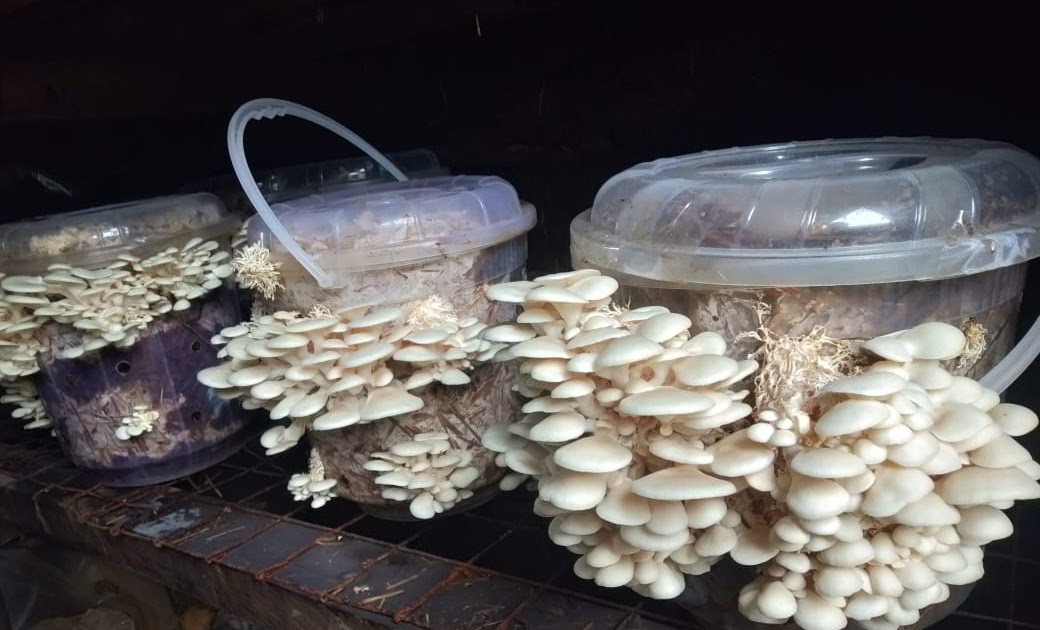
Move inoculated bags to a dark, warm (20–28°C for oyster), humidity-controlled incubation room. Over 10–21 days, white mycelium spreads through the substrate — the "spawn run." Healthy mycelium looks bright white and fluffy. Signs of contamination (green, black, or pink patches) indicate moulds competing with mushroom mycelium. Contaminated bags should be removed immediately to prevent spread.
Trigger Fruiting
Once bags are fully colonised (all white, firm), introduce fruiting conditions: cut slits or open bag tops to allow gas exchange; reduce temperature slightly (15–22°C for oyster); increase relative humidity to 85–95%; introduce fresh air exchange to lower CO₂ levels (high CO₂ suppresses fruiting). Primordia (pin formation) should appear within 5–10 days.
Harvest First Flush
Harvest oyster mushrooms just before or as caps begin to flatten and edges start waving — this is peak quality and weight. Twist and pull the entire cluster from the bag rather than cutting, to remove the base and prevent rot initiation. First flush typically takes 5–7 days from pin formation. After harvesting, clean the harvest site, rest the bag for 7–14 days, then re-trigger fruiting for second and subsequent flushes.
Post-Harvest Flushes
A well-prepared substrate bag typically produces 3–5 flushes before mycelium exhausts available nutrients. Each successive flush is slightly smaller than the previous. First flush: typically 15–25% of bag weight. Second flush: 10–18%. Third and beyond: 5–12% each. Total biological efficiency (all flushes) for oyster mushrooms on straw typically reaches 80–120% of original dry substrate weight across all flushes combined — meaning a 1 kg dry straw bag produces 800g–1.2 kg total mushrooms.
Optimal Growing Conditions and Environmental Control
Mushroom farming's major technical challenge is environmental control. Unlike field crops that tolerate natural variation, cultivated mushrooms require specific temperature, humidity, CO₂, and light conditions at different growth stages — and the consequences of getting these wrong range from reduced yield to complete crop failure.
| Parameter | Spawn Run (Incubation) | Fruiting (Pins to Harvest) | Why It Matters |
|---|---|---|---|
| Temperature | 22–28°C (oyster) | 15–22°C (oyster) | Controls mycelium growth rate; fruiting requires slight temperature drop |
| Relative Humidity | 70–80% | 85–95% | High humidity prevents caps from drying and cracking during fruiting |
| CO₂ Level | High tolerable (sealed bag) | <1,000 ppm (fresh air exchange) | Elevated CO₂ causes long, thin stems — fresh air triggers normal cap development |
| Light | Dark preferred | Indirect light 12 hrs/day | Light directs pin orientation — mushrooms grow toward light source |
| Airflow | Minimal (contamination risk) | 0.3–1.0 m/s gentle flow | Fresh air removes CO₂; prevents moisture buildup; reduces contamination |
For small-scale operations, environmental control does not require expensive equipment. A simple spray-misting system (manual or automated) handles humidity. A thermostat-controlled fan handles temperature and air exchange. A basic timer-controlled LED light system handles photoperiod. Taken together, these components can be assembled for under KES 30,000 ($230) for a small growing room — a manageable investment that dramatically improves yield consistency over uncontrolled setups.
Kenya's natural climate advantage: Kenya's highland growing regions — Nairobi, Murang'a, Kiambu, Nyeri, Meru, and the Rift Valley — offer ambient temperatures of 15–24°C that fall within or very close to optimal mushroom fruiting ranges for oyster and button varieties. This natural climate alignment dramatically reduces the energy cost of temperature control compared to growing in tropical lowland environments or cold temperate climates. A well-designed mushroom house in the Kenyan highlands can maintain near-optimal growing conditions with minimal heating or cooling — a structural cost advantage that makes Kenyan mushroom farming economically competitive with production in higher-cost countries.
Yield Benchmarks and Profit Calculations
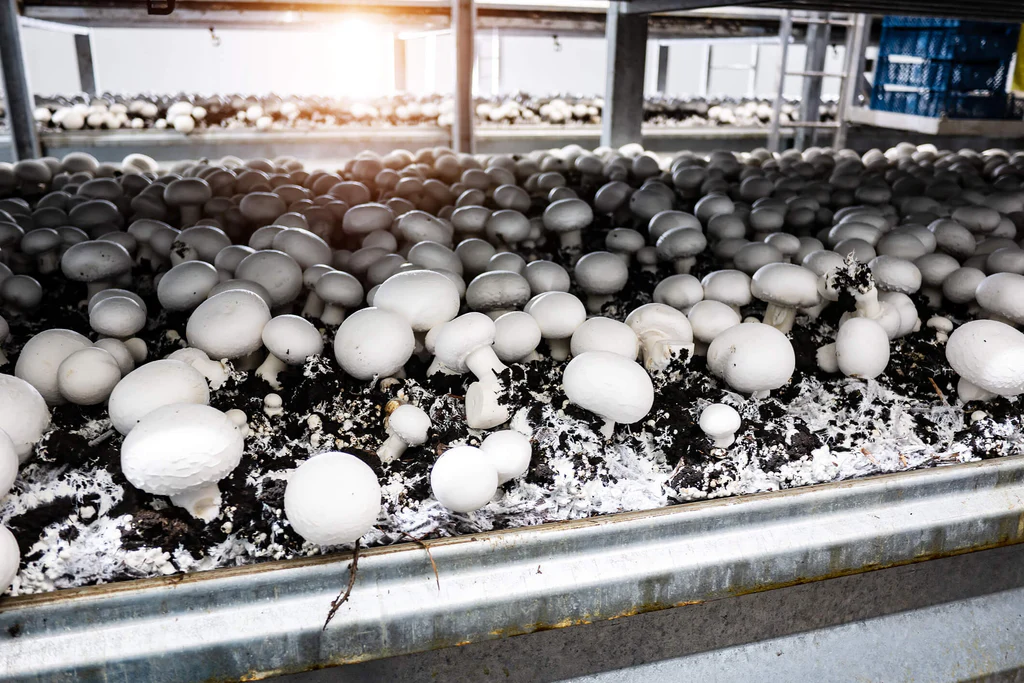
Real mushroom farm economics depend on scale, variety, market channel, and substrate cost. Here is a concrete small-scale Kenya example for oyster mushrooms — the most accessible entry point for new farmers.
📊 Small-Scale Oyster Mushroom Farm — Weekly P&L (200 active bags, Kenya)
At direct-to-consumer retail pricing (KES 700–900/kg via Nairobi market stalls or online delivery), the same 50 kg weekly yield generates KES 35,000–45,000 gross, with net margins of KES 27,000–35,000 per week — significantly higher than wholesale, though requiring more marketing effort and sales infrastructure.
Mushroom Farming in Kenya: The East African Opportunity
Kenya has emerged as East Africa's most commercially advanced mushroom farming ecosystem — a development driven by a combination of ideal growing climate, rapidly expanding urban demand, and an active community of smallholder and commercial mushroom producers who have proven the economics across multiple scales.
The Kenyan mushroom sector has several structural advantages over comparable markets. Highland temperatures (15–24°C) naturally approximate optimal oyster mushroom growing conditions, reducing energy costs. Agricultural waste materials — maize stalks, coffee husks, tea waste, sugar cane bagasse — are abundantly available at minimal cost from Kenya's farming sector, providing some of the most affordable substrate inputs on the continent. And Nairobi's 4+ million urban population, combined with a growing middle class with above-average health awareness and food quality consciousness, provides a strong local market for premium mushrooms at prices that support viable farmer economics.
Nairobi's wholesale mushroom markets price oyster mushrooms at KES 400–600/kg and button mushrooms at KES 500–900/kg, depending on season and quality grade. Premium retail channels — supermarkets, Nairobi health food stores, and direct-to-consumer delivery services — command KES 700–1,200/kg. Restaurants and hotels serving health-conscious clientele pay premium prices for consistent, high-quality supply. This multi-channel market structure allows Kenyan mushroom farmers to graduate from wholesale supply toward more lucrative direct channels as they build relationships and production consistency.
Selling Your Mushrooms: Market Access Channels
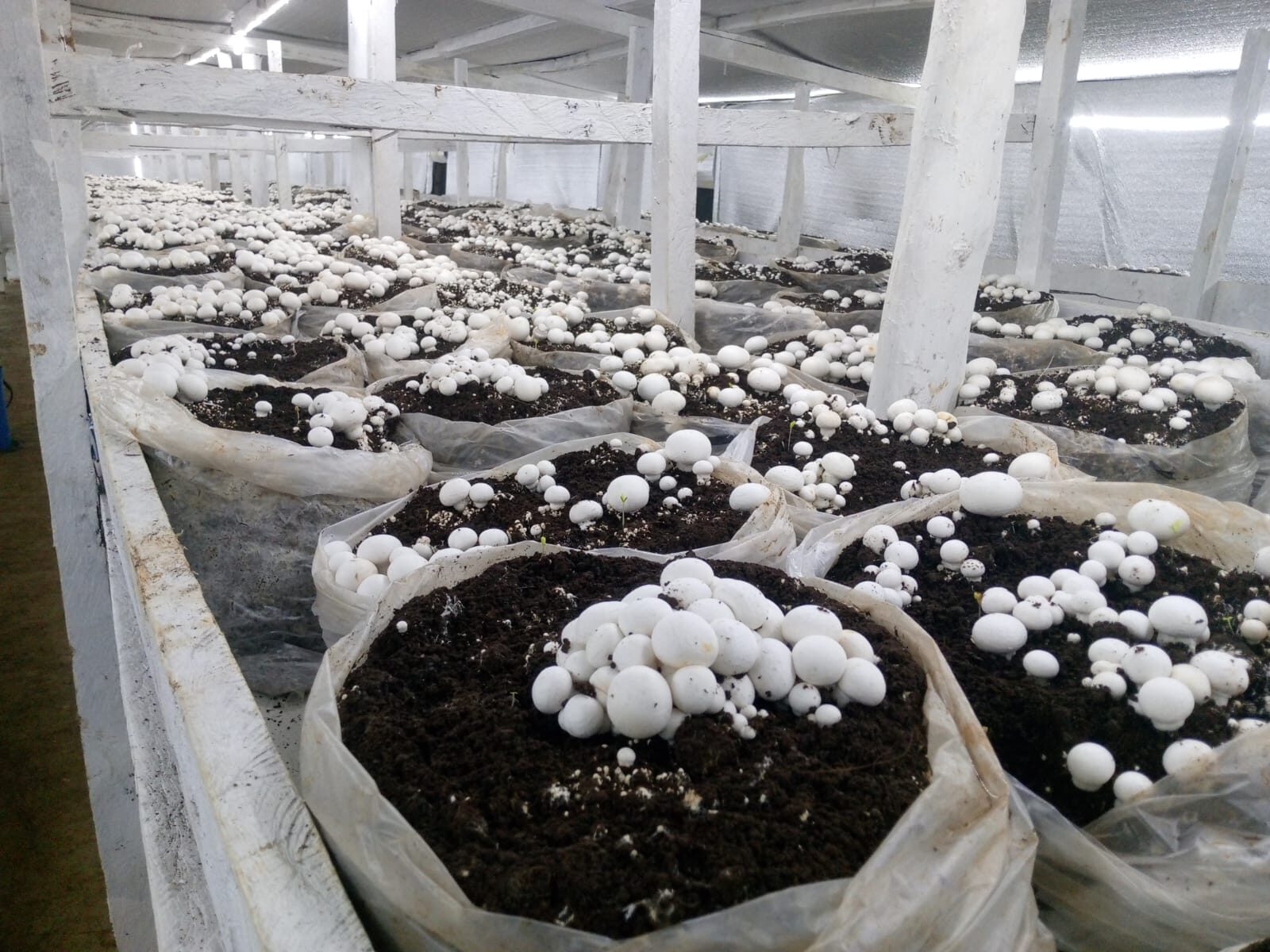
Producing mushrooms consistently is only half of the farming equation. Selling them profitably — before they deteriorate, because fresh mushrooms have a 3–7 day shelf life — is the other half. Building reliable market channels before scaling production is one of the most important risk management decisions a mushroom farmer can make.
Wholesale to Markets and Distributors
The most straightforward channel for new producers. Nairobi's Wakulima Market, City Market, and other wholesale produce centres accept mushroom deliveries from established producers. Prices are lower than retail (KES 400–600/kg) but volume is reliable if your quality and consistency are proven. Wholesale is the right starting channel while you are establishing production systems and building market relationships.
Direct to Hotels, Restaurants, and Catering
The premium B2B channel. Hotels and restaurants in Nairobi, Mombasa, and tourist areas pay KES 600–1,000/kg for consistently supplied, quality-graded mushrooms. The advantages are premium price, reliable volume commitment, and invoice-based payment cycles. The requirement is absolute consistency — a hotel kitchen cannot have a week where your mushrooms don't arrive. This channel rewards producers who have mastered production consistency before approaching buyers.
Supermarket and Retail
Nairobi supermarkets (Carrefour, Naivas, QuickMart, Chandarana) stock mushrooms and actively seek reliable local suppliers. Per-kg prices are strong (KES 700–900/kg), but supermarkets require specific packaging, food safety documentation, and consistent delivery schedules. A KEBS quality certification and GAP compliance are typically required. Once established, supermarket supply provides the best combination of volume, price, and payment reliability.
Direct Consumer and Online Delivery
Social media-driven direct sales and Nairobi's home delivery platforms (Twiga Foods, Mkulima Young, and WhatsApp-based consumer groups) allow small-scale producers to access KES 800–1,200/kg retail pricing without a physical storefront. This channel works best for producers who can build a community following around their farming story and product quality — particularly those growing specialty or organic varieties that command premium positioning.
Value-added products extend your market: Fresh mushrooms are highly perishable. When production exceeds fresh market demand — which happens during peak flush periods — drying surplus mushrooms converts them to a shelf-stable product worth KES 3,000–8,000/kg dried (versus KES 400–750/kg fresh). A simple solar or electric dryer allows you to capture the value of surplus production rather than composting overstock. Dried oyster and shiitake mushrooms, mushroom powder, and mushroom-based seasonings are growing product categories with premium pricing and longer sales windows than fresh produce.
Scaling from Small to Commercial: The Growth Pathway
Most successful commercial mushroom farms started small — often as a 50–200 bag home operation — and scaled progressively as production systems were mastered and market relationships established. The scaling pathway in Kenya typically follows a recognisable pattern.
Phase 1 (50–200 bags, 3–6 months): Learn production fundamentals. Establish spawn sourcing relationships with reliable local spawn producers. Master substrate preparation, sterilisation, inoculation technique, and environmental control. This phase is about technique development and contamination reduction — a 95%+ success rate on inoculations is the target before scaling further. Revenue at this stage covers operating costs and provides learning capital.
Phase 2 (200–1,000 bags, 6–18 months): Systematise production. Build market relationships in parallel with production growth. Invest in basic infrastructure — a proper fruiting room with humidity control and air exchange. Begin serving 2–3 reliable wholesale customers. This phase generates sustainable income and builds the operational knowledge and customer base needed for commercial scale.
Phase 3 (1,000+ bags, 18 months+): Commercial scale. At 1,000+ active bags, a farm produces 250–500 kg of fresh mushrooms weekly — enough volume to supply institutional buyers (hotels, hospitals, catering companies) directly, negotiate supply contracts with supermarket chains, and explore dried mushroom or extract product lines. This scale typically requires a dedicated facility, full-time staff, and formal business registration with relevant food safety certifications.
The most common scale-up mistake: Expanding production before establishing market relationships is the most common reason mushroom farming businesses fail to scale successfully. A farmer who masters production and doubles bag count without pre-securing buyers ends up with twice the mushrooms and half the time to sell them — with a 3–7 day window before quality deteriorates. Build your market first, then expand production to meet committed demand. A standing order from two hotels and a supermarket is worth more than three times the revenue than unplaced surplus production.