

Ecuador emerges as South America's premier early-season mango supplier, delivering premium tropical fruit to international markets when other origins wind down. The country's strategic equatorial position creates ideal growing conditions that produce exceptionally sweet, flavorful mangos distinct from other suppliers.
Understanding Ecuador's mango season timing helps buyers secure the best quality fruit at optimal prices. The harvest calendar follows predictable patterns influenced by elevation, regional microclimates, and variety characteristics that savvy importers leverage for competitive advantage.
From the first yellow varieties appearing in September through the final Kent mangos of December, Ecuador's season offers diversity unmatched by single-variety origins. This comprehensive analysis reveals exactly when to source each variety for maximum quality and value.
Explore Global Mango Harvest Patterns
Discover Worldwide Mango Season Calendar →Essential Season Insights
- Ecuador's season runs mid-September through December with peak November volumes
- Tommy Atkins dominates production at 68%, followed by Kent at 15%
- Exports reach 12-14 million boxes annually, primarily to US markets
- Yellow varieties start the season, red varieties finish strong
- Perfect holiday timing fills market gap before Peru's January peak
- All farms maintain GlobalGAP certification with full traceability
Ecuador Mango Season Timeline: Month-by-Month Breakdown
Ecuador's mango production follows a consistent annual pattern driven by the country's equatorial climate and distinct flowering cycles. The season progresses through four distinct phases, each characterized by specific varieties and volume levels.
September: Season Launch with Yellow Varieties
The Ecuadorian mango season begins in mid to late September with yellow-fleshed varieties including Ataulfo and Honey mangos. These early arrivals enter markets at low volumes, typically representing starter shipments that test market conditions and establish distribution channels.
Growers in southern Ecuador near Machala begin harvest first, benefiting from slightly earlier flowering due to regional climate variations. Initial shipments focus on premium markets willing to pay higher prices for early-season availability.
September volumes rarely exceed 500,000 boxes for the entire month. This limited availability creates premium pricing opportunities for importers who establish early-season contracts with reliable suppliers.
October: Tommy Atkins Takes Center Stage
October marks the arrival of Tommy Atkins mangos, Ecuador's dominant commercial variety. This workhorse cultivar combines excellent shipping characteristics with consistent quality, making it ideal for the long journey to North American and European markets.
Volumes increase substantially during October, reaching medium levels as more farms begin harvest operations. Packers ramp up processing capacity while cold chain logistics shift into high gear to handle growing volumes.
The transition from yellow to red varieties occurs gradually throughout October. By month's end, Tommy Atkins represents the majority of shipments while yellow variety volumes decline significantly.
November: Peak Season Delivers Maximum Volumes
November represents Ecuador's peak production period when all varieties reach optimal harvest maturity simultaneously. Weekly shipments surge to 1.7 million boxes or higher, flooding markets with premium quality fruit.
Kent mangos join Tommy Atkins during November, offering buyers choice between commercial-grade and premium varieties. This diversity enables differentiated marketing strategies targeting multiple consumer segments simultaneously.
Peak season timing coincides perfectly with US Thanksgiving and early Christmas shopping periods. This natural market alignment supports strong demand and stable pricing despite elevated supply levels.
December Through Early January: Season Wind-Down
December volumes remain strong through the first three weeks before declining rapidly. Late-season Kent and Keitt varieties dominate December shipments, appealing to quality-focused buyers seeking superior eating characteristics.
The season concludes during the last week of December or first week of January. Final shipments often command premium prices as markets anticipate the gap before Peru's season reaches full production.
Weather patterns including potential late-season rains influence exact end dates. Growers monitor conditions closely to optimize final harvest timing and avoid quality deterioration from unexpected precipitation.
| Month | Primary Varieties | Volume Level | Quality Notes |
|---|---|---|---|
| Mid-Late September | Ataulfo, Honey | Low (starter volumes) | Premium early-season fruit |
| October | Tommy Atkins, Honey | Medium (building) | Quality improving, volumes rising |
| November | Tommy Atkins, Kent | Peak (1.7M+ boxes/week) | Optimal quality and availability |
| December | Kent, Keitt, Tommy | High to declining | Late-season premium varieties |
| Early January | Keitt, Kent | Low (final shipments) | Limited premium availability |

Ecuador's Commercial Mango Varieties Explained
Ecuador cultivates four main commercial varieties, each bringing unique characteristics that appeal to different market segments. Understanding variety distinctions enables strategic sourcing decisions aligned with specific customer preferences and market positioning.
Tommy Atkins: The Commercial Powerhouse
Tommy Atkins mangos represent 68% of Ecuador's total production, dominating exports due to superior shipping durability and extended shelf life. The variety's thick skin protects fruit during long ocean voyages, reducing damage rates and maintaining appearance through distribution.
This cultivar produces medium to large fruit with characteristic red and green coloring. The flesh offers mild, sweet flavor with minimal fiber content. While not the most complex flavor profile, Tommy Atkins delivers consistent eating quality that appeals to mainstream consumers.
Commercial buyers favor Tommy Atkins for its reliable performance across diverse handling conditions. The variety tolerates temperature fluctuations better than delicate cultivars, simplifying logistics and reducing loss throughout the supply chain.
Kent: Premium Quality Alternative
Kent mangos comprise approximately 15% of Ecuador's production, targeting premium market segments willing to pay higher prices for superior eating quality. This variety delivers rich, sweet flavor with smooth, fiberless flesh that melts in the mouth.
The fruit develops attractive greenish-yellow color with red blush at maturity. Kent's tender skin requires more careful handling than Tommy Atkins, limiting distribution to quality-focused retail channels and specialty markets.
European buyers particularly favor Kent mangos, often specifying this variety for air freight programs serving premium retailers. The eating experience justifies premium pricing, creating strong demand despite higher logistics costs.
Ataulfo and Honey: Yellow Variety Appeal
Ataulfo and Honey mangos collectively represent 11% of production, appealing to consumers seeking traditional yellow mango characteristics. These varieties produce small to medium fruit with buttery texture and intense sweetness.
The compact size creates excellent portion control for single servings. Minimal fiber and smooth consistency make yellow varieties ideal for fresh consumption, smoothies, and culinary applications requiring puree.
Yellow variety production has increased steadily as consumer awareness grows. Mexican mango dominance established US market familiarity with Ataulfo characteristics, creating ready demand for Ecuador's harvest when Mexico's season ends.
Haden and Specialty Varieties
Haden mangos and other specialty varieties fill niche market demands. Haden's historical significance as the cultivar that launched Florida's mango industry creates heritage appeal among specialty buyers.
Limited production volumes restrict wide distribution, keeping these varieties in boutique channels. The intense tropical flavor and excellent eating quality justify premium positioning for discerning consumers.
Tommy Atkins
Production: 68% of total
Characteristics: Medium-large, red-green skin, mild sweet flavor, excellent shipper
Best For: Mainstream retail, foodservice
Kent
Production: 15% of total
Characteristics: Large, greenish-yellow with red blush, rich sweet flavor, fiberless
Best For: Premium retail, specialty markets
Ataulfo/Honey
Production: 11% of total
Characteristics: Small-medium, golden yellow, buttery texture, intensely sweet
Best For: Fresh consumption, smoothies, premium segments
Geographic Production Regions and Growing Conditions
Ecuador's mango cultivation concentrates in specific regions offering ideal combinations of climate, soil, and water availability. The country's diverse topography creates microclimates that extend harvest windows and enable variety specialization.
Southern Coastal Regions: Primary Production Zone
Southern Ecuador near Machala and the Peruvian border produces the majority of commercial mangos. This region benefits from relatively dry climate that minimizes fungal pressure while providing adequate water through irrigation.
Proximity to major ports facilitates efficient export logistics. Harvest operations begin slightly earlier in southern areas due to warmer temperatures and lower elevation compared to northern growing regions.
The dry conditions prove particularly advantageous for organic production. Lower disease pressure reduces chemical treatment requirements, enabling Ecuador to expand certified organic acreage more readily than humid tropical origins.
Central and Northern Coastal Areas
Additional mango production occurs throughout Ecuador's coastal lowlands extending north from Guayaquil. These areas contribute secondary volumes that extend the overall harvest window through later flowering dates.
Elevation variations create temperature differences that stagger bloom cycles naturally. Growers leverage these variations strategically, planting different varieties at specific elevations to optimize harvest timing.
The equatorial position delivers consistent day length throughout the annual cycle. This stability eliminates photoperiod-triggered flowering common in subtropical regions, enabling more predictable production planning.
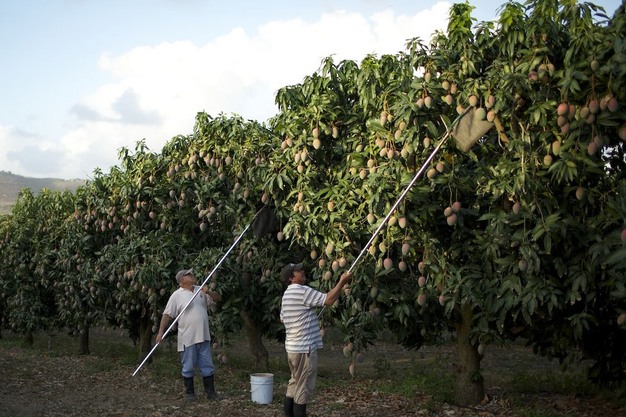
Climate Advantage: Ecuador's equatorial location provides stable temperatures averaging 22-28°C (72-82°F) throughout the growing season. This consistency produces reliable flowering cycles and predictable harvest timing that subtropical origins cannot match.
Understanding Ecuador's Position in Global Mango Supply
Ecuador occupies a strategic niche in global mango markets, bridging the gap between Mexico's summer season and Peru's winter-spring harvest. This timing creates valuable market positioning that supports premium pricing despite competition from larger origins.
Relationship with Mexico's Dominant Season
Mexico supplies over 95 million boxes to US markets during its April through September peak season, completely dominating summer availability. Ecuador's September start coincides with Mexico's wind-down, creating smooth seasonal transition.
The timing enables retailers to maintain consistent mango programs throughout the calendar without gaps. Ecuadorian suppliers inherit shelf space and promotional momentum established during Mexico's long season.
However, increasing Mexican irradiated fruit extending into fall creates growing overlap. Ecuador must compete on quality and service rather than availability alone as Mexican volumes now reach 10 million boxes in traditional Ecuador season months.
Transition to Peru's Massive Winter Crop
Peru represents the largest offshore mango supplier to US markets, shipping 23-29 million boxes during its October through April season. Ecuador's earlier start creates 4-6 weeks of minimal competition before Peru reaches full production.
This window provides Ecuador premium pricing opportunities. Early-season demand combined with limited supply supports margins impossible during Peru's peak volumes in January and February.
The seasonal handoff requires careful coordination. Ecuador winds down as Peru builds momentum, creating December overlap when both origins ship substantial volumes simultaneously. This transitional period often sees softer pricing as supply temporarily exceeds demand.
Brazil's Parallel Timing Creates Challenges
Brazil's August through December season overlaps Ecuador substantially, creating direct competition throughout most of the harvest period. Brazil's larger production capacity and established distribution networks pose significant competitive pressure.
However, quality perceptions favor Ecuador in many segments. Ecuadorian fruit often commands premium pricing based on superior consistency and flavor characteristics compared to variable Brazilian quality.
Geographic proximity gives Ecuador faster shipping times to US East Coast markets. This transit advantage reduces spoilage risk and enables fresher arrival compared to Brazil's longer ocean voyage.
| Origin | Season Period | Typical Volume (boxes) | Primary Markets |
|---|---|---|---|
| Mexico | April - September | 95+ million | US (dominant supplier) |
| Ecuador | September - December | 12-14 million | US (90%+), Europe |
| Brazil | August - December | 9-11 million | US, Europe |
| Peru | October - April | 23-29 million | US (largest offshore supplier) |
Quality Standards and Certification Requirements
Ecuador maintains stringent quality protocols that differentiate its mango industry from less regulated origins. Comprehensive certification requirements ensure food safety, traceability, and sustainable production practices throughout the supply chain.
Universal GlobalGAP Certification
Every commercial mango farm in Ecuador holds GlobalGAP certification, demonstrating compliance with good agricultural practices covering food safety, worker welfare, and environmental protection. This universal requirement eliminates uncertified suppliers from export channels.
The certification mandates detailed record-keeping covering pesticide applications, irrigation practices, and harvest procedures. Traceability extends from individual trees through packing and shipping, enabling rapid response to quality issues.
Regular third-party audits verify ongoing compliance. Farms failing to maintain standards lose certification and export privileges, creating strong incentive for continuous improvement.
Packhouse Quality Protocols
All Ecuadorian mango packhouses maintain Primus GFS certification for facility food safety and SMETA certification for social and ethical practices. These standards cover facility sanitation, worker treatment, and operational procedures.
Packhouses implement rigorous sorting protocols that grade fruit by size, color, and quality. Multiple inspection points throughout processing eliminate defective fruit before packing.
Temperature management begins immediately post-harvest. Fruit moves quickly from field heat to controlled cooling, slowing ripening and extending shelf life for the long journey to distant markets.
Organic Production Standards
Ecuador's organic mango production has expanded substantially, benefiting from naturally drier climate conditions that reduce disease pressure. Certified organic farms follow strict protocols prohibiting synthetic pesticides and fertilizers.
The dry southern coastal climate proves ideal for organic production compared to humid tropical regions where fungal pressure necessitates intervention. This natural advantage enables competitive organic pricing.
Organic certification from recognized bodies including USDA and EU authorities opens premium market access. Growing consumer demand for organic tropical fruit supports continued production expansion.
Industry Traceability Leadership
Ecuador stands among the few mango origins providing complete farm-to-export traceability. Every box can be traced to specific farms and even individual orchard blocks. This transparency exceeds requirements in many competing origins and provides quality assurance that sophisticated buyers demand.

Weather Patterns and Climate Influences
Ecuador's mango production responds to specific climate patterns that shape annual harvest outcomes. Understanding these influences helps predict season timing, volume expectations, and potential quality variations.
El Niño's Significant Impact
El Niño weather patterns dramatically affect Ecuadorian mango production, with the phenomenon occurring irregularly every several decades. The climate disruption causes elevated temperatures and altered rainfall patterns during critical flowering periods.
Higher than normal temperatures during floral induction prevent proper flower development. This reproductive stress drastically reduces fruit set, sometimes cutting volumes by 65-75% in severe El Niño occurrences.
The unpredictable timing makes advance planning challenging. Growers monitor climate forecasts closely during critical May-June flowering period to anticipate potential harvest impacts months ahead.
Optimal Growing Temperature Range
Mango trees thrive in Ecuador's consistent equatorial temperatures averaging 22-28°C throughout the growing cycle. This stable warmth promotes vigorous growth and reliable flowering without extreme heat stress.
The lack of cold winter dormancy enables multiple annual bloom cycles. Some trees flower up to four times yearly, though commercial production focuses on the primary September-December cycle.
Temperature consistency eliminates frost risk completely. This reliability contrasts sharply with subtropical origins where occasional cold snaps damage crops and create supply uncertainty.
Rainfall Timing and Irrigation Management
Controlled water availability during specific growth stages optimizes fruit development. Strategic irrigation supplementation during dry periods ensures adequate moisture without the excessive humidity that promotes disease.
Late-season rainfall poses the greatest risk to harvest quality. Unexpected December precipitation can split ripening fruit or accelerate maturation, forcing earlier harvest before optimal quality development.
Climate forecasting helps growers anticipate late-season weather patterns. Advanced harvest timing adjustments protect quality when significant rainfall appears imminent.
Buyer Considerations for Ecuador Mango Sourcing
Strategic buyers leverage Ecuador's unique season characteristics to optimize mango programs and secure competitive advantages. Multiple factors influence sourcing decisions beyond simple availability and price.
Optimal Purchase Timing for Quality
November represents the sweet spot for Ecuador mango purchasing. Peak volumes combine with optimal maturity across all varieties, delivering best quality-to-price ratios of the season.
Early-season September fruit commands premium pricing due to limited availability. This positioning suits buyers targeting quality-focused consumers willing to pay for scarcity value.
Late-season December and January fruit can offer exceptional value as growers rush to clear remaining inventory before Peru's season pressures markets. Quality remains strong despite declining volumes.
Variety Selection Strategy
Tommy Atkins selection makes sense for mainstream programs prioritizing consistent supply and competitive pricing. The variety's reliability and availability enable large-volume commitments with minimal risk.
Kent mangos deserve premium positioning due to superior eating quality. The variety suits specialty retailers and foodservice operations differentiating through quality rather than competing on price.
Yellow varieties including Ataulfo create niche opportunities. The distinctive characteristics appeal to consumers familiar with Mexican yellow mangos, enabling premium pricing through perceived uniqueness.
Organic vs Conventional Decisions
Organic Ecuador mangos command 30-50% premiums over conventional fruit. This margin justifies organic sourcing for retailers with strong organic customer bases willing to pay differential pricing.
Supply limitations sometimes constrain organic availability during peak demand periods. Forward contracts established early in the season secure organic volumes that spot buyers cannot access later.
Quality differences between organic and conventional production remain minimal. The decision hinges primarily on market positioning and customer preferences rather than eating quality distinctions.
Transit Time and Freshness Considerations
Ocean freight from Ecuador typically requires 6-12 days to reach US ports depending on destination. This transit time demands proper cold chain management to maintain quality through arrival and distribution.
Controlled atmosphere containers extend shelf life significantly compared to standard refrigeration. The investment in CA technology pays dividends through reduced spoilage and extended retail display life.
Air freight from Ecuador enables ultra-fresh delivery but multiplies costs substantially. This premium logistics makes sense only for highest-value varieties like Kent targeting luxury retail segments.
Frequently Asked Questions About Ecuador Mango Season
Strategic Advantages of Ecuador Mango Season
Ecuador's mango season delivers unique benefits that strategic buyers leverage for competitive positioning. The combination of timing, quality, and reliability creates opportunities unavailable from other origins.
Perfect Holiday Season Alignment
Peak November-December volumes coincide with major US holiday shopping periods including Thanksgiving, Christmas, and New Year's. This natural timing supports holiday promotions when consumer mango demand traditionally peaks.
Seasonal marketing campaigns capitalize on mango's nutritional profile and tropical appeal during winter months when fresh fruit consumption increases. The timing enables retailers to feature mangos prominently during high-traffic shopping periods.
Ecuador's consistent quality during peak season enables confident promotional commitments. Retailers can advertise specific variety characteristics knowing supply will support advertised attributes.
Minimal Competition Window
The early-season September-October period provides 4-8 weeks of minimal offshore competition. Mexico winds down while Peru hasn't reached full production, creating temporary supply constraints that support premium pricing.
This window enables Ecuador to establish market presence and capture shelf space before larger origins dominate. First-to-market advantage creates consumer awareness that persists even after competitive supplies increase.
Late-season positioning in December through early January fills the gap before Peru peaks. This shoulder period avoids direct competition with Peru's massive January-February volumes.
Unmatched Traceability and Transparency
Ecuador's universal certification requirements and comprehensive traceability create supply chain transparency exceeding most competing origins. Buyers can verify farm practices, treatment protocols, and harvest timing with confidence.
This documentation supports food safety requirements from sophisticated retail buyers and foodservice operators. The ability to trace issues to specific farms enables rapid problem resolution impossible with less transparent supply chains.
Sustainability-focused buyers increasingly demand verifiable production practices. Ecuador's certification infrastructure provides the documentation required for corporate responsibility reporting.
Future Market Positioning
Ecuador's mango industry continues expanding organic acreage and improving quality protocols. Production increases of 10-15% over recent seasons demonstrate growing capacity to serve international markets. The combination of ideal growing conditions, strategic timing, and commitment to quality positions Ecuador as an increasingly important origin for discerning mango buyers.
Maximizing Ecuador Mango Season Opportunities
Ecuador's mango season offers strategic advantages for buyers seeking reliable quality during the critical fall-winter period. The harvest calendar positions Ecuadorian fruit perfectly between Mexico's summer dominance and Peru's winter peak.
Understanding variety characteristics, seasonal timing, and quality protocols enables informed sourcing decisions. Tommy Atkins delivers mainstream commercial reliability, Kent provides premium positioning, and yellow varieties create specialty niche opportunities.
The country's universal certification requirements, comprehensive traceability, and expanding organic production meet sophisticated buyer demands for transparency and sustainability. These quality systems differentiate Ecuador from less regulated competing origins.
Peak November availability combined with holiday demand creates ideal promotional timing. Strategic buyers leverage Ecuador's season to maintain consistent year-round mango programs while capitalizing on seasonal marketing opportunities.
Climate consistency and predictable harvest patterns provide reliability that volatile origins cannot match. Ecuador's equatorial position eliminates frost risk and extreme weather variations, supporting confident forward contracting.
As global mango demand continues expanding, Ecuador's position as a premium early-season supplier strengthens. The combination of quality, timing, and certification positions the origin for sustained growth in international markets.