Retail (Bucharest/Iași)
RON 10–18/kg
~$2.29–$3.96 USD/kg
Wholesale range (2025)
$1.61–$2.78/kg
transaction avg $2.63/kg
Import value (2023)
~$44 million
+28% year-on-year growth
Eastern Europe rank
#3 consumer
19K tonnes — behind Poland & Russia
Key Takeaways
- Bucharest/Iași retail: RON 10.58–18.32/kg (~$2.29–$3.96 USD/kg)
- Wholesale 2025: $1.61–$2.78/kg; consistent $2.63/kg transaction price
- Import value hit $44M in 2023 — up 28% YoY — fastest EU eastern growth
- Eastern Europe's #3 avocado consumer at 19K tonnes annually
- Kaufland & Lidl Romania most price-competitive avocado retailers
- Import season: March through August (peak summer supply window)
Romania's Avocado Market: An Eastern European Growth Story
Romania's avocado market transformation tells one of the most dramatic emergence stories in Eastern European fresh produce. In 2012, Romania imported approximately $1.7 million worth of avocados. By 2023, that figure had reached approximately $44 million — with a remarkable 28% single-year growth rate that placed Romania among the fastest-expanding avocado markets in all of Europe. A country of 19 million people has, within a single decade, built the continent's third-largest Eastern European avocado market.
What drove this transformation is a convergence of structural forces that reshaped Romanian food culture over the same period. Rising urban incomes — particularly in Bucharest, Cluj-Napoca, Timișoara, and Iași — created a consumer class with the purchasing power and the health aspirations to make avocado a regular purchase. The rapid expansion of modern retail formats — Kaufland, Lidl, Carrefour, Auchan, and Mega Image all significantly expanded their Romanian footprints through the 2010s — gave these consumers access to avocados in formats and at prices that previous Romanian retail infrastructure could not provide.
Social media accelerated the cultural shift. Romanian food bloggers, Instagram-era café culture, and the global avocado-on-toast phenomenon all reinforced avocado's positioning as a health-forward, aspirational food product among the 25–45 age demographic that drives Romanian urban food trends. What began as a niche product available primarily in Bucharest's upscale food stores is now stocked in virtually every Kaufland and Lidl across the country — reaching smaller cities and towns that would have had no avocado access just eight years ago.
$44MRomania avocado import value (2023)
+28%Year-on-year import growth rate (2023)
19K TAnnual avocado consumption (Eastern Europe #3)
$2.63/kgConsistent Romania transaction price (2025)
Avocado Prices in RON: Understanding the Romanian Retail Range
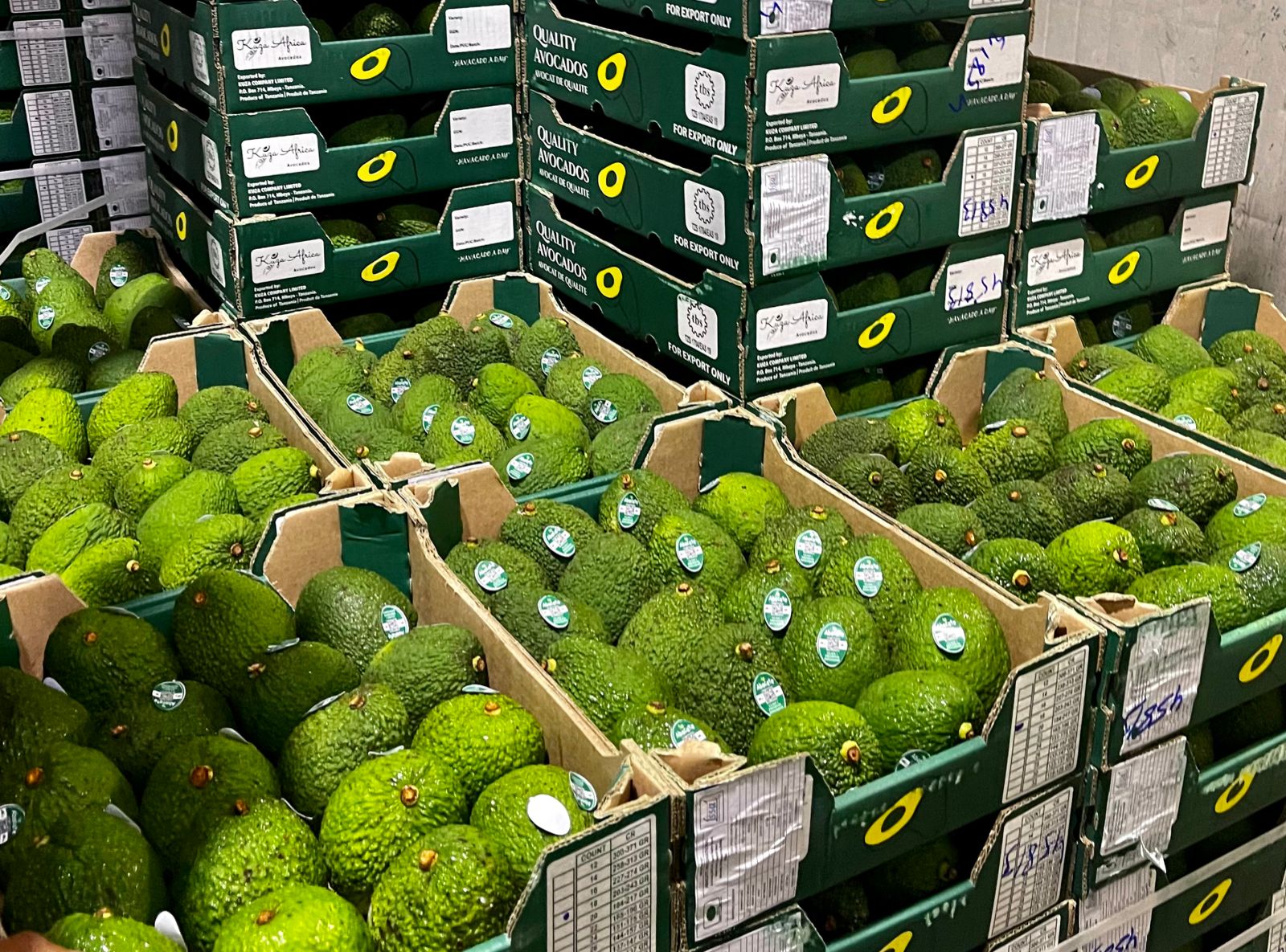
Romanian retail avocado pricing is denominated in Romanian Leu (RON) — a currency that is tied closely to the Euro through Romania's EU membership, though Romania has not yet adopted the Euro as its currency. The RON/EUR exchange rate stability (approximately 4.97 RON = 1 EUR) means that Romanian avocado retail prices track closely to their EUR equivalents, making Romania's pricing broadly comparable to other CEE (Central and Eastern European) EU member states.
The retail price range in Bucharest and Iași sits at RON 10.58–18.32 per kilogram — approximately $2.29–$3.96 USD/kg at current exchange rates, or €2.13–€3.69/kg EUR equivalent. This positions Romania well below Western European retail price levels (France €3.50–5.00/kg, Netherlands €4.29–6.91/kg) but broadly consistent with other Central and Eastern European markets where income levels and avocado consumption cultures are still developing relative to Western Europe's mature consumer base.
A single regular Hass avocado in Romania typically costs RON 3–8 each depending on retailer and size. Kaufland promotional pricing — Romania's most competitive mainstream avocado offer — regularly brings single avocados below RON 3.50 each during peak Peruvian supply season. At Mega Image in Bucharest's premium districts (Floreasca, Dorobanți, Aviației), organic or premium avocados push above RON 8–12 each. The wide per-unit range reflects both Romania's diverse retail landscape and the extremely wide size variation in avocados that appear across different channels.
RON 10–18Retail per kg (Bucharest/Iași)
$2.29–$3.96USD equivalent at current RON rate
€2.13–€3.69EUR equivalent retail range
RON 10.61Historical wholesale low ($2.31/kg equiv.)
Romania's price positioning within the EU: Romania's avocado retail prices at €2.13–€3.69/kg sit approximately 25–40% below France's €3.50–5.00/kg range and 30–50% below the Netherlands' €4.29–6.91/kg. This differential reflects Romania's lower average incomes — GDP per capita remains approximately 70% of the EU average — and the corresponding price sensitivity of Romanian consumers. It also reflects lower retail operating costs: Romanian supermarket labour, real estate, and logistics costs are meaningfully below Western European equivalents, allowing retailers to pass savings through to shelf prices while maintaining viable margins.
Romanian Supermarket Avocado Price Comparison

Romania's modern retail landscape has been shaped by rapid entry of major Western European supermarket chains since the early 2000s, creating a competitive grocery environment that has consistently delivered lower consumer prices than the country's previous retail structure could provide. Avocado pricing follows the competitive tier structure of this evolved retail market.
🛒
Kaufland Romania
RON 2.99–4.99 each
Largest hypermarket — most competitive
🛒
Lidl Romania
RON 2.99–4.49 each
Hard discount — frequent promos
🛒
Carrefour Romania
RON 3.99–5.99 each
Mid-market hypermarket
🛒
Auchan Romania
RON 3.99–6.49 each
Mid-market hypermarket
🛒
Mega Image
RON 5.99–9.99 each
Premium urban — Bucharest focus
🌿
Organic / La Doi Pași Bio
RON 8.99–14.99 each
Organic specialist — premium tier
Kaufland Romania's market position in avocado pricing is a function of the Schwarz Group's European-level buying power. Kaufland and Lidl are sister companies within the Schwarz Group — Europe's largest retailer by revenue — which means both chains access avocados through the same pan-European procurement structure. This gives Kaufland Romania and Lidl Romania access to the same volume pricing and supply programmes that Kaufland Germany and Lidl Germany use, delivered to Romanian consumers at prices calibrated to Romanian purchasing power rather than German wage levels. The result is consistent, competitive avocado pricing that other Romanian chains — accessing supply through smaller-scale domestic import arrangements — struggle to match.
Mega Image's premium positioning in Romanian grocery retail is directly linked to its ownership by Ahold Delhaize — the Dutch-Belgian retail conglomerate that also owns Delhaize Belgium and Albert Heijn in the Netherlands. This corporate relationship gives Mega Image access to Ahold Delhaize's avocado supply network, including the ready-to-eat avocado programmes that Ahold developed for Albert Heijn. However, the brand operates at a price premium over Romanian market peers because its Bucharest stores are concentrated in the city's higher-income residential and commercial districts, and its consumer base accepts premium pricing for quality and convenience assurance.
Wholesale and Import Avocado Prices in Romania
Romania's wholesale avocado price structure reflects its position as an emerging EU market supplied through multiple European distribution channels — primarily Dutch-routed but with supplementary flows from Spain, Germany, and directly from producing countries via southern European ports.
| Price Level | RON/kg (approx) | USD/kg | Period / Source | Notes |
|---|
| Historical wholesale low | RON 10.61 | $2.31/kg | Recent past | Freshela lowest recorded wholesale |
| Import wholesale avg | RON 12–13 | $2.61–$2.83/kg | Current reference | Freshela standard wholesale range |
| Tridge transaction price | ~RON 12.08 | $2.63/kg | Apr, May, Dec 2025 | Consistent across 4 sampled transactions |
| Wholesale range (2025) | RON 7.40–12.80 | $1.61–$2.78/kg | Full year 2025 | Market price data — full range |
| Nov 2025 import price | ~RON 11.78 | $2.56/kg | Nov 11, 2025 | Standard import transaction |
| Nov 2025 premium spike | ~RON 37.35 | $8.12/kg | Nov 27, 2025 | Emergency/specialty import at premium |
The November 2025 premium transaction at $8.12/kg is the most commercially striking data point in Romania's recent import history. This price — approximately 3× the standard Romania transaction rate — almost certainly represents an emergency import during tight supply conditions, a specialty or organic product category, or a small-volume air freight shipment rather than standard commercial container supply. The simultaneous existence of a $2.56/kg transaction and an $8.12/kg transaction on dates just 16 days apart illustrates the extreme price range that can exist within a single market depending on supply conditions, product specification, and import modality.
The $2.63/kg consistency signal: Tridge data shows four Romania avocado transactions all recording exactly $2.63/kg across April, May, and December 2025. This unusual price consistency across diverse months suggests a standing commercial contract or established supply relationship at a fixed reference price — a pattern more common in emerging markets where a small number of established importers supply the majority of domestic wholesale volume. For exporters seeking to enter the Romanian market, understanding that established importers may have fixed-price agreements helps calibrate realistic pricing expectations for new supply relationships.
Avocado Price by Channel in Romania
🥑 Romania Avocado Price Per Kg by Channel (RON and USD equivalent)
Import (CIF Romania)
~RON 7–13
Romanian wholesale
~$2.30–$3.20
Kaufland / Lidl
~$3.40–$5.70
Carrefour / Auchan
~$4.10–$7.50
Mega Image premium
~$6.40–$12.60
Organic / specialty
~$9.10–$16.00+
Romania in Eastern European Avocado Context

Romania's position as Eastern Europe's third-largest avocado consumer is commercially significant when viewed in the context of the region's overall market structure. IndexBox's Eastern European avocado market analysis places Romania at 19,000 tonnes annual consumption, behind Russia (50,000 tonnes) and Poland (40,000 tonnes) — but ahead of all other Eastern and Central European countries. Understanding how Romania's market compares to its regional peers helps calibrate both its pricing position and its growth potential.
🇷🇺
Russia
50,000 tonnes
Eastern Europe #1 — but supply chain complexity
🇵🇱
Poland
40,000 tonnes
Eastern Europe #2 — $122M import value; rapid growth
🇷🇴
Romania
19,000 tonnes
Eastern Europe #3 — 28% growth; fastest emerging
🇨🇿🇧🇬
Czech & Others
Growing fast
Baltic states, Czechia, Bulgaria emerging rapidly
Romania's 28% import value growth rate in 2023 — compared to Poland's more measured growth trajectory — positions it as the highest-growth market in the Eastern European tier. This dynamic reflects a market at an earlier stage of the adoption curve: Poland has been consuming avocados in volume since the mid-2010s and growth is now more incremental, while Romania is still in the faster-growth phase where consumer discovery and retail expansion drive double-digit gains. The IndexBox Eastern European market report confirms that Romania's growth dynamics are expected to continue as modern retail expands beyond Bucharest into secondary and tertiary cities.
Romania's per-capita consumption of approximately 1 kg per year remains well below Western European benchmarks (France 2.3 kg, Netherlands 2 kg, UK ~2 kg) — which signals substantial headroom for continued growth as incomes converge toward EU averages and avocado adoption deepens beyond the current urban, younger-demographic consumer base. The economic convergence trajectory for Romania suggests this per-capita gap will narrow meaningfully over the next decade.
Where Romania's Avocados Come From
Romania's geographic position at the southeastern corner of the EU — sharing borders with Bulgaria, Serbia, Hungary, Ukraine, and the Black Sea coast — creates a specific logistics dynamic for avocado supply that differs from northern or western European markets.
| Origin | Route to Romania | Season | Price Tier | Market Role |
|---|
| Peru | Via Netherlands/Germany → Romania | May–Sep | $1.80–$2.80/kg FOB | Dominant summer supply; volume driver |
| Spain | Road freight via Hungary/Serbia | Nov–Apr | $2.80–$3.40/kg | Winter freshness; direct road access |
| South Africa | Via Netherlands/Germany | Apr–Aug | $2.30–$3.20/kg | Counter-seasonal supplement |
| Morocco / Israel | Via Greece/Turkey corridor | Oct–Mar | $2.20–$3.50/kg | Mediterranean winter bridge |
| Kenya | Air/sea via Rotterdam → Romania | Feb–Jun | $2.00–$3.00/kg | Spring quality supply — growing |
| Colombia | Via Netherlands/Belgium → road | Year-round | $2.00–$2.80/kg | Volume supplement to Peru |
Romania's proximity to the Mediterranean creates a supply chain opportunity that more northern European markets lack. Spanish avocados — as well as Moroccan and Israeli product moving through the eastern Mediterranean corridor — can reach Romania by road via Hungary or the Balkans corridor more efficiently than they can reach Germany or the Netherlands. This geographic proximity gives Romanian importers an alternative to the Dutch hub for southern European and eastern Mediterranean supply origins, potentially reducing logistics costs for winter supply during the October–April window.
Kenya's commercial case for Romanian importers: FrutPlanet's Kenya-origin Hass avocados carry GlobalG.A.P. certification and full KEPHIS phytosanitary documentation meeting EU import standards — which Romania applies as a full EU member state. Our February–June East African export season fills Romania's spring supply transition gap: the period after Spanish winter supply ends and before Peru's summer volumes reach full scale. For Romanian importers evaluating supply diversification beyond Dutch-routed European supply, Kenya's competitive FOB pricing ($2.00–$3.00/kg) and consistent quality credentials represent a commercially viable alternative that avoids the additional logistics cost of the Romanian-routed Dutch hub supply chain.
Romania's Avocado Import Regulatory Framework
Romania is a full EU member state, which means its avocado import regulatory framework is essentially the EU framework — the same phytosanitary standards, MRL (Maximum Residue Level) pesticide limits, and UNECE FFV-42 marketing standards that apply throughout the EU apply in Romania. This significantly simplifies compliance for exporters who are already certified for EU market access.
The specific Romanian institutional framework adds some national layers. The General Customs Directorate (Direcția Generală a Vămilor) manages customs clearance for avocado imports. The National Sanitary Veterinary and Food Safety Authority (ANSVSA) — Romania's food safety authority, equivalent to the German BfR or French ANSES — is responsible for pesticide MRL testing and food safety protocol enforcement at the border. ANSVSA works within the EU RASFF (Rapid Alert System for Food and Feed) framework, meaning any non-compliant avocado consignment detected at the Romanian border triggers alerts throughout the EU system.
Labelling requirements are enforced by the National Authority for Consumer Protection (ANPC), which requires that avocado carton labels include Romanian-language product information. The Ministry of Agriculture and Rural Development (MARD) oversees the horticultural produce import standards framework that sets quality requirements for avocados at Romanian port of entry.
EUDR compliance is coming for Romania too: Romania, as an EU member state, is within scope of the EU Deforestation Regulation (EUDR). Romanian importers will be required to provide verified geolocation data demonstrating that avocados they import did not originate from deforested land after December 2020. For exporters supplying Romania, this means EUDR-compliant documentation will become a de facto market access requirement — not just for Western European markets but for the entire EU including its eastern members. Exporters from Kenya, with documented smallholder farm locations and KEPHIS export certification, are well-positioned for EUDR compliance relative to some larger-volume Latin American origins where deforestation traceability is more complex.
Seasonal Avocado Price Patterns in Romania
📅 Romania Avocado Price Seasonality — Monthly Overview
Jan
Feb
Mar
Apr
May
Jun
Jul
Aug
Sep
Oct
Nov
Dec
Peak import season (Mar–Aug) — best availability & prices
Good supply — moderate pricing
Transitional — variable supply
Tight supply — elevated prices, risk of shortage
Romania's avocado import season is distinctively March through August — slightly earlier than the peak import window of more northern European markets that follow the June–August Dutch redistribution calendar. Romania's earlier start reflects its access to the Mediterranean supply chain corridor, where Spanish domestic production and North African supply from Morocco can reach Romania by road from March onwards — earlier than the peak Peruvian summer supply that dominates the Dutch hub's July–August volumes.
The November 2025 import transaction data from Tridge is instructive. Two transactions on November 11 at $2.56/kg (standard) and one on November 27 at $8.12/kg (premium spike) illustrate the supply tension that characterises Romania's autumn window. By late November, Romania's summer import peak is long past and the country is dependent on whatever Mediterranean and Spanish supply is available — supplemented by expensive emergency imports when that supply tightens. The $8.12/kg November spike is almost certainly such an emergency import.
For Romanian food service operators, hotel groups, and restaurant chains — which represent a fast-growing segment of Romanian avocado demand as the country's dining-out culture develops — the seasonality pattern creates a clear procurement strategy. Buying forward during the March–August peak and building inventory positions during the competitive summer window reduces exposure to the expensive autumn and winter supply periods. Romanian restaurants and catering operations that manage avocado procurement seasonally consistently achieve lower per-kg costs than those buying on weekly spot market terms.
Frequently Asked Questions: Avocado Price in Romania
What is the price of avocado per kg in Romania?
Retail avocado prices in Bucharest and Iași range from RON 10.58 to RON 18.32 per kilogram (~$2.29–$3.96 USD/kg; €2.13–€3.69/kg). Single avocados cost RON 3–10 each depending on retailer and size. Kaufland and Lidl Romania offer promotional pricing below RON 3.50 each. The 2025 wholesale range is $1.61–$2.78/kg. Tridge transaction data consistently records $2.63/kg as the Romania standard import price. The historical wholesale low is RON 10.61/kg ($2.31/kg equiv.).
How fast is Romania's avocado market growing?
Romania's avocado import value grew 28% year-on-year to $44 million in 2023 — one of Europe's fastest growth rates. Romania is Eastern Europe's third-largest avocado consumer at 19,000 tonnes annually (behind Russia at 50K and Poland at 40K). Historical growth was most extreme in 2012–2013 when imports jumped from $1.7M to $3.3M. Romania is transitioning from an urban niche product to a mainstream national consumer category as modern retail expands beyond Bucharest.
Which Romanian supermarket has the cheapest avocados?
Kaufland Romania and Lidl Romania consistently offer the most competitive avocado prices — typically RON 2.99–4.99 each. Both chains are part of the Schwarz Group (Europe's largest retailer), giving them pan-European buying power applied at Romanian price points. Carrefour and Auchan offer mid-range pricing (RON 3.99–6.49). Mega Image (Ahold Delhaize brand) prices premium urban avocados at RON 5.99–9.99 each. Organic specialists reach RON 8.99–14.99+.
Where does Romania import avocados from?
Romania imports primarily through Dutch redistribution (Peru summer, South Africa spring). Spain supplies winter avocados via road through Hungary or the Balkans corridor. Morocco and Israel supply through the Mediterranean eastern corridor. Kenya supplies spring avocados via Rotterdam and air freight. Romania's import season runs March–August — earlier than northern European markets due to Mediterranean supply chain access. ANSVSA enforces EU MRL pesticide standards on all imports.
What is Romania's wholesale avocado price?
Romania's 2025 wholesale price range is $1.61–$2.78/kg. Tridge shows a consistent transaction price of $2.63/kg across April, May, and December 2025. Standard import transactions in November 2025 were recorded at $2.56/kg. A premium spike to $8.12/kg was also recorded in late November 2025 — likely an emergency or specialty import. The historical wholesale low is RON 10.61/kg (~$2.31/kg). Import season prices peak in summer (competitive) and spike in late autumn (tight supply).
Is Romania a good market for avocado exporters?
Yes. Romania's 28% import growth in 2023, Eastern Europe #3 consumption position (19K tonnes), EU membership (simplifying compliance), and transition from niche to mainstream make it a high-potential market. Kaufland and Lidl Romania access supply through Schwarz Group's pan-European buying — meaning exporters supplying these chains in Germany or Netherlands can access Romania through the same relationships. Food service growth in Bucharest, Cluj, and Timișoara creates a premium B2B channel alongside mainstream retail demand.
