

United States avocado market demonstrates complex pricing dynamics as America's favorite superfruit navigates supply chain realities, seasonal fluctuations, and regional variations. Understanding American avocado pricing structures enables buyers to navigate market complexities and secure optimal value across diverse retail channels.
In 2026, multiple factors influence avocado prices throughout America including Mexican import volumes, California domestic production, seasonal timing, variety characteristics, quality grading, and regional distribution costs. Major metropolitan areas demonstrate price variations based on local competition and consumer purchasing power.
From budget-friendly warehouse clubs to premium organic retailers commanding substantial premiums, America's market accommodates diverse consumer preferences and price sensitivities. This comprehensive analysis reveals exactly what drives US avocado pricing and how to maximize purchasing value.
Essential Price Insights
- Retail avocado prices span $0.95-2.46 per pound ($2.09-5.41 per kg) across US markets
- Wholesale rates range $0.66-1.72 per pound ($1.46-3.79 per kg) for standard grades
- Hass avocados command premiums at $1.20-1.80 per pound retail positioning
- Organic varieties reach $1.80-2.46 per pound reflecting 30-50% premiums
- California and Texas offer lowest prices at $0.95-1.40 per pound proximity advantages
- Northeast markets reach $1.40-2.00 per pound due to transportation costs
- September-February peak season delivers 20-35% price reductions versus spring scarcity
Source Premium Avocados at Wholesale Prices
Buy Avocados in Bulk - Wholesale Supplier →Understanding USA Avocado Price Structure
American avocado pricing operates through interconnected market tiers spanning import wholesale through diverse retail channels. Comprehending these structures clarifies where value emerges for different purchasing scenarios.
Wholesale Import Pricing Foundations
Wholesale import prices form America's avocado market foundation, typically ranging $0.66-1.72 per pound ($1.46-3.79 per kg) depending on variety, source country, and seasonal timing. These 2026 rates reflect landed costs including freight, customs, and initial distribution margins.
Mexican imports dominating 80-90% of US supply create benchmark pricing around which market fluctuates. Peruvian and Colombian imports during Mexican off-seasons command premiums reflecting air freight costs and limited volumes.
Quality grading creates significant price tiers at wholesale level. Export-grade avocados meeting strict specifications price 25-40% above commercial grades. Premium large fruit commanding restaurant demand reaches highest wholesale rates.
Retail Pricing Across American Markets
Retail avocado prices spanning $0.95-2.46 per pound ($2.09-5.41 per kg) reflect cumulative value addition including distribution, retail overhead, ripening services, and profit margins. America's diverse retail landscape creates substantial pricing variations between channel types.
Warehouse clubs including Costco and Sam's Club offer most competitive rates at $0.85-1.10 per pound through bulk packaging and streamlined operations. Volume purchasing requirements suit larger households and commercial buyers.
Discount retailers including Walmart, Aldi, and Lidl price avocados $0.95-1.35 per pound leveraging massive purchasing power and operational efficiency. These channels democratize access for price-conscious consumers.
Traditional supermarket chains including Kroger, Safeway, Albertsons, and Publix charge $1.20-1.65 per pound reflecting enhanced quality control, ripening programs, and superior presentation. Mainstream consumers value consistency and convenience justifying modest premiums.
Premium and organic retailers including Whole Foods, Sprouts, and Trader Joe's command $1.60-2.20 per pound for certified organic and specialty varieties. These outlets serve quality-focused, sustainability-committed consumers accepting substantial premiums.
| Market Channel | Price Range ($/lb) | Price Range ($/kg) | Best For |
|---|---|---|---|
| Import Wholesale | $0.66 - 1.72 | $1.46 - 3.79 | Distributors, restaurants, retailers |
| Warehouse Clubs | $0.85 - 1.10 | $1.87 - 2.43 | Bulk buyers, large households |
| Discount Retailers | $0.95 - 1.35 | $2.09 - 2.98 | Budget-conscious consumers |
| Standard Supermarkets | $1.20 - 1.65 | $2.65 - 3.64 | Mainstream consumers |
| Premium/Organic Retailers | $1.60 - 2.20 | $3.53 - 4.85 | Quality-focused, organic buyers |
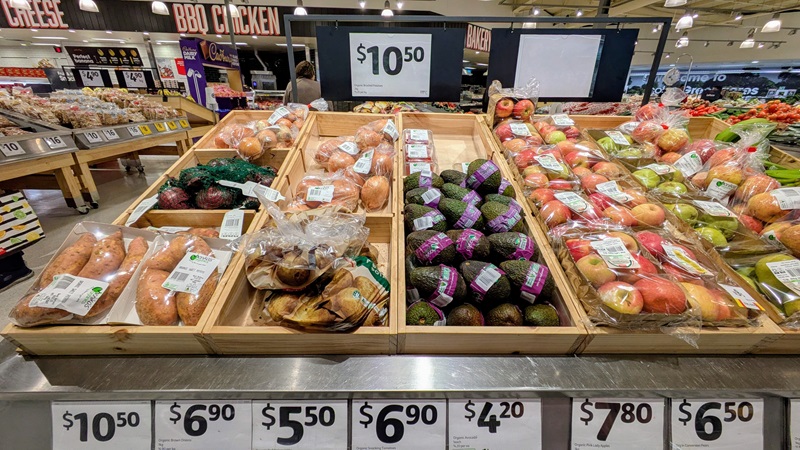
Regional Price Variations Across America
Geographic location creates substantial avocado price differentials across United States reflecting transportation economics, local production, and market competition dynamics.
Western States: Lowest Price Regions
California leads affordable avocado pricing at $0.95-1.40 per pound retail benefiting from dominant domestic production representing 93% of US-grown avocados. Local availability eliminates cross-country transportation costs creating natural price advantages.
California harvest running July through September adds domestic supply supplementing Mexican imports. San Diego and Ventura counties hosting majority production support fresh local market availability.
Texas border regions access Mexican imports efficiently with minimal transportation costs. Houston, Dallas, San Antonio, and El Paso markets price avocados $1.05-1.45 per pound reflecting proximity advantages.
Arizona and New Mexico benefit from regional positioning near California production and Mexican import routes. Phoenix and Albuquerque markets average $1.10-1.50 per pound competitive with California rates.
Nevada particularly Las Vegas demonstrates competitive pricing at $1.15-1.55 per pound despite limited local production. Proximity to California and strong retail competition create consumer benefits.
Southern States: Moderate Pricing
Florida contributes modest domestic production but tropical varieties differ from consumer-preferred Hass. Miami, Tampa, and Orlando markets price avocados $1.20-1.60 per pound reflecting distribution from Mexico and California.
Georgia, Louisiana, and Alabama markets average $1.25-1.65 per pound positioned between affordable West and expensive Northeast. Atlanta as distribution hub demonstrates competitive rates.
Southern states benefit from multiple distribution routes reducing dependence on single supply chains. However, transportation distances from Western sources add incremental costs versus border regions.
Midwest: Moderate to High Pricing
Chicago serves as major Midwest distribution hub with prices averaging $1.30-1.75 per pound. Transportation from California and Texas ports adds costs but competition among retailers moderates final pricing.
Secondary Midwest markets including Detroit, Minneapolis, St. Louis, and Kansas City price avocados $1.35-1.80 per pound. Distance from supply sources and colder climates requiring controlled transport increase delivered costs.
Smaller Midwest cities demonstrate highest regional pricing at $1.45-1.90 per pound reflecting limited retail competition and increased distribution complexity to tertiary markets.
Northeast: Premium Price Region
Northeast markets demonstrate America's highest avocado prices at $1.40-2.00 per pound reflecting maximum distance from supply sources and cold weather logistics challenges.
New York City commands $1.50-2.00 per pound despite massive market size. Transportation from California ports crossing entire continent adds 15-30% costs versus Western markets.
Boston, Philadelphia, and Washington DC price similarly at $1.45-1.95 per pound. Cold chain requirements protecting avocados during winter transport add operational costs.
Smaller Northeast cities including Hartford, Providence, and Albany reach $1.55-2.10 per pound representing highest US avocado pricing outside premium organic segments.
| Region | Retail Price Range ($/lb) | Key Markets | Price Drivers |
|---|---|---|---|
| California | $0.95 - 1.40 | LA, San Diego, San Francisco | Local production, minimal transport |
| Texas Border | $1.05 - 1.45 | Houston, Dallas, San Antonio | Mexican import proximity |
| Southwest | $1.10 - 1.55 | Phoenix, Las Vegas, Albuquerque | Regional positioning |
| Southeast | $1.20 - 1.65 | Miami, Atlanta, New Orleans | Moderate distribution distances |
| Midwest | $1.30 - 1.80 | Chicago, Detroit, Minneapolis | Cross-country transport, cold weather |
| Northeast | $1.40 - 2.00 | NYC, Boston, Philadelphia | Maximum transport, cold chain costs |
Hass Avocado Pricing and Variety Differentials
Hass avocados dominate American consumption at 95% market share commanding premiums over alternative varieties through superior flavor, texture, and transport characteristics.
Hass Avocado Market Dominance
Hass avocados retail for $1.20-1.80 per pound ($2.64-3.97 per kg) at US supermarkets depending on size, quality grade, and regional location. The distinctive pebbled black skin and rich creamy texture justify premiums supporting market leadership.
Size significantly impacts Hass pricing. Large avocados counting 36-40 per carton command premiums at $1.50-1.80 per pound attracting consumers seeking maximum flesh. Medium Hass counting 48-50 price $1.30-1.60 per pound representing mainstream preference.
Small Hass avocados counting 60-70 per carton reach $1.20-1.50 per pound offering value positioning. However, consumers increasingly favor larger fruit perceiving better value despite higher per-pound costs.
Restaurant wholesale Hass pricing averages $1.30-1.60 per pound for standard commercial grades. Food service operators prioritize consistency and reliability over absolute price minimums.
Alternative Variety Positioning
Green-skin avocados including Fuerte, Bacon, Zutano, and Pinkerton varieties capture remaining 5% market share at $0.85-1.30 per pound retail. Lower consumer demand creates discounting versus Hass despite similar production costs.
Florida avocado varieties demonstrate distinct characteristics with larger size, lower oil content, and smooth green skin. These price $0.90-1.35 per pound serving niche markets preferring milder flavor profiles.
Limited green-skin variety availability reflects consumer preference concentration on Hass. Retailers stock alternative varieties seasonally or in regions with traditional consumption patterns.
Organic Avocado Premium Segment
Organic Hass avocados command America's highest pricing at $1.80-2.46 per pound ($3.97-5.42 per kg) reflecting 30-50% premiums over conventional equivalents. Certification costs, lower yields, and premium positioning justify elevated rates.
Whole Foods, Sprouts, and Trader Joe's specialize in organic offerings capturing committed consumer bases. These retailers position organic as standard rather than premium choice normalizing higher pricing.
Conventional supermarkets increasingly stock organic options responding to consumer demand. However, premium positioning remains with organic commanding dedicated shelf space and prominent placement.
Understanding Hass avocado pricing per kilogram helps buyers compare international rates and evaluate import opportunities. Global price differentials create arbitrage possibilities for sophisticated purchasers.
Hass Avocado
Price: $1.20-1.80/lb retail
Market Share: 95%
Characteristics: Pebbled skin, rich flavor, superior transport
Green-Skin Varieties
Price: $0.85-1.30/lb retail
Market Share: 3-4%
Characteristics: Smooth skin, milder flavor, limited availability
Organic Hass
Price: $1.80-2.46/lb retail
Market Share: 5-8%
Characteristics: Certified organic, sustainability focus, premium

Seasonal Price Patterns and Import Cycles
American avocado prices follow predictable seasonal patterns driven by Mexican import timing, California harvest cycles, and demand fluctuations. Understanding these cycles enables strategic purchasing maximizing value.
Peak Import Season: Optimal Value Window
September through February represents peak import season when Mexican avocado production floods American markets. Supply abundance during this window drives prices down 20-35% below annual averages to $0.95-1.30 per pound retail for Hass varieties.
Mexican harvest peaks coinciding with this window reflect ideal growing conditions and established production infrastructure. Year-round Mexican production concentrates highest volumes in fall and winter months.
California domestic harvest July through September adds supply further pressuring prices downward during overlap period. Combined Mexican and California availability creates optimal buying conditions.
Spring Scarcity and Price Peaks
April through August periods see reduced Mexican production as growing cycles transition between seasons. Spring scarcity drives retail pricing to $1.40-2.00 per pound representing annual peaks.
Limited California production during spring months eliminates domestic supply cushion leaving markets entirely dependent on Mexican imports. Single-source dependency creates price vulnerability.
Peruvian and Colombian imports partially offset Mexican gaps but cannot match peak-season volumes. Alternative sources command premiums reflecting air freight costs and limited availability.
Holiday and Event Pricing Patterns
Super Bowl period late January through early February drives consumption spikes as guacamole features prominently in party menus. However, peak import timing prevents significant price increases despite elevated demand.
Retailers deploy promotional pricing during Super Bowl week creating temporary bargains. Loss-leader strategies attract customers accepting thin avocado margins to drive overall basket sales.
Cinco de Mayo early May occurs during spring scarcity window limiting promotional opportunities. Modest demand increases during already-elevated pricing periods create annual peaks.
Thanksgiving and Christmas holidays generate moderate consumption increases but fall within peak supply seasons preventing price spikes. Holiday promotional pricing occasionally creates value opportunities.
Strategic Purchase Timing: Maximum value emerges during September-February peak import season when abundant Mexican supply drives prices 20-35% below annual averages. California harvest overlap July-September creates secondary value window. Super Bowl promotional periods offer temporary discounts despite high demand. Avoid April-August spring scarcity when prices peak 25-40% above seasonal lows. Monitor weekly retailer circulars capturing promotional pricing regardless of season.
Supermarket Chain Price Comparison
America's diverse supermarket landscape creates substantial price variations between chains reflecting different positioning strategies, target consumers, and operational models.
Warehouse Clubs: Absolute Lowest Pricing
Costco leads affordable avocado segment at $0.85-1.10 per pound through bulk packaging typically 4-6 pound bags. Membership model and high-volume throughput enable aggressive pricing.
Sam's Club prices similarly at $0.90-1.15 per pound competing directly with Costco. Walmart ownership provides supply chain efficiencies passed to consumers.
Warehouse pricing requires bulk purchases unsuitable for small households or consumers preferring variety. However, per-pound savings of 30-40% versus traditional supermarkets justify volume purchases for many buyers.
Discount Retail Chains
Walmart leverages massive scale pricing avocados $0.95-1.35 per pound competitive with warehouse clubs without membership requirements. Purchasing power and operational efficiency create consumer value.
Aldi and Lidl German discount chains price $0.98-1.28 per pound through streamlined operations and limited selection strategies. Private label focus eliminates brand premiums.
Dollar General and Family Dollar price $1.10-1.45 per pound serving rural and underserved urban markets. Convenience offsets modest premiums versus larger competitors.
Traditional Supermarket Chains
Kroger prices avocados $1.20-1.65 per pound across its various regional banners including Fred Meyer, Smith's, and Ralph's. Quality assurance programs and ripening services justify premiums over discounters.
Safeway, Albertsons, and affiliated chains charge $1.25-1.70 per pound reflecting similar positioning. Customer service focus and presentation standards support pricing.
Publix in Southeast commands $1.30-1.75 per pound through premium service reputation. Strong regional loyalty supports elevated positioning versus national competitors.
Specialty and Premium Retailers
Whole Foods reaches $1.60-2.20 per pound emphasizing organic and sustainably-sourced product. Premium positioning attracts quality-focused consumers accepting substantial premiums.
Sprouts Farmers Market prices $1.45-1.95 per pound positioning between traditional supermarkets and Whole Foods. Produce focus and health-oriented marketing support elevated rates.
Trader Joe's demonstrates unique pricing at $1.05-1.40 per pound for conventional and $1.60-1.95 per pound for organic. Cult following accepts limited selection in exchange for value positioning.
| Retailer | Conventional ($/lb) | Organic ($/lb) | Positioning |
|---|---|---|---|
| Costco/Sam's Club | $0.85 - 1.15 | $1.40 - 1.80 | Warehouse bulk, membership required |
| Walmart | $0.95 - 1.35 | $1.50 - 1.95 | Mass market, everyday low prices |
| Aldi/Lidl | $0.98 - 1.28 | $1.55 - 1.90 | Discount, limited selection |
| Kroger/Safeway | $1.20 - 1.65 | $1.70 - 2.10 | Traditional, quality focus |
| Trader Joe's | $1.05 - 1.40 | $1.60 - 1.95 | Specialty value, cult following |
| Whole Foods | $1.60 - 2.00 | $1.95 - 2.46 | Premium organic, sustainability |

Import Dynamics and Supply Chain Economics
Understanding American avocado import patterns clarifies pricing dynamics as 80-90% of US supply originates from foreign sources primarily Mexico.
Mexican Import Dominance
Mexico supplies 80-90% of American avocado consumption creating single-source dependency affecting price stability. Michoacán state produces majority of exported fruit through ideal growing conditions and established infrastructure.
Mexican avocado exports to US exceed 2.7 billion pounds annually valued at $2.7 billion. This massive trade volume reflects American consumption patterns and Mexican production capabilities.
Import suspensions from Mexican regions due to safety or quality concerns immediately spike American prices. Even brief week-long disruptions create lasting price effects as supply-demand imbalances persist.
Alternative Source Country Contributions
Peru contributes growing volumes particularly during Mexican off-seasons April through July. Peruvian imports command premiums reflecting air freight costs but fill critical supply gaps.
Colombia demonstrates rapid growth with volumes increasing 169% recently. Colombian production targeting American market creates competition moderating Mexican pricing power.
Dominican Republic supplies modest volumes focusing on East Coast markets. Proximity advantages versus California and Mexican sources create niche opportunities.
Domestic California Production
California produces 93% of domestic American avocados but represents only 10-20% of total US consumption. Water scarcity and climate pressures constrain expansion limiting domestic supply growth.
California harvest timing July through September provides seasonal domestic availability. However, year-round consumption requires imports filling eight-month domestic production gaps.
Premium positioning of California avocados creates modest price advantages. However, consumer willingness to pay premiums for domestic origin remains limited creating pricing constraints.
Quality Grading and Size-Based Pricing
Avocado quality assessment significantly impacts American pricing as appearance, size consistency, and ripeness separate premium from discount product.
USDA Quality Standards
USDA quality grades create official classification but market pricing reflects more nuanced assessment. Export-grade avocados meeting strictest specifications command 25-40% premiums reaching $1.50-1.80 per pound retail.
Commercial grade avocados constitute market mainstream at $1.20-1.50 per pound retail. Minor cosmetic imperfections acceptable under commercial standards prove invisible to consumers in prepared applications.
Processing grade fruit with significant cosmetic issues prices $0.80-1.10 per pound wholesale serving food service and manufacturing. Identical eating quality versus higher grades creates genuine value for price-sensitive commercial buyers.
Size Classification Premium Structure
Large avocados counting 36-40 per 25-pound carton command highest prices at $1.50-1.80 per pound retail. Consumer preference for maximum flesh justifies per-pound premiums despite higher absolute costs.
Medium fruit counting 48-50 per carton prices $1.30-1.60 per pound representing mainstream. Balanced size and value proposition appeals to broad consumer base.
Small avocados counting 60-70 per carton reach $1.20-1.50 per pound offering entry-level pricing. However, consumer migration toward larger sizes pressures small fruit demand.
Ripeness and Ready-to-Eat Premiums
Ready-to-eat avocados pre-ripened to perfect eating condition command 20-30% premiums reaching $1.60-2.00 per pound retail. Convenience value targeting time-constrained consumers justifies elevated pricing.
Unripe avocados requiring home ripening dominate retail sales at standard pricing. Consumer willingness to manage ripening timing enables lower pricing but creates quality variability concerns.
Retailers increasingly invest in ripening programs ensuring consistent quality at point of sale. Controlled ripening adds costs but reduces consumer disappointment supporting category growth.
Frequently Asked Questions About Avocado Prices in USA
Strategic Avocado Purchasing in America
Navigating America's complex avocado market requires understanding pricing structures, seasonal patterns, quality determinants, and retail channel characteristics. Strategic buyers combine this knowledge with optimal timing to maximize value.
Optimal Channel Selection
Warehouse clubs deliver maximum value for consumers purchasing 4-6 pound quantities. Savings of 30-40% versus traditional supermarkets justify bulk purchases for families and food service operators.
Discount retailers balance value and convenience for mainstream consumers. Walmart, Aldi, and Lidl pricing 15-25% below traditional supermarkets creates genuine savings without bulk requirements.
Traditional supermarkets justify modest premiums through quality assurance, ripening programs, and service. Consumers valuing consistency and convenience find value despite 10-20% premium versus discounters.
Premium retailers suit quality-focused, sustainability-committed consumers. Whole Foods and Sprouts positioning justifies 40-60% premiums through organic certification and premium service.
Seasonal Timing Strategies
Peak season buying September through February delivers maximum value with 20-35% savings versus spring months. Volume buyers should concentrate purchases during abundance periods utilizing increased consumption or freezing.
California harvest overlap July-September creates secondary value window. Domestic supply supplementing Mexican imports pressures prices downward despite modest volumes.
Super Bowl promotional periods offer temporary discounts. Loss-leader pricing creates genuine bargains during high-volume sales week despite elevated demand.
Quality and Size Selection
Small Hass avocados deliver best per-unit value for price-conscious consumers. Lower per-pound costs offset slightly reduced flesh-to-pit ratios versus larger specimens.
Commercial grade product offers identical eating quality at 20-30% discounts versus export grade. Cosmetic imperfections prove invisible in prepared applications justifying savings.
Unripe avocados enable lower pricing versus ready-to-eat premiums. Consumer willingness to manage home ripening eliminates 20-30% convenience charges.
America's Dynamic Avocado Pricing Landscape
United States avocado market demonstrates robust consumption growth positioning as world's largest import market. Understanding current pricing dynamics enables stakeholders to succeed in this evolving landscape.
Retail prices ranging $0.95-2.46 per pound ($2.09-5.41 per kg) across American markets reflect legitimate value addition through import services, distribution, retail operations, and quality assurance. Wholesale foundation at $0.66-1.72 per pound supports diverse retail positioning strategies.
Hass avocados dominating 95% market share command premiums at $1.20-1.80 per pound retail over alternative varieties at $0.85-1.30 per pound. Consumer preference concentration creates clear market segmentation supporting premium positioning.
Regional variations see California and Texas offering lowest prices at $0.95-1.40 per pound versus Northeast peaks at $1.40-2.00 per pound. Transportation economics create geographic arbitrage opportunities for flexible consumers.
Seasonal timing proves crucial with September-February abundance delivering 20-35% savings versus April-August scarcity. Strategic buyers concentrate purchases during peak import periods maximizing value capture.
Retailer diversity spanning warehouse clubs at $0.85-1.10 per pound through premium organic outlets at $1.60-2.20 per pound accommodates varied consumer preferences and budgets. Channel selection directly impacts purchase economics.
Mexican imports providing 80-90% of supply create dependency on cross-border trade and seasonal production patterns. Import dynamics fundamentally drive American pricing structures.
Organic segment capturing 5-8% market share at 30-50% premiums reflects sustainability commitment among quality-focused consumers. Certification costs and limited supply support elevated positioning.
Quality grading and size classification create 30-50% price differentials within Hass category. Large export-grade fruit commands maximum rates while small commercial-grade enables value positioning.
Growth trajectories remain robust with per-capita consumption doubling over past decade reaching nine pounds annually. American avocado market continues expansion trajectory with substantial future potential.
Whether sourcing for restaurants, retail operations, food service businesses, or home consumption, understanding American avocado market dynamics delivers tangible benefits. Strategic buyers combining channel selection, seasonal timing, variety choice, and quality assessment maximize value while maintaining desired product characteristics in world's largest and most sophisticated avocado consumer market.