
Mushroom Farming in Kenya: Varieties, Real Profit Analysis & County-by-County Breakdown
Kenya needs 1,200 tonnes of mushrooms annually but produces only 500 — a 700-tonne deficit worth over KES 350 million. Here's the honest breakdown of who's actually making money, and how.
- Kenya's 700-Tonne Mushroom Deficit: The Commercial Case
- Best Mushroom Varieties for Kenya
- County-by-County Growing Conditions
- Kenya-Specific Substrate Options
- The Honest Profit Analysis: Which Scale Actually Works?
- Step-by-Step Farm Setup in Kenya
- Market Channels and Selling in Kenya
- Certification: KEBS, HCDA, and Supermarket Requirements
- Kenya's Mushroom Export Opportunity
- Frequently Asked Questions
- Kenya produces 500T annually vs 1,200T demand — 700T deficit = major opportunity
- 50-bag setup barely breaks even; 200–300 bags is the commercial viability threshold
- Retail (KES 400–600/kg) vs wholesale (KES 200–300/kg) — channel choice doubles margins
- Nairobi, Kiambu, and Murang'a are Kenya's prime mushroom farming counties
- Coffee grounds and tea waste: near-free premium substrates in Central Kenya
- 100+ tonnes exported in 2023 — EU and Middle East markets are actively buying
Kenya's 700-Tonne Mushroom Deficit: Understanding the Commercial Case
The single most important fact in Kenya's mushroom farming landscape is also the most consistently underexplained: Kenya produces approximately 500 tonnes of mushrooms annually, but domestic demand reaches 1,200 tonnes. The 700-tonne shortfall is filled through costly imports — and at an average retail price of KES 500/kg, that import dependency represents over KES 350 million in annual foreign exchange leaving Kenya for a product that could, and should, be grown domestically.
This demand gap is not theoretical. It is documented by the National Farmers Information Service survey and consistently referenced by industry analysts across Kenya's agricultural sector. It means that every kilogram of quality mushroom a Kenyan farmer can produce and bring to market has a ready buyer. It means that the challenge in Kenya's mushroom sector is emphatically not finding customers — it is producing enough, consistently enough, to satisfy the buyers who are already looking.
Mushroom farming in Kenya has attracted intense interest over the past decade, with the number of smallholder and urban farmers entering the sector growing alongside a thriving training industry. Kenya currently supports over 10,000 small-scale mushroom farmers. Yet production has not kept pace with demand growth — because most new farmers enter at scales too small to achieve commercial profitability, and many exit before reaching the production volume and market relationships that make the business viable. Understanding this dynamic is the foundation of any honest assessment of mushroom farming in Kenya.
Best Mushroom Varieties for Kenya's Market and Climate
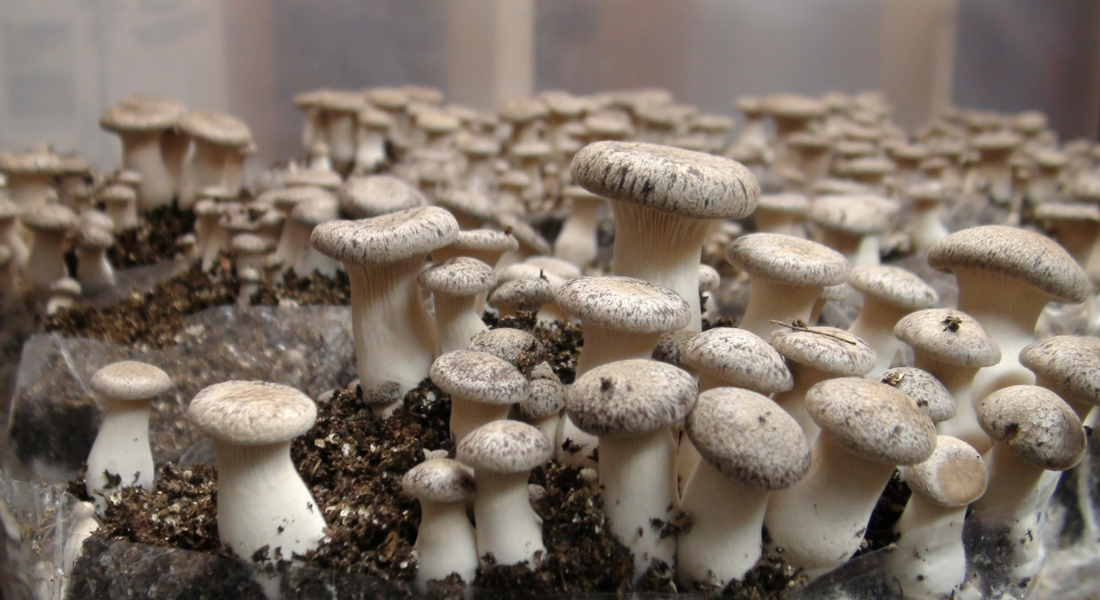
Kenya's commercial mushroom sector is dominated by two varieties, with a third gaining traction among experienced farmers targeting premium markets. Each occupies a distinct position in Kenya's agricultural and commercial landscape — understanding their differences is essential before committing any capital.
Oyster Mushroom
Fastest growing (4–6 weeks). Widest substrate tolerance. Most forgiving of imperfect conditions. Multiple harvest flushes. Preferred entry point for new Kenya farmers. Strong local market demand.
Button Mushroom
Dominant in Kenya's supermarkets. Requires composted substrate and strict temp control (16–20°C). Longer shelf life — supermarket friendly. Higher per-kg price. Zucchini sold at ~KES 1,000/kg at peak.
Shiitake
Grows on hardwood sawdust or logs. 4–6 week colonisation. Rich umami flavour — high-end restaurant demand. Growing export interest. Currently underproduced in Kenya relative to potential.
Reishi / Medicinal
Kenya exported KES 6.5 billion in medicinal mushrooms in 2016. Growing nutraceutical demand. Dried for supplement production. Requires longer cultivation cycle. Premium export market positioning.
The variety recommendation debate: Most Kenya mushroom trainers recommend starting with oyster mushrooms, and that advice is correct for technical ease and speed to market. However, the retail price differential matters enormously for profitability. Oyster mushrooms wholesale at KES 200–300/kg while button mushrooms wholesale at KES 350–500/kg. At scale, the 60–80% premium on button mushrooms — combined with their longer shelf life — significantly changes the business case for farmers who have mastered production consistency and can meet the stricter environmental requirements.
County-by-County Growing Conditions: Where to Farm in Kenya
Kenya's climate diversity means that mushroom farming economics differ significantly by location. The county you farm in affects your natural temperature range, available substrate materials, proximity to buyers, and competition from other producers.
| County / Region | Temp Range | Best Varieties | Key Substrate Advantage | Market Access |
|---|---|---|---|---|
| Nairobi | 15–24°C | Oyster + Button | None — buy substrate; biggest market | Excellent — all channels |
| Kiambu | 14–22°C | Oyster + Button + Shiitake | Coffee husks/grounds from coffee co-ops | Excellent — Nairobi proximity |
| Murang'a | 15–23°C | Oyster + Shiitake | Coffee waste, tea waste, banana fibre | Good — Nairobi 70–90km |
| Nakuru | 14–24°C | Oyster + Button | Wheat straw from Rift Valley farms | Good — Rift Valley belt |
| Nyeri | 12–20°C | All varieties including Shiitake | Coffee husks, sawdust from timber | Moderate — 150km from Nairobi |
| Mombasa | 25–33°C | Tropical Oyster only | Sawdust, coconut coir | Good — coastal tourist sector |
| Kisumu / Western | 20–28°C | Oyster + warm-season varieties | Sugar cane bagasse, maize stalks | Developing market — limited buyers |
| Kericho / Nandi | 14–22°C | Oyster + Shiitake | Tea waste from tea factories | Moderate — speciality opportunity |
Kiambu and Murang'a stand out as Kenya's most commercially advantaged mushroom farming counties for three converging reasons: natural temperatures that suit oyster, button, and shiitake cultivation without significant climate control costs; abundant coffee processing waste (husks, spent grounds) available near-free from the region's dense coffee cooperative network; and proximity to Nairobi — Kenya's dominant consumer market — that reduces logistics costs and enables daily fresh deliveries to hotels, supermarkets, and direct buyers.
Kenya-Specific Substrate Options: Your Hidden Cost Advantage
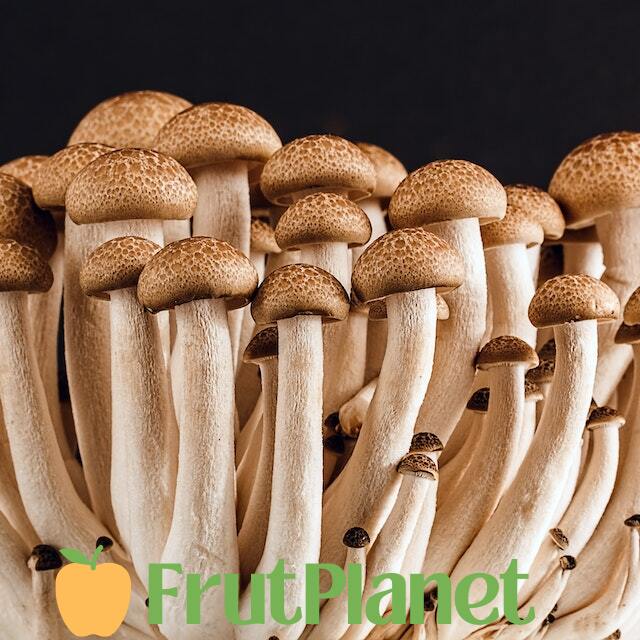
Kenya's rich agricultural diversity creates substrate material advantages that most other African countries cannot match. The choice of substrate is one of the most important cost decisions a Kenyan mushroom farmer makes — and getting it right can reduce substrate costs by 70–90% compared to purchasing commercial materials.
| Substrate | Best For | Kenya Source | Cost | County Advantage |
|---|---|---|---|---|
| Coffee Husks/Grounds | Oyster, Shiitake | Coffee co-ops (wet mill waste) | Near-free — collection cost only | Kiambu, Murang'a, Nyeri, Embu |
| Wheat Straw | Oyster mushroom | Rift Valley commercial farms | KES 5–15/kg | Nakuru, Trans Nzoia, Uasin Gishu |
| Tea Waste / Spent Tea | Oyster, Shiitake | Tea factory effluent | Near-free from factories | Kericho, Nandi, Murang'a |
| Maize Cobs / Stalks | Oyster mushroom | Nationwide — subsistence farms | KES 5–20/kg | All counties |
| Sawdust (Hardwood) | Shiitake, King Oyster | Timber yards, sawmills | KES 5–10/kg | Nairobi, Thika, Eldoret |
| Sugar Cane Bagasse | Oyster mushroom | Sugar factories (Mumias, Chemelil) | Near-free from factories | Kakamega, Busia, Kisumu |
| Composted Poultry Manure | Button mushroom | Poultry farms — Kiambu, Nakuru | KES 15–30/kg composted | Kiambu, Limuru, Nakuru |
Coffee waste deserves particular emphasis as Kenya's most exceptional mushroom substrate advantage. Kenya processes enormous volumes of coffee through wet milling operations, generating coffee husks and spent coffee grounds at each cooperative washing station. These materials are produced as waste — they have no established commercial use and must be disposed of by the cooperative. A Kiambu or Murang'a mushroom farmer who establishes a relationship with a local coffee cooperative can access tonnes of this premium nutrient-rich substrate annually at zero cost beyond transport. A 1 kg bag of coffee grounds produces comparable oyster mushroom yields to wheat straw — and the caffeine and natural antifungal compounds in coffee actually suppress competing moulds, reducing contamination rates in coffee-ground substrate setups.
The Honest Profit Analysis: Which Scale Actually Makes Money?
The single most misleading aspect of Kenya's mushroom farming training ecosystem is the scale at which profitability is claimed. Most trainers present a 50-bag beginner setup as a commercially viable starting point. The mathematics tell a different story — and understanding the real numbers is critical before investing a single shilling.
❌ 50-Bag Setup — The True Economics (Kenya Oyster Mushroom)
✅ 300-Bag Setup — Where the Business Becomes Real
The break-even reality: At wholesale-only pricing (KES 200–300/kg), the critical scale for commercial viability in Kenya is approximately 200–300 bags minimum. At direct retail pricing to hotels, restaurants, and supermarkets (KES 400–600/kg), the break-even point drops to approximately 100–150 bags. The lesson is clear: market channel matters as much as production scale. Farmers who go straight to wholesale at 50 bags will always struggle. Farmers who build direct relationships with institutional buyers and sell at retail prices can be viable at smaller scales.
Step-by-Step Farm Setup in Kenya
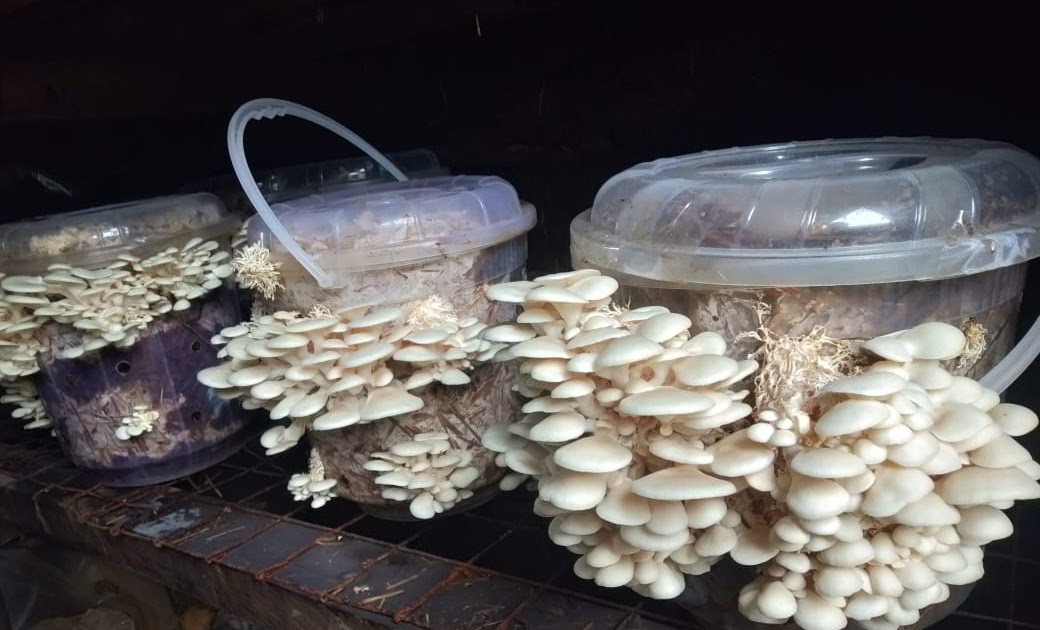
The technical process for mushroom farming in Kenya follows the same universal principles as any other market, adapted to local material availability and climate conditions. Here is the Kenya-specific setup pathway.
Step 1 — Secure a growing space. An enclosed room with good drainage and no direct sunlight is the baseline requirement. The room should allow temperature control (shade cloth, insulation), humidity management (spray misting or drip systems), and basic ventilation (window with mesh, or a small fan). A standard 3m×4m room accommodates 200–300 growing bags on vertical shelves or hanging systems.
Step 2 — Source and prepare substrate. For Kiambu and Murang'a farmers, approach coffee cooperatives for spent grounds or husks — many will provide free access if you collect yourself. For other counties, wheat straw at KES 10–15/kg from grain traders or tea waste from local factories works well. Pasteurise using the hot water drum method (70–80°C for 1–2 hours) or cold lime treatment (soaking in hydrated lime solution pH 12+, 12–18 hours).
Step 3 — Inoculate with quality spawn. Source fresh spawn (under 4 weeks old) from a reputable supplier. Richfarm Kenya in Nakuru is one of Kenya's most established operations. Work in the cleanest environment available, mix spawn at 15–20% of substrate weight, pack into polythene bags, and seal with breathable cotton plugs or filter patches.
Step 4 — Incubation and spawn run. Store inoculated bags in a dark, warm space (22–28°C) for 14–21 days until the substrate is fully colonised with white mycelium. Daily inspection for contamination (green, black, pink patches) is essential — remove any contaminated bags immediately to prevent spread.
Step 5 — Trigger fruiting and harvest. Move colonised bags to the fruiting room. Cut slits or open bag tops. Maintain humidity at 85–95% by misting 2–3 times daily. Introduce fresh air exchange (high CO₂ creates elongated stems without caps). Harvest when caps begin to flatten — twist off entire clusters. Rest bags 7–10 days between flushes. Expect 3–5 flushes per bag over 6–8 weeks.
The one step most Kenya farmers skip: Market research before production. Visiting at least 10 potential buyers — hotels, supermarkets, restaurant chefs — and understanding their requirements (packaging format, delivery schedule, minimum order, payment terms) before a single bag is inoculated is the single most impactful thing a new Kenya mushroom farmer can do. Farmers who start by securing committed buyers and then scaling production to meet those commitments consistently outperform farmers who produce first and look for buyers afterward. The demand is there — but buyers have specific requirements, and aligning your production to those requirements before investing ensures your mushrooms have a confirmed home.
Market Channels and Selling Mushrooms in Kenya
Certification: KEBS, HCDA, and Supermarket Supply Requirements
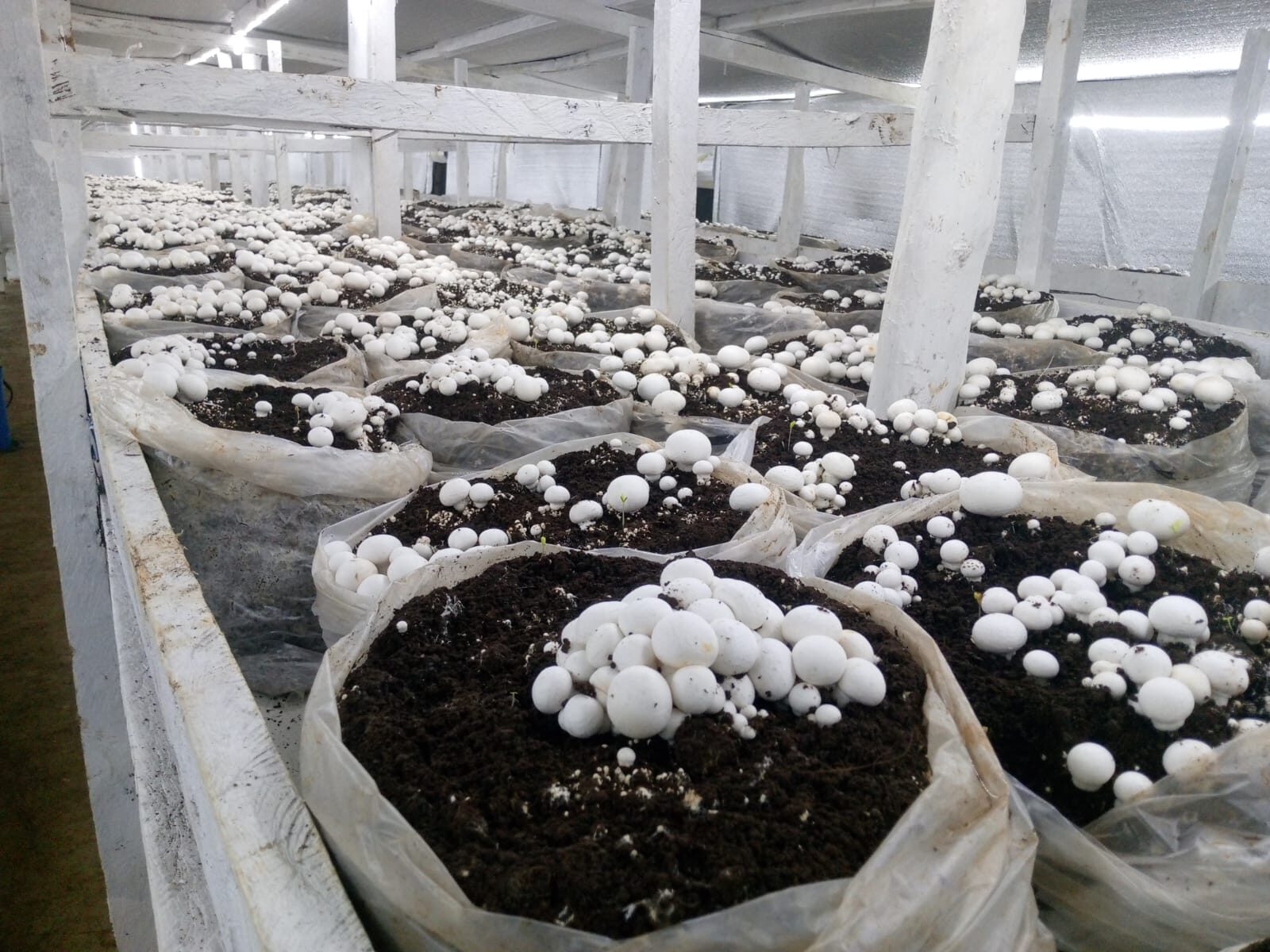
One of the most critical and consistently underexplained aspects of scaling mushroom farming in Kenya is the certification pathway. To supply supermarkets, hotels, or export markets — the channels that command the highest prices — farmers must meet specific regulatory and quality standards that casual producers overlook.
KEBS (Kenya Bureau of Standards) certification is required for mushroom producers supplying supermarket chains and processing operations. KEBS inspects production facilities, assesses hygiene standards, and certifies that product meets Kenya Standard KS 1875:2010 for cultivated mushrooms. The application process involves a facility inspection, product testing, and payment of a registration fee. KEBS certification is both a legal requirement for formal retail supply and a quality signal that supermarket buyers and export customers require before establishing supply relationships.
HCDA (Horticultural Crops Directorate Authority) registration is required for any farmer seeking to export mushrooms from Kenya. HCDA issues export permits, oversees phytosanitary compliance (working with KEPHIS), and maintains the registry of Kenyan horticultural exporters. Registering with HCDA is a straightforward but essential step for any farmer targeting the EU, Middle East, or other export markets. Many Kenya mushroom farmers who produce export-quality product never access export pricing because they have not taken this administrative step.
GlobalG.A.P. for premium buyers: Major Nairobi supermarket chains and all EU-destined export buyers are increasingly requiring GlobalG.A.P. or equivalent Good Agricultural Practice (GAP) certification from their fresh produce suppliers. GlobalG.A.P. certification involves farm-level documentation of pesticide use (none, in mushroom farming — an advantage), water quality, worker welfare, and traceability systems. The certification cost is significant for individual smallholders (KES 30,000–80,000+ for first year) but becomes viable through group certification schemes where multiple farmers certify together, sharing audit and administrative costs. Farmer group certification through a recognised group certification body is the most practical path for small-scale Kenya mushroom farmers seeking premium market access.
Kenya's Mushroom Export Opportunity: EU, Middle East, and East Africa
Kenya exported over 100 tonnes of mushrooms in 2023, demonstrating that the country's production capabilities can meet international quality standards — and command the premium pricing that export markets provide. The export opportunity is particularly significant for certain product formats and market corridors.
Dried mushrooms and mushroom powder are the most commercially accessible export formats for Kenya's small and medium-scale producers. Fresh mushroom export requires extremely time-compressed logistics (air freight within 24–48 hours of harvest), controlled-atmosphere packaging, and precise cold chain management — capabilities that require significant infrastructure investment. Dried mushrooms and powder, by contrast, can be packaged, labeled, and shipped by standard air cargo with shelf life measured in months rather than days. A 10 kg fresh mushroom yield, when dried to 1 kg of dried mushroom powder or slices, becomes a shelf-stable, high-margin export product accessible to health food distributors, restaurant supply companies, and specialty food importers in the EU, Gulf States, and regional East African markets.
EU market access requires both EU-compliant Maximum Residue Level (MRL) pesticide certification — which is straightforward for mushrooms since they use no pesticides in production — and EUDR (EU Deforestation Regulation) documentation confirming sustainable production. Mushrooms, grown on agricultural waste substrate rather than deforested land, are well-positioned for EUDR compliance. Kenyan exporters must work with an EU-registered importing company as their market access partner, since direct consumer-to-consumer cross-border sales are practically complex.
Middle East markets — particularly UAE, Qatar, and Saudi Arabia — have growing Kenyan diaspora communities and hotel and restaurant sectors with demand for East African fresh produce. Kenya's existing fresh produce export infrastructure (Jomo Kenyatta International Airport's JKIA Fresh Produce Centre) provides established logistics for fresh mushroom shipments to Gulf markets at competitive airfreight rates.