
Macadamia Nuts Wholesale Price: Insider Secrets to Unlock Best Bulk Rates
Discover the strategies commercial buyers use to slash wholesale costs by 40-60% while securing premium quality kernels for their operations
Imagine slashing your macadamia procurement costs by half. Thousands of commercial buyers achieve exactly this by mastering wholesale pricing dynamics. The difference between paying retail markups and securing true wholesale rates often determines whether your business remains competitive.
Most buyers overpay simply because they don't understand how wholesale pricing actually works. They accept the first quote. They order insufficient volumes. They miss seasonal opportunities. Meanwhile, savvy competitors lock in rates that seem impossibly low.
This knowledge gap costs businesses thousands annually. But the gap closes quickly once you understand the system. Wholesale macadamia pricing follows predictable patterns. Master these patterns and you control your costs.
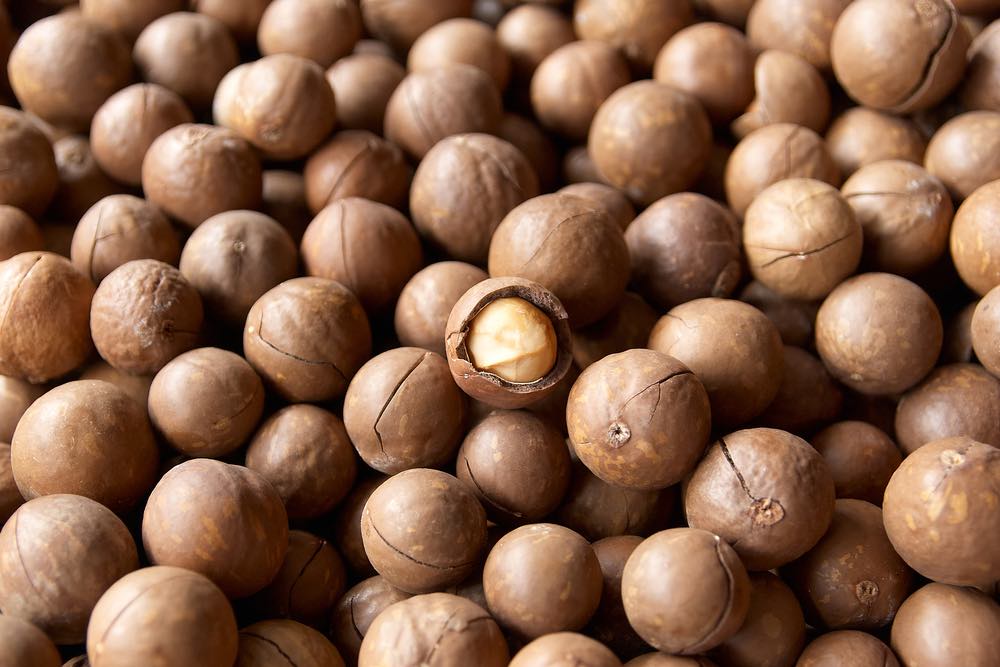
The Real Numbers: Current Wholesale Price Landscape
Wholesale macadamia pricing exists in tiers. Each tier unlocks at specific volume thresholds. Understanding these tiers transforms your buying power.
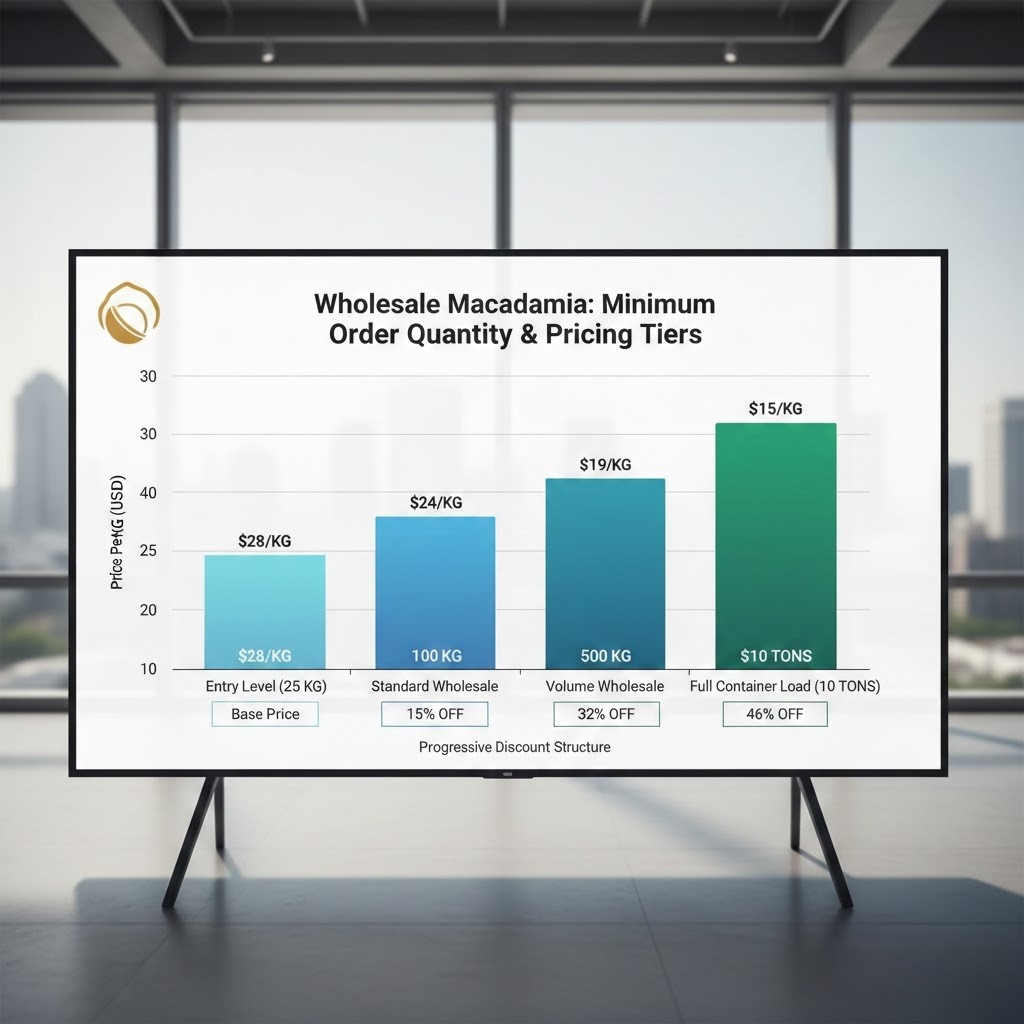
| Volume Tier | Order Size | Style 0 Price | Style 1 Price | Broken Pieces |
|---|---|---|---|---|
| Entry Wholesale | 25-50 kg | $24-26/kg | $21-23/kg | $14-16/kg |
| Standard Wholesale | 100-250 kg | $20-24/kg | $18-21/kg | $12-15/kg |
| Volume Wholesale | 500-1000 kg | $17-21/kg | $15-19/kg | $10-13/kg |
| Distributor Pricing | 3-5 tons | $16-19/kg | $14-17/kg | $9-12/kg |
| Direct Import | 10+ tons | $14-18/kg | $12-16/kg | $8-11/kg |
Notice the dramatic price drops between tiers. Moving from entry wholesale to volume wholesale saves $4-7 per kilogram. On a 500kg order, that's $2,000-3,500 in savings.
These aren't theoretical numbers. They reflect current global wholesale markets. Actual rates vary by supplier, season, and negotiation skill.
Quality Grade Impact on Wholesale Rates
Style designation dramatically affects wholesale pricing. Many buyers don't realize Style 1 performs identically to Style 0 for most applications.
🏆 Style 0 Premium
$14-26/kg
Characteristics: Flawless whole kernels, 20mm+, perfect color
Best For: Retail packaging, gift sets, premium snacking
⭐ Style 1 Standard
$12-23/kg
Characteristics: Whole kernels, 17-20mm, minor surface marks
Best For: Commercial baking, most food manufacturing
💰 Broken & Pieces
$8-16/kg
Characteristics: Halves, quarters, pieces, consistent flavor
Best For: Nut butter, granola, toppings, bakery fillings
Cracking the MOQ Code
Minimum Order Quantities determine who accesses which pricing tiers. Most suppliers structure MOQs in clear steps.
The Entry Barrier: Most wholesalers set 25kg minimums. This filters out retail consumers while remaining accessible to small businesses. At this level, expect prices only 10-15% below retail.
The Sweet Spot: Real wholesale pricing begins at 100-250kg orders. This volume signals serious commercial intent. Suppliers offer substantially better rates because order processing costs remain constant whether selling 25kg or 200kg.
The Volume Advantage: Orders exceeding 500kg unlock distributor-level pricing. At this threshold, you're ordering enough to justify direct attention from processors and exporters.
💡 Insider MOQ Hack
- Start Small, Scale Fast: Place an initial 25-50kg order to verify quality. Once satisfied, immediately jump to 200-500kg for your next order. The dramatic price drop offsets initial testing costs.
- Group Buying Power: Small businesses can pool orders. Five cafes ordering 100kg each negotiate as a single 500kg buyer. Everyone accesses volume pricing.
- Mixed Container Strategy: Don't limit yourself to single grades. Fill containers with 60% Style 1, 30% broken pieces, 10% organic. You hit volume thresholds while diversifying inventory.
- Negotiate First Order MOQs: Many suppliers reduce MOQs for first orders. Ask for 50kg minimums on initial purchases to test quality before committing to 200kg+ orders.
Container Economics Explained
Container shipping represents the ultimate wholesale volume threshold. Understanding container economics separates amateur buyers from professionals.
A standard 20-foot container holds 10-12 tons of packaged macadamias. At volume wholesale rates of $17/kg, that's $170,000-204,000 per container. Seems massive. But break it down differently.
If you use 200kg monthly, a container provides 50-60 months of inventory. For many operations, that's excessive. But consider shared containers. Three businesses splitting a container each get 3-4 tons at direct import pricing.
📊 Real-World Container Scenario
The Setup: Three bakeries each use 150kg macadamias monthly. Currently each pays $22/kg buying 150kg orders ($3,300 monthly, $39,600 annually each).
The Solution: They combine orders for a single container (12 tons split three ways = 4 tons each). At $15/kg container pricing, each pays $60,000 for 27 months of supply.
The Savings: Each bakery saves approximately $29,700 over the container's usage period. That's a 33% cost reduction achieved through strategic volume consolidation.
Timing the Market: Seasonal Wholesale Opportunities
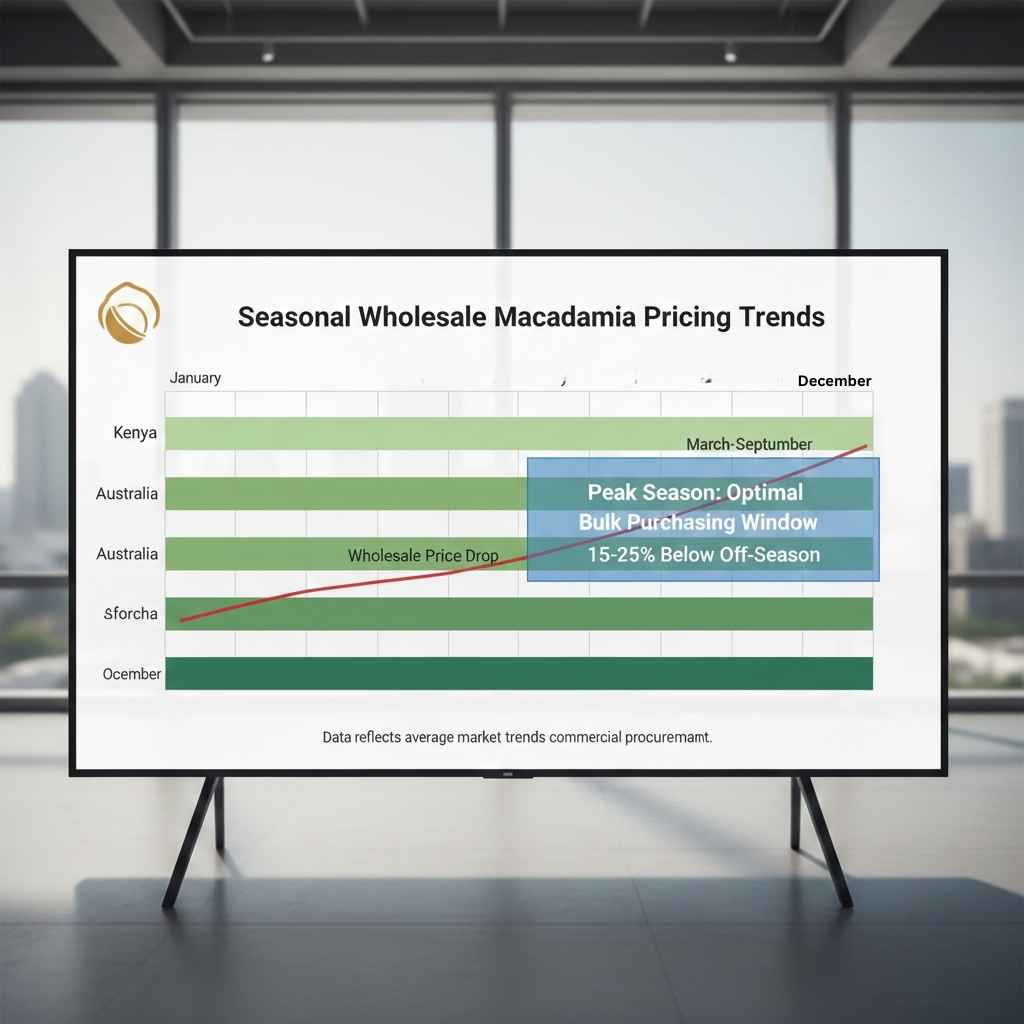
Wholesale macadamia pricing follows predictable seasonal patterns. Smart buyers exploit these patterns ruthlessly.
Global macadamia production concentrates in three main regions. Each has distinct harvest periods. This creates rolling supply waves throughout the year.
The Harvest Calendar
Kenya (March-September): East African harvest begins March and peaks May-July. Kenyan suppliers offer aggressive pricing during this period to move fresh crop. Expect 15-20% discounts from peak prices.
Australia (February-July): Southern hemisphere harvest overlaps Kenya's. Australian premium kernels flood markets March-June. This dual supply period creates yearly price bottoms.
South Africa (April-August): The world's largest producer harvests mid-year. South African volume dominates global markets during this window. Wholesale prices typically reach annual lows May-June.
Off-Season Reality (October-February): Global fresh supply tightens. Wholesalers draw from cold storage. Prices climb 15-25% above harvest pricing. This isn't price gouging—it reflects storage costs and reduced availability.
🗓️ Strategic Buying Calendar
January-February: Avoid unless urgent. Highest annual pricing. Pre-harvest scarcity.
March-April: New crop arrivals begin. Prices start dropping. Good buying window opens.
May-June: Optimal purchasing period. Multiple origin harvests overlap. Lowest wholesale rates.
July-September: Still favorable. African crops finishing. Maintain low pricing.
October-December: Prices climbing. Buy only immediate needs. Wait for new crop if possible.
Direct Sourcing vs Distribution Channels
The path you choose to source macadamias dramatically impacts wholesale pricing. Each channel offers distinct advantages and drawbacks.
Distribution Channel Economics
Domestic distributors simplify procurement. They import containers, warehouse inventory, and sell smaller quantities. This convenience costs money.
Distributors typically add 20-30% markups over direct import costs. A container landed at $15/kg wholesales through distributors at $18-20/kg. That markup pays for warehousing, logistics, credit terms, and smaller order fulfillment.
For businesses ordering less than one ton annually, distributors make financial sense. The price premium proves cheaper than managing direct imports.
Direct Exporter Advantages
Sourcing directly from origin exporters slashes costs but increases complexity. You handle international shipping, customs clearance, documentation, and quality verification.
Direct sourcing only justifies the complexity at substantial volumes. Break-even typically occurs around 5 tons annually. Below this, distributor markups cost less than direct import management.
| Channel | MOQ | Typical Price | Best For | Key Advantage |
|---|---|---|---|---|
| Local Distributor | 25-100 kg | $20-26/kg | Small operations | Fast delivery, low MOQ, credit terms |
| Regional Wholesaler | 250-500 kg | $17-23/kg | Medium businesses | Better pricing, reasonable MOQs |
| Direct Importer | 1000+ kg | $15-20/kg | Large operations | Significant savings, control |
| Origin Exporter | 5-10 tons | $14-18/kg | Very high volume | Lowest possible costs |
Master Negotiation Tactics
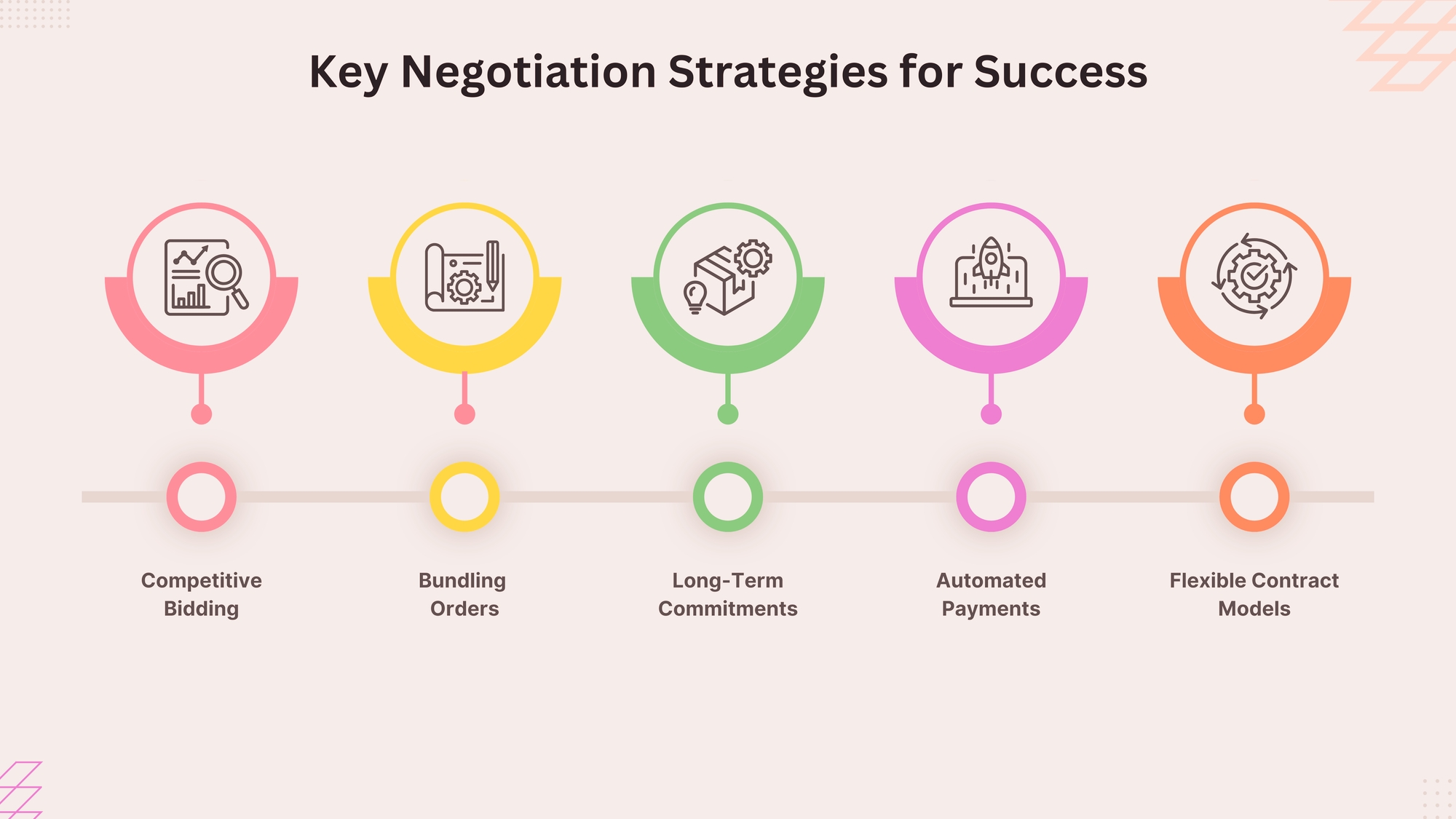
Negotiating better wholesale rates isn't about aggressive bargaining. It's about structuring deals that benefit both parties.
The Volume Commitment Strategy
Annual volume commitments unlock pricing unavailable through spot orders. Suppliers value predictable demand. They'll discount substantially for commitment.
Structure commitments as quarterly minimums rather than single deliveries. "We'll purchase 2 tons annually, delivered quarterly in 500kg orders" works better than "We'll buy 2 tons now."
Quarterly delivery spreads cash flow, maintains fresh inventory, and still secures volume pricing. Suppliers appreciate defined schedules that aid production planning.
🎯 Negotiation Framework
Step 1: Gather Competitive Quotes
Request detailed quotes from 3-5 suppliers. Specify exact volumes, grades, delivery terms. Use these quotes as negotiation leverage.
Step 2: Define Your Commitment
Calculate annual usage. Offer 70-80% of annual volume as committed orders. Reserve 20-30% flexibility for spot purchases.
Step 3: Structure Payment Terms
Offer faster payment for discounts. Net-30 is standard. Net-15 might unlock 2-3% savings. Upfront payment could yield 5-7% discounts.
Step 4: Negotiate Flexibility
Request grade substitution rights. If Style 1 shortages occur, substitute Style 2 at proportional pricing. This flexibility benefits both parties.
Step 5: Lock Annual Pricing
Fix pricing for 12 months regardless of market fluctuations. Suppliers accept this risk for guaranteed volume. You gain budget certainty.
Flexible Delivery Scheduling
Delivery flexibility creates unexpected negotiation leverage. Suppliers juggle complex logistics. Orders fitting their schedule cost them less.
Offer delivery windows rather than fixed dates. "Deliver within April 15-30" beats "deliver April 20." That flexibility might earn 3-5% discounts.
Accepting pre-harvest commitments captures lowest pricing. Place orders 60-90 days pre-harvest. Suppliers lock your order into production planning, yielding 10-15% savings.
Certification Impacts on Wholesale Pricing
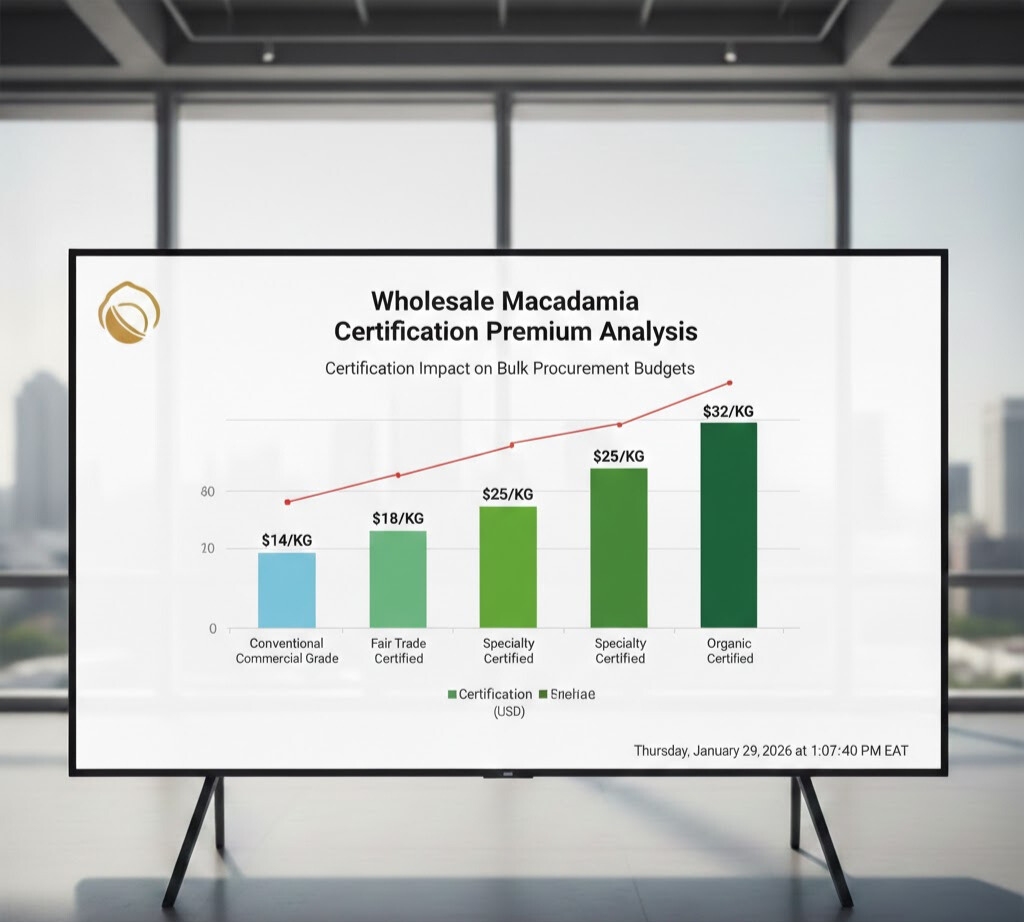
Certifications add premiums to wholesale costs. Understanding these premiums helps decide when certified products justify their expense.
Organic Certification: Adds $4-8/kg to wholesale pricing. Organic macadamias wholesale at $22-32/kg versus $14-24/kg conventional. This premium reflects certification costs, yield reductions, and market positioning.
Fair Trade Certification: Adds $2-4/kg. Fair Trade ensures farmer minimum prices and community development programs. The premium directly supports these initiatives.
Non-GMO Verification: Adds $1-2/kg. Macadamias are inherently non-GMO, making this certification largely marketing-focused. The premium covers verification and labeling rights.
Kosher/Halal Certification: Adds $0.50-1/kg. These certifications require facility inspections and process verification but minimal production changes.
Certification ROI Analysis
Certified products often command retail premiums exceeding wholesale costs. Organic macadamias wholesale at 40% premiums but retail at 60-80% premiums.
This margin difference creates profit opportunities. Buyers targeting premium market segments find certification premiums economically justified.
💰 Certification Economics Example
Conventional Route: Buy at $18/kg wholesale, sell at $35/kg retail = $17/kg margin
Organic Route: Buy at $26/kg wholesale, sell at $52/kg retail = $26/kg margin
Result: Organic certification's $8/kg wholesale premium yields $9/kg additional retail margin. The certification pays for itself while expanding profit.
Payment Terms Engineering
How you structure payment dramatically affects wholesale pricing. Strategic payment terms create win-win scenarios.
Standard wholesale terms are Net-30 (payment due 30 days after delivery). This industry default reflects balanced risk between buyer and supplier.
Accelerating payment unlocks discounts. Net-15 terms might earn 2-3% reductions. Upfront payment could yield 5-8% discounts. For a $20,000 order, that's $1,000-1,600 savings.
Large operations negotiate Net-60 or Net-90 terms without penalties. This requires established relationships and strong credit. The extended terms improve cash flow management.
Letter of Credit vs Wire Transfer
International purchases involve payment security mechanisms. Each carries costs affecting overall pricing.
Letters of Credit: Banks guarantee payment upon proof of shipment. LCs protect both parties but cost 1-2% of order value. They're standard for new supplier relationships.
Wire Transfers: Direct bank transfers prove cheaper (typically $25-50 flat fee). They suit established supplier relationships where trust exists.
Escrow Services: Third parties hold payment until quality verification. Escrow fees run 2-3% but provide excellent protection for first-time large orders.
💡 Payment Strategy Progression
- First Order: Use Letter of Credit despite 1-2% cost. The security justifies the expense when testing new suppliers.
- Orders 2-3: Request Net-15 terms with wire transfer. Offer faster payment for 2-3% discount.
- Established Relationship: Negotiate Net-30 as standard. Request Net-45 for large orders without penalties.
- Long-Term Partnership: Structure annual agreements with quarterly deliveries. Lock pricing and terms for 12 months.
Building Strategic Supplier Partnerships
Transactional relationships limit your wholesale potential. Strategic partnerships unlock advantages beyond pricing.
Suppliers prioritize reliable customers. During shortages, they allocate inventory to partners first. Spot buyers scramble for scraps at premium prices.
Partnership benefits compound over time. Year one might save 10% through volume commitments. Year two adds 5% through relationship pricing. Year three includes priority allocation during tight markets.
Relationship Development Framework
First 6 Months: Establish reliability. Pay invoices promptly. Provide advance notice on order changes. Communicate clearly about requirements.
Months 6-12: Increase commitment. Move from spot orders to quarterly purchases. Share forecast information. Request account manager assignment.
Year 2: Propose annual contracts. Commit to volume minimums. Negotiate multi-year pricing frameworks. Request involvement in harvest planning.
Year 3+: Become strategic partner. Participate in quality improvement discussions. Provide market feedback. Collaborate on new product development.
🤝 Partnership Value Checklist
✓ Priority Allocation: First access to inventory during shortages
✓ Custom Processing: Special sizing, roasting profiles, packaging
✓ Extended Payment Terms: Net-45 or Net-60 without penalties
✓ Price Protection: Fixed annual pricing regardless of market spikes
✓ Quality Guarantees: Advanced notification of quality issues with solutions
✓ Logistics Flexibility: Adjusted delivery schedules without surcharges
✓ Market Intelligence: Early warnings about supply conditions and pricing trends
Frequently Asked Questions
Your Wholesale Action Plan
Knowledge without action changes nothing. Transform these insights into cost savings through systematic implementation.
Immediate Actions (This Week): Calculate your current cost per kilogram including all fees. Request quotes from three new suppliers. Identify your annual volume needs.
Short-Term Actions (This Month): Place test orders with top two suppliers. Evaluate quality, delivery, and communication. Calculate break-even volumes for container sharing.
Medium-Term Actions (This Quarter): Negotiate quarterly delivery contracts. Lock pricing for 12 months. Establish payment terms matching your cash flow.
Long-Term Strategy (This Year): Build strategic supplier partnership. Implement seasonal buying calendar. Develop container consolidation network if applicable.
Ready to Unlock Wholesale Pricing?
Access premium Kenyan macadamia nuts with transparent wholesale rates, flexible MOQs, and strategic sourcing support
Start Saving Today →Wholesale macadamia pricing rewards informed buyers. The strategies outlined here work regardless of business size. A cafe ordering 200kg quarterly applies the same principles as a manufacturer ordering containers.
Start where you are. Calculate your current costs. Identify one improvement area. Implement it. Measure results. Then tackle the next opportunity.
Your competitors aren't waiting. Every month you delay implementing these strategies costs money. Begin today. Your future profitability depends on it.