
Avocado Price in Norway: Oslo Retail Rates, Wholesale Costs & Import Breakdown
Norway's avocado import value hit $65 million in 2023 — and is growing at 8% annually. Retail in Oslo and Bergen runs NOK 41–52/kg. Here's the full picture from Rema 1000 to bulk import pricing.
- Norway's Avocado Market: Scale & Growth
- Avocado Prices in NOK: What You Pay at Retail
- Norwegian Supermarket Price Comparison
- Wholesale & Import Prices in Norway
- Price by Channel: Import to Consumer
- Norway's EEA Status & Avocado Import Rules
- Where Norway's Avocados Come From
- Key Players in Norway's Avocado Supply Chain
- Seasonal Price Patterns
- Frequently Asked Questions
- Oslo/Bergen retail: NOK 41–52/kg (~$3.91–$4.88 USD/kg)
- Wholesale range 2025: $2.64–$3.38/kg
- Import prices: $1.33/kg (2023) → $1.78–$2.23/kg (2024) — rising trend
- Import value: $65M (2023) growing at 8% CAGR through 2029
- Uganda confirmed as direct import origin (November 2024 transaction)
- Rema 1000 and Kiwi are Norway's most price-competitive avocado retailers
Norway's Avocado Market: Scale, Growth, and Competitive Position
Norway is a small country by population — approximately 5.5 million people — but it punches significantly above its weight in avocado import value. With $65 million in avocado imports in 2023, representing a 6% year-on-year increase, Norway commands more avocado import spend per capita than most larger European nations. An 8% compound annual growth rate projected through 2029 puts Norway among the fastest-growing avocado markets in Northern Europe.
The sharpest growth period in Norway's avocado import history came between 2012 and 2013, when import value surged from approximately $26 million to $36 million — a near-40% single-year jump that established avocados as a mainstream rather than specialist product in Norwegian food culture. Since then, growth has been more gradual but consistent, driven by expanding consumer health consciousness, the Nordic dietary shift toward plant-rich eating, and the normalisation of avocado as a weekly household purchase rather than an occasional premium treat.
What distinguishes Norway from its Scandinavian neighbours in terms of avocado pricing is its non-EU status. Norway is a member of the European Economic Area (EEA) but not the European Union itself — a distinction that creates specific customs and regulatory dynamics for avocado imports that differ from neighbouring Sweden and Denmark, and which contributes to Norway's price positioning at the premium end of the Scandinavian avocado market.
Avocado Prices in NOK: What You Pay at Retail
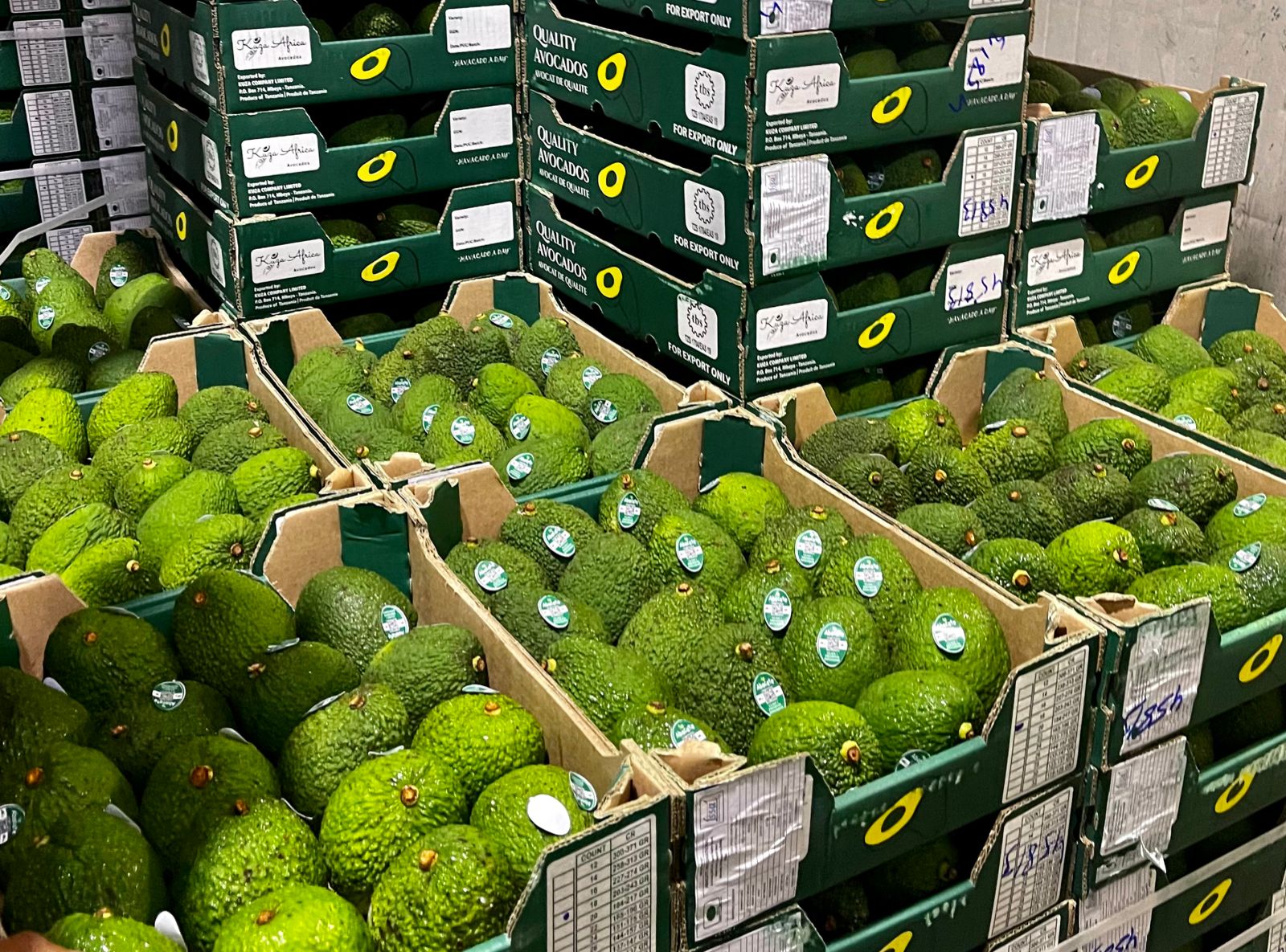
Norwegian retail avocado pricing is denominated in Norwegian Krone (NOK) — a currency that, like the Swedish Krona, has experienced periods of weakness against the euro that make all imported produce more expensive in local currency terms. The retail range of NOK 41.37–52.91 per kilogram in Oslo and Bergen translates to approximately $3.91–$4.88 USD/kg — placing Norway roughly in the middle of the European price spectrum, above France and Germany but below the premium tier of Sweden's retail market.
In practical unit terms, a single regular Hass avocado in Norway costs between NOK 8 and NOK 18 at mainstream supermarkets, with Rema 1000 and Kiwi promotional pricing regularly bringing single avocados to NOK 8–10 during peak supply periods. At Meny (premium positioning) and specialty food stores in Oslo, single avocados can cost NOK 15–22 each. Organic avocados at specialty health food retailers (Helios, Sunkost) push the upper bound further — sometimes exceeding NOK 30 for a single premium organic unit.
The wholesale price data adds important context. The 2025 wholesale range of $2.64–$3.38/kg contrasts with a historical wholesale low of NOK 37/kg ($3.61/kg at historic rates) in the recent past — reflecting that Norway's wholesale pricing environment, while elevated versus Western European equivalents, has seen more volatility than some mature markets. Import prices of $1.33/kg in 2023 rising to $1.78–$2.23/kg in 2024 reflect the underlying cost trend that Norwegian importers must manage against relatively sticky retail prices.
Understanding NOK's role in Norwegian avocado pricing: The Norwegian krone is one of Europe's more volatile currencies when measured against the euro. A 10% NOK depreciation against EUR translates directly to a 10% increase in the NOK-equivalent cost of all imported produce, including avocados sourced via Dutch or Spanish distribution channels priced in EUR. Norwegian importers absorb some of this currency volatility rather than passing it all through to retail — but periods of sharp NOK weakness (as seen in 2022–2023) compress importer margins and eventually lead to retail price adjustments. Monitoring the NOK/EUR rate is a commercially important habit for any operator managing Norwegian avocado costs.
Norwegian Supermarket Avocado Price Comparison

Norway's grocery retail market is dominated by two large groups — NorgesGruppen (which operates Meny, Kiwi, Joker, and Spar Norway) and Rema (which operates Rema 1000) — with Coop Norge as a significant third player. These groups collectively command over 80% of Norwegian grocery sales and determine the pricing environment for all fresh produce including avocados.
Rema 1000's market position in Norwegian avocado retail is comparable to Biedronka in Poland or Mercadona in Spain — a price leader whose promotional activity sets the floor for the entire market. Rema 1000's centralised buying model, developed through long-term partnerships with selected supplier categories, allows it to achieve avocado procurement at competitive volume pricing and pass savings to Norwegian consumers with a thin margin structure. When Rema 1000 runs avocados at NOK 8–9 each, it creates genuine value pressure on Kiwi, Coop, and Meny to respond.
Meny occupies the premium end of Norwegian mass-market grocery retail — positioned as NorgesGruppen's quality-focused format with strong fresh produce departments, extensive organic ranges, and ready-to-eat (RTE) food offerings. In Oslo's premium residential neighbourhoods (Frogner, Majorstuen, Tjuvholmen), Meny stores stock a wider variety of avocados than discount chains — including organic Hass, Fuerte, and ready-to-eat packaged options — at prices that reflect both quality differentiation and premium retail real estate costs. For avocado exporters seeking access to Norwegian premium retail, Meny is the commercial gateway that rewards consistent quality over pure price competitiveness.
Wholesale and Import Avocado Prices in Norway
Norway's wholesale avocado price structure sits at $2.64–$3.38 per kilogram in 2025 — a range that places it above Western European commodity pricing but below Sweden's elevated wholesale ceiling. The historical wholesale low of NOK 37/kg ($3.61/kg at older exchange rates) sets the reference floor for what Norwegian buyers have paid during oversupply periods.
| Price Level | NOK/kg (approx) | USD/kg | Period | Notes |
|---|---|---|---|---|
| Import price low (2023) | ~NOK 14/kg | $1.33/kg | Full year 2023 | Tridge transaction data |
| Import price 2024 | NOK 18–23/kg | $1.78–$2.23/kg | Full year 2024 | Rising YoY — Tridge confirmed |
| Wholesale low (NOK-era) | NOK 37/kg | ~$3.61/kg | Historical recent low | Freshela reference data |
| Wholesale range (2025) | NOK 27–35/kg | $2.64–$3.38/kg | Full year 2025 | Market price reference |
| Retail range (Oslo/Bergen) | NOK 41–52/kg | $3.91–$4.88/kg | Current market | Freshela & market data |
| Retail high (NOK reference) | NOK 40–50/kg | $3.91–$4.88/kg | Current market | Import avg per Freshela: NOK 40–50 |
The gap between Norway's 2024 import price ($1.78–$2.23/kg) and wholesale price ($2.64–$3.38/kg) is substantial — reflecting the Norwegian supply chain's specific cost structure. Norwegian avocados typically arrive via Rotterdam, are distributed north through Germany, Denmark, and Sweden, and eventually reach Norwegian distributors via road freight or short-sea shipping to Oslo's Alnabru logistics hub or Bergen's port. Each stage adds logistics cost that is not present for Belgian, Dutch, or German buyers accessing the Rotterdam market directly.
Norway's import pricing versus its retail pricing — the margin picture: With a 2024 import price of $1.78–$2.23/kg and a retail range of $3.91–$4.88/kg, the effective retail-to-import multiple in Norway is approximately 2–2.5×. This is higher than equivalent multiples in France (~1.7×) or Germany (~1.8×), reflecting the cumulative effect of Norway's longer supply chain, higher labour costs, 15% food VAT, and the NOK/EUR exchange rate premium. For Norwegian importers, this wider margin theoretically provides more buffer — but it also means Norwegian consumers are more sensitive to import cost increases, since there is less margin compression room available before retail prices must move.
Avocado Price by Channel in Norway
Norway's EEA Status and Avocado Import Rules

Norway's trade status is one of its most commercially distinctive features for avocado importers. Norway participates in the European Economic Area (EEA) but is not a member of the European Union. This creates a specific regulatory environment for fresh produce imports that differs meaningfully from EU member state dynamics.
For most fresh produce including avocados, Norway adopts EU-equivalent food safety and phytosanitary standards — meaning the quality and pesticide compliance requirements are essentially the same as importing into Germany or France. The Norwegian Food Safety Authority (Mattilsynet) enforces MRL (Maximum Residue Level) pesticide testing and UNECE FFV-42 avocado marketing standards. Exporters with EU-compliant certification (GlobalG.A.P., KEPHIS phytosanitary documentation) typically face no additional compliance burden at the Norwegian border beyond the standard documentation.
Where Norway's non-EU status creates real commercial complexity is in customs duties and tariff treatment. Norway is not part of the EU Customs Union, meaning it applies its own customs tariff schedule rather than the EU Common Customs Tariff. The practical impact depends on origin: avocados from countries with EU Free Trade Agreements may not automatically benefit from the same preferential tariff rates in Norway that they enjoy in EU member states, unless Norway has concluded its own bilateral agreement with the relevant producing country. This can add a modest tariff cost layer for some origins that doesn't apply to EU-destined shipments.
The EEA agricultural carve-out matters: The EEA Agreement does not fully cover agricultural trade. Agri-food products including fresh fruit face more complex trade terms between Norway and EU/EEA partners than manufactured goods. This means that some of the tariff preferences that EU member states enjoy for avocados from preferential trade partners — such as Peru (EU-Peru FTA) and Kenya (EU-Kenya EPA) — may not automatically apply at the Norwegian border. Norwegian importers need to verify origin-specific tariff treatment under Norway's bilateral agreements rather than assuming EU FTA preferences transfer automatically. The Norwegian Customs Tariff (TARIC-equivalent) should be the primary reference for current applicable duty rates on avocado imports to Norway.
Where Norway's Avocados Come From
Norway's avocado import origins follow the broadly Northern European pattern — primarily routed through the Dutch redistribution system — but with direct import transactions confirmed from East African origins.
| Origin | Route to Norway | Season | Import Price Tier | Market Role |
|---|---|---|---|---|
| Peru | Via Netherlands → Norway | Jun–Sep | $1.80–$2.80/kg FOB | Dominant summer supply origin |
| Spain | Road freight via Denmark/Sweden | Nov–Apr | $2.80–$3.40/kg | Winter freshness — proximity advantage |
| South Africa | Via Netherlands | Apr–Aug | $2.30–$3.20/kg | Counter-seasonal supplement |
| Kenya | Air/sea direct & via Netherlands | Feb–Jun | $2.00–$3.00/kg | Spring quality supply — growing presence |
| Uganda | Direct import confirmed | Nov 2024 | Competitive | Confirmed Nov 2024 transaction |
| Colombia / Morocco | Via Netherlands & Spain | Variable | $2.00–$3.00/kg | Gap-filler between main seasons |
The November 2024 Uganda-to-Norway direct import transaction is a commercially significant data point. Uganda is a growing East African avocado exporter, and the existence of a direct Uganda-Norway trade relationship — bypassing the Dutch redistribution hub — indicates Norwegian importers are actively exploring diversified sourcing options. Uganda's Hass avocados from the Mount Elgon high-altitude growing regions carry quality credentials that appeal to premium Nordic buyers, and the direct sourcing model eliminates the Dutch hub's additional margin layer.
Kenya's role in Norwegian supply is both established and growing. Kenya remains Africa's largest avocado exporter, and its February–June export window from Central Kenya directly serves the Nordic supply transition period — the months when Spanish winter supply is ending and Peruvian summer supply has not yet reached full volume. Norwegian importers seeking quality spring supply from an East African origin with full EU compliance documentation find Kenya an attractive alternative to Dutch-routed product at this time of year.
FrutPlanet's Kenya advantage for Norwegian importers: FrutPlanet sources GlobalG.A.P.-certified Kenyan Hass avocados from the high-altitude counties of Murang'a, Kirinyaga, Meru, and Embu with full KEPHIS phytosanitary documentation — meeting the Norwegian Food Safety Authority's import compliance requirements. Our February–June East African export season fills Norway's spring supply gap at competitive FOB pricing. For Norwegian importers evaluating supply diversification beyond the Dutch hub, direct Kenya sourcing during this window can improve both cost and quality outcomes. Contact our export team for current availability and Norwegian import pricing.
Key Players in Norway's Avocado Supply Chain

Several internationally significant avocado businesses have established Norwegian market presence, recognising Norway's premium pricing environment and consistent 8% growth trajectory as commercially attractive despite the country's relatively small population.
Westfalia Fruit is among the most significant avocado supply companies operating in Norway. The South African-origin company, which has expanded into a global avocado business with operations across producing and consuming countries, supplies Norwegian buyers through its European distribution network. Westfalia's operations in Belgium and the Netherlands give it direct access to Norwegian distributors, and its South African and African growing operations position it well for the spring counter-seasonal window when Norwegian buyers are most actively seeking non-Peruvian supply.
Mission Produce, the US-headquartered avocado specialist that recently completed its acquisition of Calavo Growers in a $430 million deal, maintains a Norwegian distribution presence through its European operations. Mission Produce's scale and global sourcing network — covering Mexico, Peru, Colombia, and growing East African operations — means it can supply Norwegian buyers across multiple origin seasons from a single commercial relationship. Its focus on freshness and quality aligns with Norwegian premium retail requirements.
Capespan, the fresh produce specialist with extensive South African agricultural and European distribution operations, is also active in the Norwegian market. Capespan's strength in South African avocado supply makes it particularly relevant during the April–August counter-seasonal window when South African Hass avocados provide Norwegian buyers with an alternative to Peruvian supply.
Norwegian distributor consolidation: Norway's grocery retail consolidation — with NorgesGruppen and Rema together holding over 70% of grocery market share — creates a highly concentrated buying environment for avocado importers and distributors. Unlike Germany or France, where multiple competing large retailers maintain separate supply relationships with different importers, Norway's market concentration means that securing a supply agreement with NorgesGruppen or Rema's central buying teams effectively controls a majority of Norwegian avocado retail volume. This concentration gives large importers with the scale and reliability to service these buying teams a structural advantage over smaller suppliers who cannot commit to the volume and consistency these groups require.
Seasonal Avocado Price Patterns in Norway
📅 Norway Avocado Price Seasonality — Monthly Overview
Norway's avocado import calendar concentrates peak volumes in June through August from Southern Hemisphere countries, following the same supply logic that drives Swedish and Danish seasonal patterns — Peru's export season, routed through Rotterdam, reaches Norwegian buyers during this summer window. This is when Norwegian wholesale prices are most competitive and Rema 1000 and Kiwi promotional activity on avocados is most intense.
The October through January period is Norway's most challenging supply window. Peruvian season volumes have decreased; Spanish domestic season is ramping up but not at full volume; Israel supply — which has historically bridged October–February — has faced recent geopolitical disruption. Norwegian buyers at the end of a long European distribution chain feel supply tightening more acutely than Dutch or German buyers who are closer to the Rotterdam distribution hub and can access available product more quickly.
The confirmed November 2024 Uganda-to-Norway direct import is partially explained by this seasonal context. November is precisely when Norwegian importers are most motivated to seek alternative supply sources — Peruvian summer supply is ending, Spanish autumn is not yet at full volume, and the Dutch redistribution chain is most constrained. A direct East African import during this window represents a commercially rational response to Norwegian supply seasonality rather than an opportunistic experiment.
Strategic sourcing windows for Norwegian buyers: For commercial buyers in Norway — food service distributors, restaurant groups, importers — the highest-value procurement strategy combines two approaches: locking in supply contracts during the June–August peak season when Peruvian supply is abundant and pricing competitive; and building direct East African sourcing relationships for the February–June spring window when Kenyan and Ugandan supply can fill the transition gap at competitive pricing. Together these two approaches provide year-round supply coverage with better per-kg pricing than relying exclusively on Dutch-routed commodity supply across all 12 months.