Retail (Warsaw/Kraków)
PLN 14.99–16.99/kg
~$3.37–$3.82 USD/kg
Wholesale avg
PLN 13–14/kg
$2.50–$2.83/kg range (2025)
Import value (2023)
$122 million
+42% year-on-year growth
Oct 2025 transaction price
$2.93/kg
Poland vs Spain $4.30 & NL $4.01
Key Takeaways
- Warsaw/Kraków retail: PLN 14.99–16.99/kg (~$3.37–$3.82/kg)
- Wholesale import avg: PLN 13–14/kg ($2.50–$2.83/kg, 2025)
- October 2025 Poland transaction price: $2.93/kg — below Spain and Netherlands
- Import value hit $122M in 2023 — up 42% YoY — fastest growth in Europe
- Biedronka and Lidl are Poland's most price-competitive avocado retailers
- Poland re-exports to Ukraine (dominant), Belarus, Lithuania — Eastern hub role
Poland's Avocado Market: A Growth Story Unlike Any Other in Europe
Poland's avocado market transformation over the past decade is one of the most dramatic consumption stories in European fresh produce. In 2012, Poland imported approximately $6 million worth of avocados. By 2023, that figure had reached $122 million — a 20-fold increase in just over a decade, with a 42% surge in the final year alone. No major European economy has seen avocado import value grow at anything close to this rate.
What happened? The answer is a convergence of rising Polish disposable incomes, rapidly growing health consciousness among Polish millennials, social media-driven food trends, and the expansion of both domestic discount retail infrastructure (Biedronka, Lidl) and premium fresh produce options that made avocados accessible across income groups. Poland went from a country where avocados were a specialist import to one where they are stocked at every Biedronka — the country's largest supermarket chain with over 3,000 stores nationwide — within the span of a single decade.
The result is that Poland is now one of Europe's most commercially interesting avocado markets. It is large enough to attract direct sourcing interest from major exporters, growing fast enough to sustain above-market price levels compared to more established European markets like Germany or France, and geographically positioned well enough to serve as a redistribution point for even faster-growing Eastern European markets including Ukraine, Belarus, and the Baltic states.
$122MPoland avocado import value (2023)
+42%Year-on-year import value growth (2023)
$2.93/kgPoland transaction price (Oct 2025)
3,000+Biedronka stores — Poland's dominant retailer
Retail Avocado Prices in Poland Per Kg
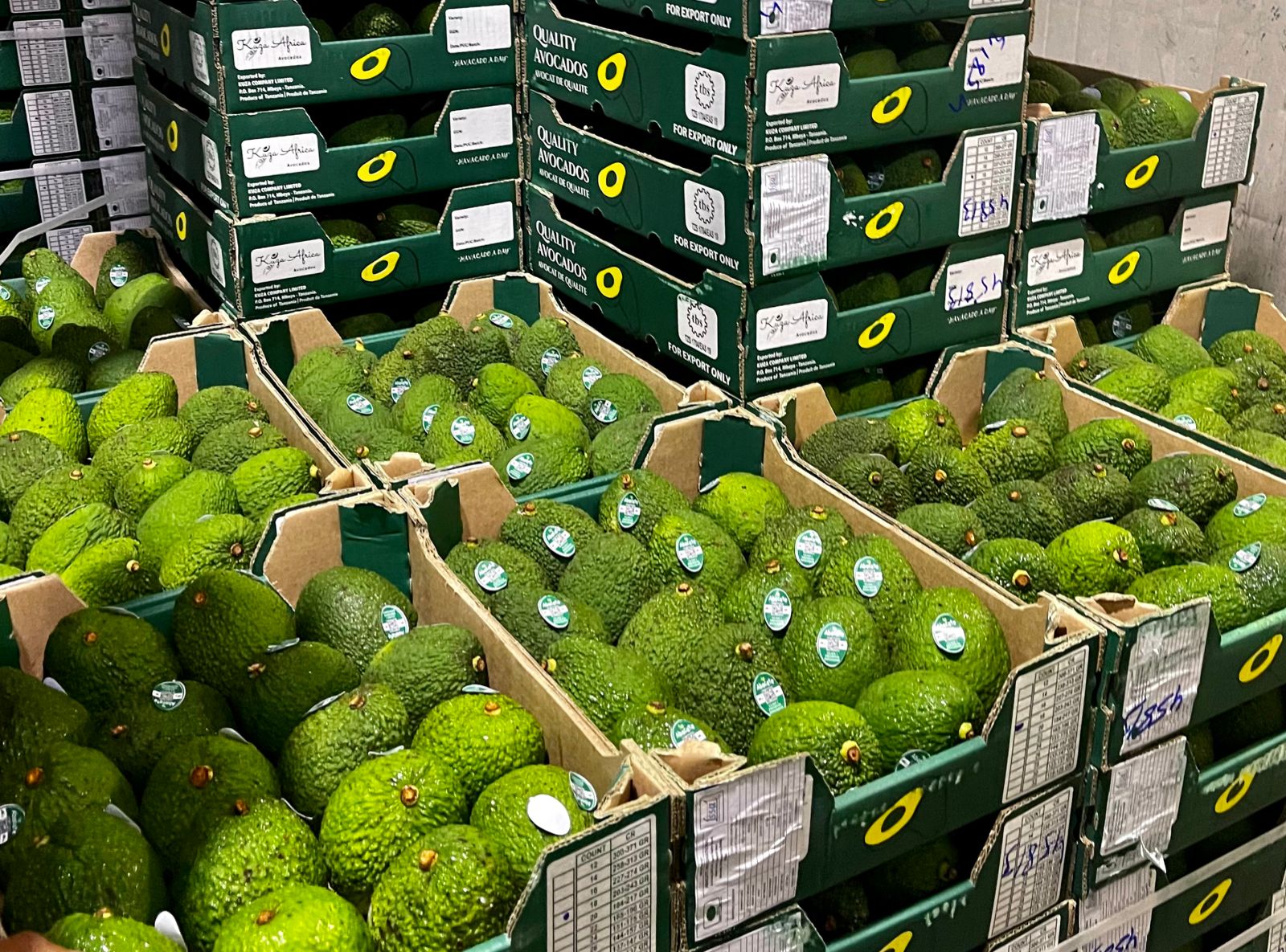
Polish retail avocado pricing is characterised by two features: a tight concentration around a specific PLN price band, and meaningful variation between the discount and premium ends of the market. Understanding both dimensions is essential for any commercial buyer or consumer navigating the Polish avocado market.
The primary retail price band in Warsaw and Kraków sits at PLN 14.99–16.99 per kilogram, based on market price data. In USD terms at current exchange rates, this translates to approximately $3.37–$3.82 per kilogram. This places Poland at a lower retail price point than the Netherlands (EUR 4.29–6.91/kg), France (EUR 3.50–5.00/kg), or Spain (EUR 3.19–5.02/kg), reflecting both Poland's status as a lower-income market relative to Western Europe and the PLN/EUR exchange rate dynamic that affects how imported EUR-priced product translates to Polish consumer pricing.
A single regular-sized Hass avocado in Poland typically costs between PLN 2.99 and PLN 5.99 depending on retailer, size, and season. At Biedronka's promotional pricing — which appears regularly in the chain's weekly catalogue — avocados can be found for PLN 2.49–2.99 each. At premium supermarkets and organic delis in Warsaw's higher-income districts, prices can reach PLN 7.00+ per unit for large organic avocados.
Poland's pricing position vs Western Europe: Poland's avocado retail prices are 25–35% lower in euro-equivalent terms than equivalent Western European markets. This discount reflects the PLN/EUR exchange rate (approximately 4.25 PLN = 1 EUR), lower Polish retail infrastructure costs, and consumer price sensitivity in a market where average wages remain below Western European levels. As Polish incomes continue converging with EU averages, this price discount is expected to narrow — which means avocado prices in PLN terms are likely to rise faster than Western European equivalents in the medium term.
Understanding PLN vs EUR Pricing: Why Currency Matters for Buyers
Poland uses the Polish Złoty (PLN), not the Euro — a distinction that is commercially important for both domestic buyers and international suppliers seeking to understand the Polish avocado market. All Polish retail pricing is denominated in PLN, while international wholesale and import prices are typically quoted in EUR or USD. The exchange rate between PLN and EUR therefore directly affects the competitiveness of imported avocados in Poland and the margin available to Polish importers and distributors.
At the October 2025 transaction price of $2.93/kg recorded for Poland, the avocado market was pricing at a discount to Spain ($4.30/kg) and the Netherlands ($4.01/kg) but at a slight premium to Peru ($2.02/kg) and Colombia ($1.66/kg) at source. This PLN-denominated market's effective USD wholesale of $2.50–$2.83/kg (2025 range) sits below the Western European average, consistent with Poland's position as an emerging rather than a mature European avocado market.
For Polish importers sourcing avocados from EUR-denominated Western European distribution channels (primarily the Netherlands), PLN weakness versus EUR directly inflates the landed cost of product before any Polish distribution margin is applied. This dynamic has been a factor in Poland's retail prices holding relatively stable in PLN terms even as supply costs in EUR have fluctuated. When the PLN weakens, Polish importers absorb some of the margin pressure rather than passing all of it through to retail — a pattern that can temporarily tighten importer profitability during PLN depreciation periods.
Polish Supermarket Avocado Price Comparison

Poland's supermarket landscape ranges from the powerful domestic discount leader Biedronka through Western European chains with Polish operations to premium specialty retailers in major cities. Each sits at a different point in the avocado pricing spectrum.
🛒
Biedronka
PLN 2.49–3.99 each
Poland's #1 retailer — best promo pricing
🛒
Lidl Poland
PLN 2.99–4.49 each
Hard discount — frequent promotions
🛒
Carrefour Poland
PLN 3.99–5.99 each
Mid-market hypermarket
🛒
Auchan Poland
PLN 3.49–5.49 each
Mid-market — broad range
🛒
Żabka / Freshmarket
PLN 4.49–6.99 each
Convenience premium — high footfall
🌿
Piotr i Paweł / Alma
PLN 5.99–9.99 each
Premium — organic & specialty
Biedronka's market position in Polish avocado retail is comparable to Lidl's in Germany or Mercadona's in Spain — a discount leader whose pricing strategy sets the reference point for the rest of the market. Owned by Jeronimo Martins (Portugal), Biedronka has invested heavily in fresh produce category development over the past decade, and avocados have become a regular promotional feature in its weekly catalogues. When Biedronka runs avocados at PLN 2.49–2.99 each, it drives significant consumer trial and volume purchasing — and it pulls competing chains toward more competitive pricing in the same category.
At the other end, Warsaw's premium food retail sector — anchored by stores like Piotr i Paweł, Alma (in its market), and specialist organic delis in Śródmieście and Mokotów districts — serves the city's professional and expatriate population with organic, ready-to-eat, and premium-origin avocados at significantly higher price points. This premium segment is small by volume but commercially significant because it commands margins that make it viable for specialist importers to develop direct supply relationships with quality-focused exporters, including Kenyan Hass producers.
Wholesale and Import Avocado Prices in Poland
Poland's wholesale avocado price structure reflects its position as an Eastern European market supplied primarily through the Dutch redistribution chain rather than through direct container-load imports from producing countries.
| Price Level | PLN/kg | USD/kg equiv. | EUR/kg equiv. | Notes |
|---|
| Import wholesale low | PLN 11 | $2.47/kg | €2.59/kg | Historical low — 2022 oversupply period |
| Import wholesale avg | PLN 13–14 | $2.92–$3.14/kg | €2.71–€2.91/kg | Standard wholesale reference |
| 2025 wholesale range | PLN 11.2–12.6 | $2.50–$2.83/kg | €2.33–€2.63/kg | Full-year 2025 wholesale spread |
| Oct 2025 transaction | ~PLN 13.1 | $2.93/kg | €2.72/kg | Poland vs Spain $4.30 & NL $4.01 |
| Retail (Warsaw/Kraków) | PLN 14.99–16.99 | $3.37–$3.82/kg | €3.12–€3.55/kg | Mainstream supermarket retail range |
The October 2025 transaction price of $2.93/kg for Poland sits in a revealing context. At the same point, Spain was trading at $4.30/kg and the Netherlands at $4.01/kg. This means Polish buyers are accessing avocados at a 28–32% discount to Western European equivalent pricing — a reflection partly of the PLN exchange rate and partly of the lower-priced product grades that flow into Eastern European markets versus the premium sizing and quality standards required by French, Dutch, and Spanish retailers. Polish importers typically source Hass avocados at Class II grade or smaller-sized Class I, which clears at lower prices than the large-sized premium fruit dominating Western European retail.
Dutch transit surcharge — Poland's supply chain reality: Most avocados reaching Poland travel via the Netherlands — imported into Rotterdam, ripened in Dutch facilities, and then distributed by refrigerated truck to Polish distribution centres. This Dutch transit adds logistics cost (approximately €0.15–0.30/kg in road freight) to the effective price Polish importers pay versus buying at Rotterdam dockside. Some larger Polish importers are exploring direct container sourcing from Peru or Kenya to bypass this Dutch surcharge, but the volumes required to justify direct container economics remain above what most Polish buyers can currently commit to in a single order.
Avocado Price by Channel in Poland
🥑 Poland Avocado Price Per Kg by Channel (PLN equivalent)
Import (via Netherlands)
PLN 11 avg
Polish wholesale
PLN 12.5 avg
Discount (Biedronka/Lidl)
PLN 15 avg
Supermarket (Carrefour)
PLN 18 avg
Convenience (Żabka)
PLN 24 avg
Organic/premium deli
PLN 33 avg
The convenience channel's premium in Poland is particularly striking. Żabka — Poland's dominant convenience store chain with over 9,000 small-format urban locations — serves primarily busy Warsaw, Kraków, and Wrocław consumers who prioritise proximity over price. Avocados at Żabka command a 40–80% premium over Biedronka equivalent pricing, reflecting the convenience real estate premium, smaller order sizes increasing per-unit cost, and the willingness-to-pay of urban professional shoppers who pick up produce en route home.
Where Poland's Avocados Come From

Unlike Western European markets that have well-documented direct relationships with producing country exporters, Poland's avocado supply chain operates primarily through transit — most imports arrive via the Netherlands, which functions as the European redistribution hub for product from all producing regions.
| Origin Country | Transit Route | Peak Season | Price Tier | Polish Market Role |
|---|
| Peru | Via Netherlands/Rotterdam | Jun–Sep | €1.80–€2.80/kg FOB | Volume leader — dominant Polish supply |
| Spain | Direct road freight | Nov–Apr | €2.80–€3.40/kg | Winter freshness supply — road transit |
| South Africa | Via Netherlands | Apr–Aug | €2.30–€3.20/kg | Counter-seasonal supplement |
| Kenya | Direct air/sea & via NL | Feb–Jun | €2.20–€3.00/kg | Growing — M&K Organic direct imports |
| Colombia | Via Netherlands | Year-round | €2.00–€2.80/kg | Growing supplement to Peru |
| Morocco / Israel | Direct & via Spain | Oct–Feb | €2.20–€3.50/kg | Winter bridge supply |
Kenya's position in the Polish market is particularly noteworthy. M&K Organic — a company specifically registered in Poland — is documented as importing fresh Hass and Fuerte avocados directly from Kenya to Europe, demonstrating that direct Poland-Kenya supply relationships exist at commercial scale. This direct sourcing model bypasses the Dutch transit surcharge and gives M&K access to Kenya's competitive FOB pricing. For Polish importers looking to differentiate on quality and reduce landed costs simultaneously, the Kenya supply chain represents one of the more commercially attractive alternatives to Dutch-routed Latin American supply.
Kenya's commercial advantage for Polish importers: FrutPlanet's Kenya-origin Hass avocados arrive at Warsaw with KEPHIS phytosanitary certification, GlobalG.A.P. farm-level compliance, and full traceability documentation that meets EU import requirements — including the EUDR provisions that will increasingly affect all EU avocado imports. The February–June export window from Central Kenya fills the gap between Spanish winter supply and Peru's summer season, providing an alternative premium-quality option during spring when supply transitions create price pressure. Kenyan FOB pricing of $2.20–$3.00/kg competes directly with Peruvian pricing while offering East African proximity advantages for air-freight consignments to Warsaw.
Poland's Re-Export Role: Gateway to Eastern Europe

One of the most commercially significant and least-discussed aspects of Poland's avocado market is its re-export function. Poland is not just a consumer market — it is increasingly a distribution gateway for fresh produce flowing into Eastern European markets that lack their own direct container-import infrastructure.
Poland exported avocados worth $10.29 million in 2019, representing a 212% increase from 2017. Ukraine is the dominant destination for Polish avocado re-exports, receiving a disproportionately large share of the total — more than ten times the volume sent to the second-largest destination Belarus. Lithuania is a third significant re-export market.
This re-export function positions Poland as the avocado distribution hub for the Eastern European bloc in much the same way the Netherlands functions as the hub for all of Europe. Polish distributors import avocados via the Dutch channel, and rather than distributing only within Poland, they redistribution portions of their volume eastward into markets that are growing fast but don't yet have the import scale or infrastructure for direct container purchasing.
The commercial implication for exporters is significant. An exporter building a supply relationship with a Polish importer is not simply accessing a $122 million Polish consumer market — they may also be accessing Ukraine, Belarus, Lithuania, and potentially other Eastern European markets through the same supply chain. This multiplier effect makes Poland a commercially more attractive export destination than its standalone import value suggests.
Geopolitical context for Poland's Eastern re-export: Russia's invasion of Ukraine in 2022 and the subsequent displacement of population and supply chain disruption created complex dynamics for Polish re-export flows eastward. Ukraine's import capacity was severely disrupted in the immediate conflict period, but demand has been resilient in western Ukrainian cities. Polish distributors with established Ukrainian trade relationships have continued to supply the market through the conflict period, making Poland's role as a food supply hub for Ukraine commercially and strategically significant beyond purely commercial considerations.
Seasonal Avocado Price Patterns in Poland
📅 Poland Avocado Price Seasonality — Monthly Overview
Jan
Feb
Mar
Apr
May
Jun
Jul
Aug
Sep
Oct
Nov
Dec
Peak Polish import season — best availability & prices
Good availability — moderate prices
Transitional — variable supply
Lower import volumes — tighter supply
Poland's avocado import calendar is driven by the global supply cycle filtered through the Dutch transit chain. The country imports the bulk of its avocados during summer months (June–August) from Southern Hemisphere countries — primarily Peru — whose harvest seasons align with this window. This peak supply period is when Polish wholesale and retail prices are most competitive and promotional activity from Biedronka and Lidl is most frequent.
The January–February and October–December periods are consistently Poland's most supply-constrained windows for avocados. This coincides with the European market's structural supply transition — Peru's season ending, Israel supply disrupted, Spanish domestic production ramping up but not yet at full volume. For Polish importers who lack the volume and relationships to access advance inventory positions in the Dutch supply chain, these months can produce price spikes and availability gaps that frustrate retail commitments.
Poland's seasonal pattern is more pronounced than in Western European markets precisely because its import scale is smaller. The Netherlands can maintain year-round supply continuity because its ripening operators hold significant buffer inventory and have contracted supply from every major producing region. Polish importers, operating at smaller scale, have less buffer inventory capability — which makes seasonal supply transitions more visible in the Polish retail market than in Rotterdam-centred Western European markets.
How to source avocados for Poland cost-effectively: For commercial buyers in Poland — restaurant groups, food service distributors, importers — the most effective procurement windows are May through August, when Peruvian supply through the Dutch chain is at peak volume and competitive pricing. Building a direct supply relationship with a Kenya-origin exporter like FrutPlanet provides an alternative window in February–June that bridges the spring transition from Spanish to Peruvian supply. Direct sourcing bypasses the Dutch transit surcharge and provides competitive FOB pricing that — even with air freight for smaller volumes — can compete with Dutch-routed product on quality-adjusted per-kg cost.
Frequently Asked Questions: Avocado Price in Poland
What is the price of avocado per kg in Poland?
Retail avocado prices in Warsaw and Kraków range from PLN 14.99 to PLN 16.99 per kilogram (~$3.37–$3.82 USD/kg). Single avocados at Polish supermarkets cost PLN 2.99–5.99 each, with Biedronka and Lidl promotional pricing as low as PLN 2.49. The wholesale import average is PLN 13–14/kg ($2.92–$3.14), with the 2025 wholesale range at $2.50–$2.83/kg. October 2025 saw Poland transaction prices of $2.93/kg — below Spain ($4.30) and the Netherlands ($4.01).
How fast is Poland's avocado market growing?
Poland's avocado import value grew 42% year-on-year to reach $122 million in 2023 — one of the fastest rates among major European markets. From just $6 million in 2012, Poland's imports grew 20-fold over a decade. The country also re-exports avocados to Ukraine, Belarus, and Lithuania, with export values reaching $10.29 million in 2019 — a 212% increase from 2017, confirming Poland's role as a regional distribution hub.
Which supermarket has the cheapest avocados in Poland?
Biedronka (Poland's largest retailer with 3,000+ stores) and Lidl consistently offer the most competitive avocado pricing — PLN 2.49–3.99 each at promotional prices. Carrefour and Auchan offer mid-range pricing at PLN 3.99–5.99. Convenience chain Żabka carries a substantial premium (PLN 4.49–6.99 each) for location convenience. Premium Warsaw delis (Piotr i Paweł, organic stores) price organic avocados at PLN 5.99–9.99 each.
Where does Poland import avocados from?
Most Polish avocados arrive via the Netherlands, which acts as Europe's redistribution hub. Dutch importers source from Peru (dominant summer supply), Spain (winter), South Africa (April–August), Kenya, Colombia, Morocco, and Israel. Some Polish companies source directly — M&K Organic imports Hass and Fuerte directly from Kenya. Poland imports heaviest volumes June–August from Southern Hemisphere origins via the Dutch supply chain.
Does Poland re-export avocados to other countries?
Yes. Poland exported $10.29 million in avocados in 2019 (up 212% from 2017). Ukraine is by far the dominant destination, receiving more than 10x the volume of the second-largest market Belarus. Lithuania is also a significant recipient. Poland functions as the avocado distribution gateway for Eastern European markets that lack direct container import infrastructure — sourcing from the Dutch chain and redistributing eastward.
What avocado varieties are available in Poland?
Hass avocado dominates Polish retail, valued for its dark skin ripeness indicator, rich flavour, and shelf life. Fuerte (larger, green-skinned) is available at premium retailers. Minor green-skin varieties appear seasonally. Polish consumers prefer smaller-sized Hass for affordability. Organic Hass is available at specialty health stores and premium Warsaw supermarkets. Both Spanish-domestic-season and Peruvian-origin Hass are sold in Poland, sometimes simultaneously during seasonal transition periods.
