Market Size (2025)
$15.7 billion
Hass-specific global market
Growth rate
6.2% CAGR
forecast through 2030
Global production
>10M tonnes
annually across 70+ countries
Mexico's share
~1/3 of global
production; 85% of US imports
Key Takeaways
- Hass avocado market: $15.7B in 2025, growing at 6.2% CAGR to 2030
- Mexico produces ~2.75M metric tonnes — about one-third of global output
- North America holds 34% market share; Asia-Pacific is fastest growing
- 2025 US tariffs on Mexico triggered 80%+ wholesale price surge
- China approved Mexican Hass imports in 2024 — major new market opening
- Kenya leads Africa as the continent's top Hass avocado exporter
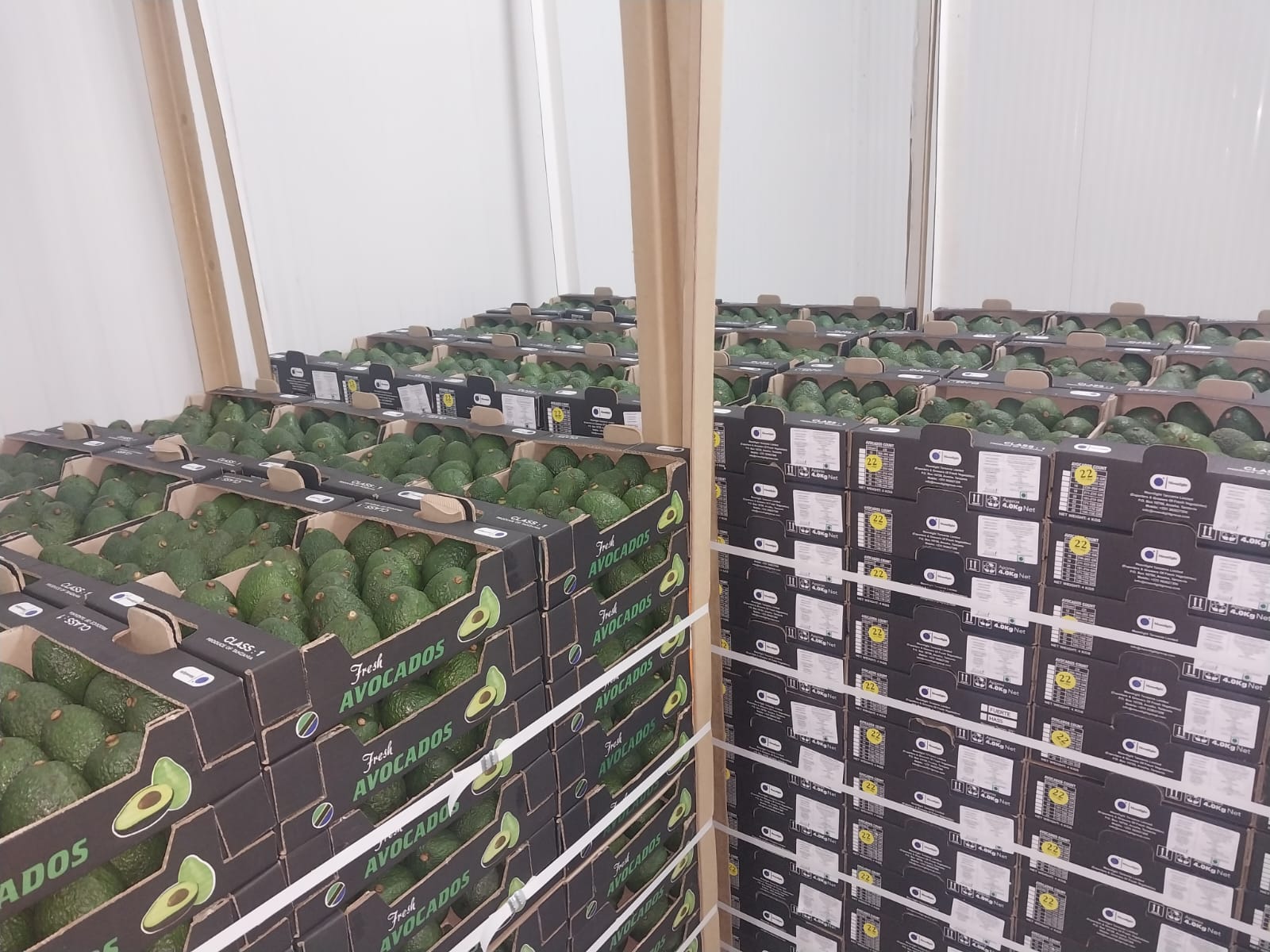
Few agricultural commodities have seen the commercial trajectory of the Hass avocado over the past two decades. What was once a niche health food found in specialty stores has become a mainstream staple in kitchens from Los Angeles to London to Tokyo — and the supply chains serving that demand have transformed into one of the most sophisticated and strategically important fresh produce networks on earth.
The Hass variety specifically — with its dark, pebbly skin, creamy high-fat flesh, and longer post-harvest shelf life compared to other cultivars — did not just benefit from the avocado trend. It drove it. Hass accounts for the vast majority of international fresh avocado trade, and the variety's commercial properties have allowed exporters and retailers to build year-round supply programmes that would be impossible with more perishable alternatives.
Understanding the Hass avocado market means understanding a genuinely complex global system: a supply chain anchored by Mexico but diversified across Peru, Colombia, Kenya, Chile, and Spain; demand concentrated in North America but expanding rapidly in Europe and Asia-Pacific; and pricing dynamics shaped as much by trade policy and climate events as by simple supply and demand.
This analysis covers the full market — size and growth projections, key exporters and their competitive positioning, regional import markets, price drivers, supply chain innovation, and the strategic risks and opportunities that define the Hass avocado landscape for stakeholders across the value chain.
$15.7BHass avocado market size (2025)
9 lbsUS per-capita avocado consumption (2024)
8.5%Asia-Pacific CAGR forecast to 2030
80%+US wholesale price surge from 2025 tariffs
The commercial forces shaping this market have direct implications for anyone buying or selling Hass avocados at scale. Let's break down the full picture.
Hass Avocado Market Size and Growth Trajectory
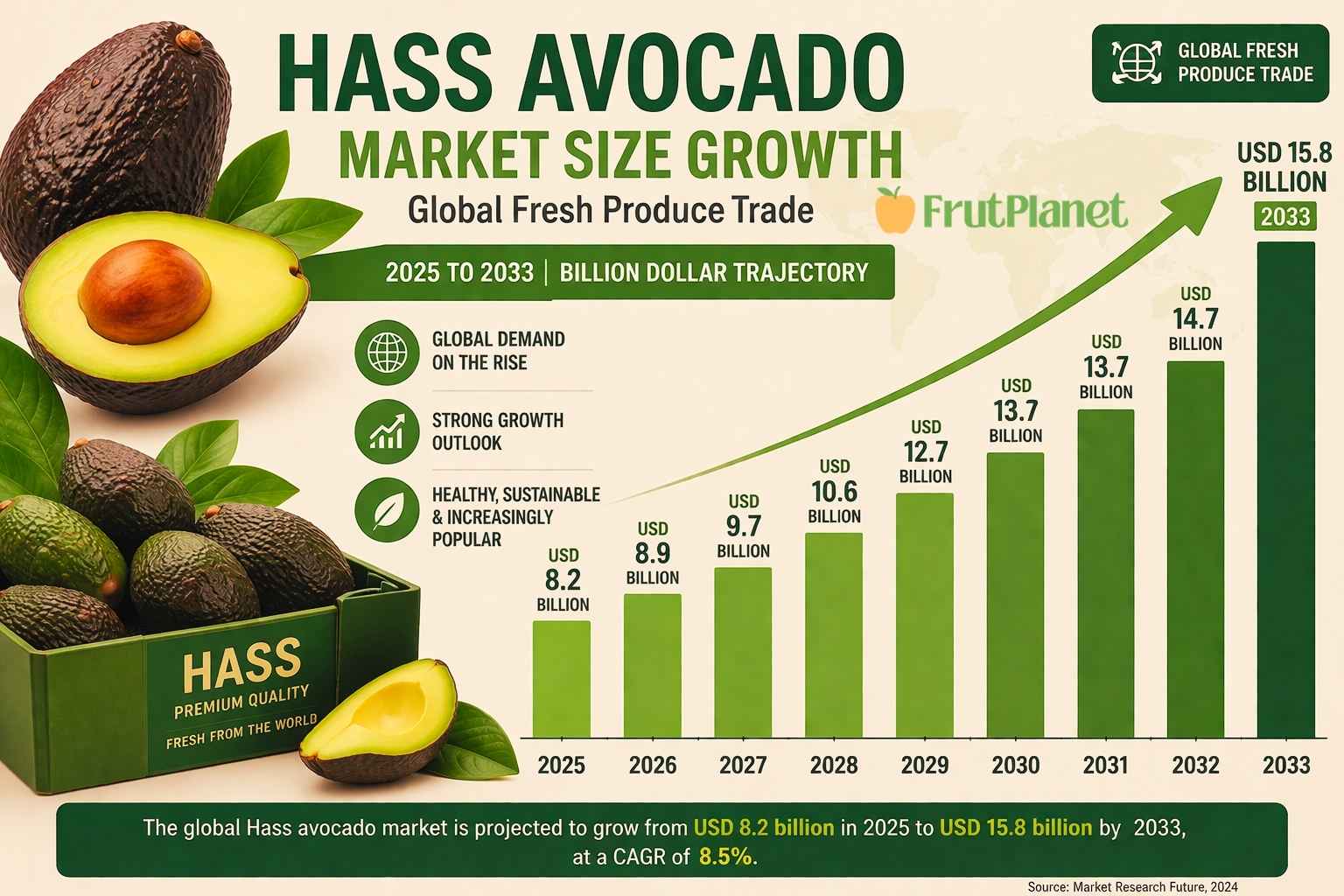
The Hass avocado market represents one of the most consistent growth stories in global fresh produce. Valued at approximately USD 15.7 billion in 2025, it is forecast to expand at a compound annual growth rate (CAGR) of 6.2% through 2030. The broader avocado market — including all varieties — is currently valued at USD 18.5 billion, with projections ranging to USD 24.93–35.24 billion by 2030 depending on the analytical framework applied.
📈 Hass Avocado Market Size Trajectory (USD Billion)
This growth is fundamentally structural rather than cyclical. The demand drivers — consumer health trends, demographic shifts, culinary adoption across new markets — are all long-term forces that market analysts consistently model as durable rather than trend-dependent.
Asia-Pacific is the region that most significantly alters the growth picture. Projected to expand at 8.5% CAGR through 2030 — the fastest of any major region — Asia-Pacific's participation represents a genuine market opening rather than an acceleration of existing demand. China's 2024 approval of Mexican Hass avocado imports, following the finalisation of phytosanitary protocols, opened the world's largest food market to its first direct Hass supply from the dominant global exporter. This structural shift has already attracted significant investment attention from exporters seeking to reduce their US market dependence.
Market size methodology note: Different market research organisations report varying Hass avocado market size figures depending on whether they include only fresh fruit, or also processed products (frozen pulp, oil, guacamole). The $15.7B figure from Mordor Intelligence (2025) covers the Hass-specific fresh and near-fresh market. The broader $18.5B avocado market figure includes all varieties and some processed forms. For stakeholders making commercial decisions, the Hass-specific fresh market figure is the most operationally relevant benchmark.
Key Hass Avocado Exporting Countries: Who Supplies the World
The global Hass avocado supply chain is dominated by a handful of producing countries, each with distinct market positions, seasonal windows, and competitive strengths.
🇲🇽
Mexico
World's #1 producer & exporter
2.75M metric tonnes in 2025. Supplies ~85% of US imports. Year-round greenhouse capability. Primary Michoacán production. APEAM export association.
🇵🇪
Peru
EU's primary southern supplier
Counter-seasonal to Mexico. Targeting 35% EU import share. Ica and La Libertad regions. Strong quality compliance. Growing China penetration.
🇨🇴
Colombia
Fastest expanding exporter
60–70% increase in Japan exports (2024). Near-year-round production. Antioquia and Caldas regions. Strong European and Asian push.
🇰🇪
Kenya
Africa's #1 avocado exporter
Primarily EU and Gulf markets. Counter-seasonal export window. High-altitude growing zones. FrutPlanet sources from certified Kenyan farms.
🇨🇱
Chile
Southern Hemisphere pioneer
Established EU and Asian supply chains. Production volume variable. Key Southern Hemisphere bridge when Peru supply tightens.
🇪🇸
Spain
Mediterranean & EU hub
Both producer (Málaga, Andalusia) and redistribution hub for Latin American product. Supplies Northern Europe directly from domestic and repackaged sources.
Mexico's supply dominance is simultaneously its strength and the market's most significant structural vulnerability. The concentration of ~85% of US imports in a single country creates extreme exposure to Mexican production shocks — whether from weather, water scarcity, organised crime impacts on Michoacán supply chains, or trade policy disruption.
Peru's strategic positioning is to serve as the market's counter-seasonal balancer. When Mexico's shoulder season creates supply gaps — typically April through July — Peruvian fruit from the Ica and La Libertad valleys fills the gap for European and, increasingly, Asian buyers. The EU-Peru Free Trade Agreement's tariff elimination provisions are projected to reinforce Peru's structural advantage in the EU market over the medium term.
Kenya's role in the global Hass market is growing but underappreciated. As Africa's leading avocado exporter, Kenya benefits from high-altitude growing conditions in the Mt. Kenya, Murang'a, and Meru counties that produce fruit with excellent dry matter content and eating quality. The relatively lower production costs compared to Latin American competitors, combined with short transit times to EU and Gulf markets, give Kenyan Hass avocados a commercially attractive value proposition for buyers seeking supply diversification.
Global Hass Avocado Demand: Who's Buying and How Fast

🇺🇸 North America
34% market share
~5–6% CAGR
US per-capita consumption 9 lbs (2024). Canada growing fast. Mexico domestic market also expanding.
🇪🇺 Europe
~30% market share
~6–7% CAGR
UK, Germany, France, Netherlands lead. Spain as redistribution hub. Double-digit demand increases in Northern Europe.
🌏 Asia-Pacific
~18% and growing
8.5–9.4% CAGR — fastest
China now open to Mexican Hass (2024). Japan, Australia established. South Korea, SE Asia emerging markets.
🌍 Middle East & Africa
~8% market share
~7% CAGR
UAE, Saudi Arabia as Gulf hubs. Growing hotel and restaurant demand. Kenya domestically developing.
North America's 34% share of the global market reflects a consumption culture that has fully integrated avocado into mainstream diets. The United States' per-capita consumption of 9 pounds in 2024 is extraordinary for a single fruit variety, driven by the near-ubiquitous presence of guacamole at social occasions, avocado toast's endurance as a breakfast staple, and the fruit's adoption into health, keto, and Mediterranean diet patterns across all adult age groups.
Europe's market is characterised by a more fragmented import structure — drawing supply from Mexico, Peru, South Africa, and Kenya — and by consumer preferences that have evolved toward convenience formats including ready-to-eat (RTE) packs and pre-ripened single avocados for retail. UK and German consumers are particularly receptive to sustainability messaging, making certified organic and deforestation-free supply chain credentials increasingly important for European market access.
Asia-Pacific's 8.5% CAGR projection represents the most significant structural growth opportunity in the global Hass market. China's opening to Mexican Hass imports in 2024 changed the competitive calculus for every major exporter. A market of China's size — even at very low per-capita penetration — represents potentially enormous volume for suppliers who can establish early distribution relationships and navigate the specific quality and ripeness requirements of Chinese retail channels.
Japan as a benchmark market: Japan deserves specific attention as a reference point for how Asian markets adopt premium produce. Colombian avocado exports to Japan grew 60–70% in 2024 alone, partly reflecting Japan's long-established premium fruit culture and willingness to pay quality premiums. Japan's existing familiarity with high-value produce makes it a more accessible entry point than China for exporters exploring Asian market diversification, with less complex regulatory requirements and more predictable quality expectations.
Hass Avocado Price Drivers: What Makes the Market So Volatile
The Hass avocado market is characterised by significant price volatility — a function of supply concentration, weather sensitivity, and the perishable nature of the product. Understanding what drives prices is essential for anyone operating in the value chain.
Trade Policy Shocks
The March 2025 episode illustrated starkly how trade-policy-dependent the Hass market has become. When the United States imposed 25% tariffs on Mexican agricultural imports, Mexican exporters paused harvests in anticipation of a market restructuring. The immediate result was wholesale prices surging more than 80% year-over-year in major US distribution centres including Chicago and Everett, Washington. The episode was a defining moment in the industry's recognition that single-supplier dependency on Mexico is a structural risk requiring active management.
Seasonal Supply Transitions
The global Hass market relies on a carefully choreographed handoff between Northern and Southern Hemisphere seasons to maintain year-round supply continuity. Mexico's main season runs August through February. Peru's counter-seasonal harvest covers much of the gap from April through August. Chile provides Southern Hemisphere bridge supply. Spain fills the Mediterranean window. When these transitions do not align smoothly — due to early or late harvests, logistics bottlenecks, or unexpected production shortfalls — price spikes occur at the handoff points.
Water and Climate Risk in Mexico
Michoacán, Mexico's dominant avocado-producing state, has faced increasing water scarcity concerns. Avocado production is water-intensive, and growing pressure on groundwater and river systems in the Michoacán highlands creates long-term production risk. Climate change projections for Central Mexico suggest more frequent drought periods. These risks are increasingly factored into the pricing strategies of sophisticated buyers who take multi-season positions in avocado supply.
Consolidation and M&A Activity
The Hass avocado market's consolidation trend is reshaping competitive dynamics at scale. Mission Produce's announced acquisition of Calavo Growers in a $430 million deal (January 2026) — one of the most significant M&A events in fresh produce history — creates a combined entity with unprecedented scale in US avocado distribution. Westfalia Fruit's acquisition of Belgian processor Syros in January 2025 signals similar consolidation in the European processed avocado segment. These structural shifts concentrate market power and potentially reduce the competitive advantages available to smaller independent exporters.
Deforestation and sustainability risk: Mexico's avocado industry has faced significant scrutiny over deforestation of Michoacán's forests to expand avocado orchards — documented extensively by Climate Rights International and academic research. In August 2025, Mexico's leading avocado industry bodies (APEAM and MHAIA) committed to achieving deforestation-free exports by 2026. European buyers in particular are implementing deforestation due diligence requirements under EUDR (EU Deforestation Regulation), which will require supply chain traceability documentation for avocados entering the EU market. Exporters without verified deforestation-free certification will face increasing market access barriers in European channels.
Supply Chain Innovation: Technology Reshaping the Hass Market
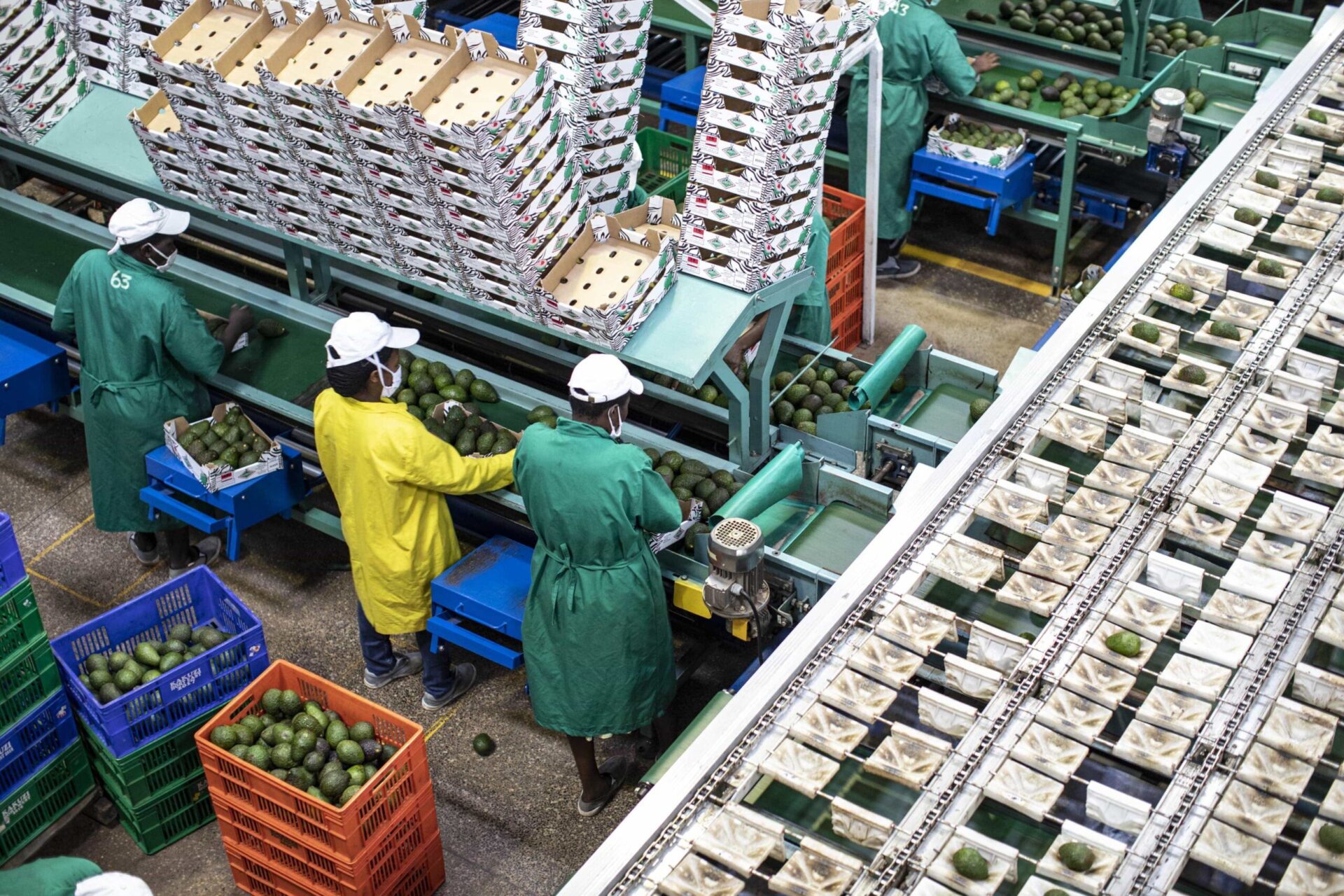
The Hass avocado's commercial success is inseparable from the technological advances that have extended its supply chain reach. Several innovations are actively reshaping what the market can do.
Controlled-Atmosphere Containers
Controlled-atmosphere (CA) containers maintain specific ratios of oxygen, carbon dioxide, and nitrogen during sea freight, dramatically slowing the ripening process. This technology has extended viable transit times for mature-green Hass avocados from approximately 14 days to 25–30 days, effectively opening markets that were previously inaccessible by sea freight. China's adoption of Mexican Hass would not be commercially viable at scale without CA container technology — the 25+ day Pacific crossing requires precisely managed atmosphere to deliver fruit in acceptable condition.
1-MCP Treatment
1-Methylcyclopropene (1-MCP) is an ethylene-blocker applied to avocados pre-shipping that inhibits the ripening trigger. Applied before packing, 1-MCP packaging inserts give exporters and importers extended windows to manage inventory, reduce waste, and deliver consistent ripeness at destination. The technology is increasingly used in premium retail programmes that guarantee consumers a specific ripeness stage at purchase.
Ripening Technology at Destination
Sophisticated ripening rooms — which use controlled ethylene exposure to bring mature-green Hass fruit to precise ripeness stages — are now standard infrastructure for major European and US importers. These facilities allow retailers to sell avocados at specific, guaranteed ripeness stages (from rock-hard to ready-to-eat), dramatically reducing in-store waste and improving consumer experience. The ability to deliver "ripe-and-ready" product at retail has been identified as a key basket-builder for supermarkets, increasing average transaction values.
IoT Monitoring and Traceability
IoT sensors embedded in cargo containers and pallet-level tracking systems now allow exporters, importers, and retailers to monitor temperature, humidity, and ethylene exposure in real time across the supply chain. Blockchain-based traceability systems are being adopted by leading exporters to meet European sustainability disclosure requirements and to provide buyers with verifiable farm-to-port documentation. These systems also generate data that helps exporters optimise harvest timing, dry matter testing protocols, and logistics scheduling to reduce quality losses.
Dry matter and quality standardisation: The industry's move toward standardised dry matter content (DMC) testing as a pre-harvest quality gate has been one of the most commercially significant shifts in avocado supply chain management. Minimum DMC thresholds — typically 21–23% for export certification — ensure that fruit harvested for long-haul markets will ripen correctly at destination rather than producing the rubbery, off-flavour product that damages buyer relationships. Exporters who invest in near-infrared (NIR) non-destructive DMC testing infrastructure demonstrate supply chain sophistication that premium buyers increasingly require as a baseline qualification.
Competitive Landscape: Key Players Across the Value Chain
| Company | Role | Geography | Recent Move |
|---|
| Mission Produce | Grower / Distributor | USA / Global | $430M Calavo acquisition (Jan 2026) |
| Calavo Growers | Packer / Distributor | USA / Mexico | Being acquired by Mission Produce |
| Westfalia Fruit | Grower / Processor | South Africa / EU | Acquired Syros Belgium (Jan 2025) |
| APEAM / Mexico | Export Association | Mexico | Deforestation-free 2026 commitment |
| ProHass / Peru | Export Promotion | Peru | Targeting 35% EU avocado share |
| FrutPlanet | Exporter / Supplier | Kenya / East Africa | GlobalG.A.P. certified Hass export |
The competitive landscape is increasingly shaped by vertical integration. The largest players are moving to control more of the value chain — from orchard to ripening room to retail shelf — to capture more margin and deliver consistent quality. Mission Produce's acquisition of Calavo Growers creates an entity large enough to negotiate directly with the largest US and international retailers from a position of significant supply scale and logistical capability.
Africa's Role: Kenya as the Continent's Hass Avocado Leader
Africa's contribution to the global Hass avocado market is growing, and Kenya sits at the centre of that development. As the continent's leading avocado producer and exporter, Kenya benefits from high-altitude growing zones that produce premium-quality Hass fruit, relatively lower production costs than Latin American competitors, and geographic proximity to EU and Gulf markets that enables competitive logistics.
Kenya's Hass avocado export season from Central Kenya's high-altitude counties (Murang'a, Kirinyaga, Meru, Embu) runs primarily from mid-February through June. Eastern counties including Machakos and Kitui have a complementary season that peaks slightly later, extending Kenya's supply window for international buyers seeking continuity.
The primary challenge for Kenyan exporters is not product quality — when harvested at appropriate dry matter content and cold-chained correctly, Kenyan Hass avocados compete directly with Peruvian fruit on eating quality in European markets. The challenge is infrastructure: cold chain capacity at the farm level, packhouse throughput, and consistent shipping frequency from Mombasa to European and Gulf ports. The sector is actively investing in addressing these constraints, supported by export-focused certification programmes and institutional development through KEPHIS and HCDA.
💰
Related Reading
What Is the Current Hass Avocado Price Per Kilogram? Wholesale & Export Rates Explained →
Frequently Asked Questions: Hass Avocado Market
How big is the global Hass avocado market?
The Hass avocado market reached approximately USD 15.7 billion in 2025. The broader avocado market (all varieties) is valued at USD 18.5 billion. The Hass-specific market is forecast to grow at 6.2% CAGR through 2030. Hass dominates global trade due to superior shelf life, rich flavour, and year-round availability from complementary Northern and Southern Hemisphere growing regions.
Which countries export the most Hass avocados?
Mexico is the world's largest exporter by a large margin — producing ~2.75 million metric tonnes in 2025 and supplying ~85% of US imports. Peru is the leading Southern Hemisphere exporter, dominant in European markets. Chile, Colombia, and Kenya are also significant. Spain serves as both a Mediterranean producer and a European redistribution hub. Kenya is Africa's leading avocado exporter, primarily serving EU and Gulf markets.
Which regions consume the most Hass avocados?
North America leads with ~34% market share; US per-capita consumption exceeded 9 lbs in 2024. Europe is second, with the UK, Germany, France, and Netherlands as primary markets. Asia-Pacific is the fastest-growing region at 8.5% CAGR — China's 2024 opening to Mexican Hass imports marks a structural shift in Asian market participation. The Middle East and Gulf are also growing at ~7% CAGR.
What caused the Hass avocado price spike in 2025?
In March 2025, the US imposed 25% tariffs on Mexican agricultural imports including avocados. Mexican exporters paused harvests, causing US supply to tighten sharply. Wholesale prices surged 80%+ year-over-year in markets like Chicago and Everett. The episode highlighted the market's extreme vulnerability to trade policy disruption given Mexico's ~85% US import supply share.
What is driving long-term growth in the Hass avocado market?
Key structural growth drivers include: health and wellness trends positioning avocado as a superfood; demographic demand from millennials and Gen Z; plant-based and keto diet adoption; Asia-Pacific market opening (especially China); processed avocado product growth (guacamole, oil, frozen pulp); and supply chain technology advances extending shelf life and geographic reach.
What is the role of Africa in the global Hass avocado market?
Africa is growing in significance, with Kenya as the continent's leading producer and exporter. Kenya supplies primarily EU and Gulf markets from high-altitude growing zones in Murang'a, Kirinyaga, Meru, and Embu counties. South Africa, Tanzania, Uganda, and Ethiopia are developing contributors. African avocados benefit from counter-seasonal harvests and lower production costs, though post-harvest infrastructure remains a development focus.
