Domestic Wholesale
5–15 EGP/kg
~$0.10–$0.30 per kg
Retail (Cairo)
18–36 EGP/kg
~$0.36–$0.72 per kg
Export Price
$1.05–$1.30
per kg FOB/CIF
Gulf CIF
$0.80–$1.40
per kg landed
Key Takeaways
- Domestic wholesale: 5–15 EGP/kg — varies heavily by season
- Export grade commands a 4–8× premium over domestic wholesale
- Nile Delta (Beheira, Dakahlia) is Egypt's primary production zone
- Spring (March–May) is Egypt's peak supply and lowest price window
- Egypt undercuts Spain and Netherlands on price — competes closely with Turkey
- Gulf states are Egypt's largest export cucumber markets
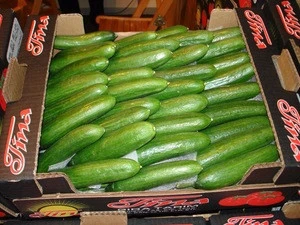
egypt cucumber wholesale market cairo
Egypt rarely gets the attention it deserves as a cucumber supplier. When buyers think of affordable, large-volume fresh cucumbers, Spain and Turkey typically dominate the conversation. But Egypt's position in the global cucumber market is both significant and strategically underappreciated.
The country ranks among the world's top cucumber producers by volume, according to FAOSTAT data. Its Nile Delta growing regions — some of the most fertile agricultural land on earth — produce cucumbers year-round, with peak supply in spring that pushes wholesale prices to their annual lows. For international buyers, that price point represents a genuine sourcing opportunity.
But Egypt's cucumber market is not simple. Domestic wholesale prices in Egyptian pounds tell one story. Export prices in USD tell a completely different one. Seasonal supply patterns create price swings that can be dramatic. And the competitive landscape — against Turkish, Spanish, Moroccan, and Indian suppliers — shapes what buyers can realistically expect to pay for Egypt-origin product at various points in the year.
This article breaks down all of it. Domestic wholesale rates, retail prices in Cairo and Alexandria, export-grade CIF pricing, seasonal patterns, growing regions, and a direct comparison of Egypt against its main competitor supply origins — with enough specificity to be useful for procurement decisions.
Top 10Egypt ranks among world's top cucumber producers by volume
7 EGP/kgMost recent wholesale benchmark (Apr 2025)
3–5 daysSea transit from Alexandria to Gulf ports
HS 070700UN trade code for fresh/chilled cucumber
Domestic Wholesale vs Export Price: The Egypt Cucumber Pricing Gap
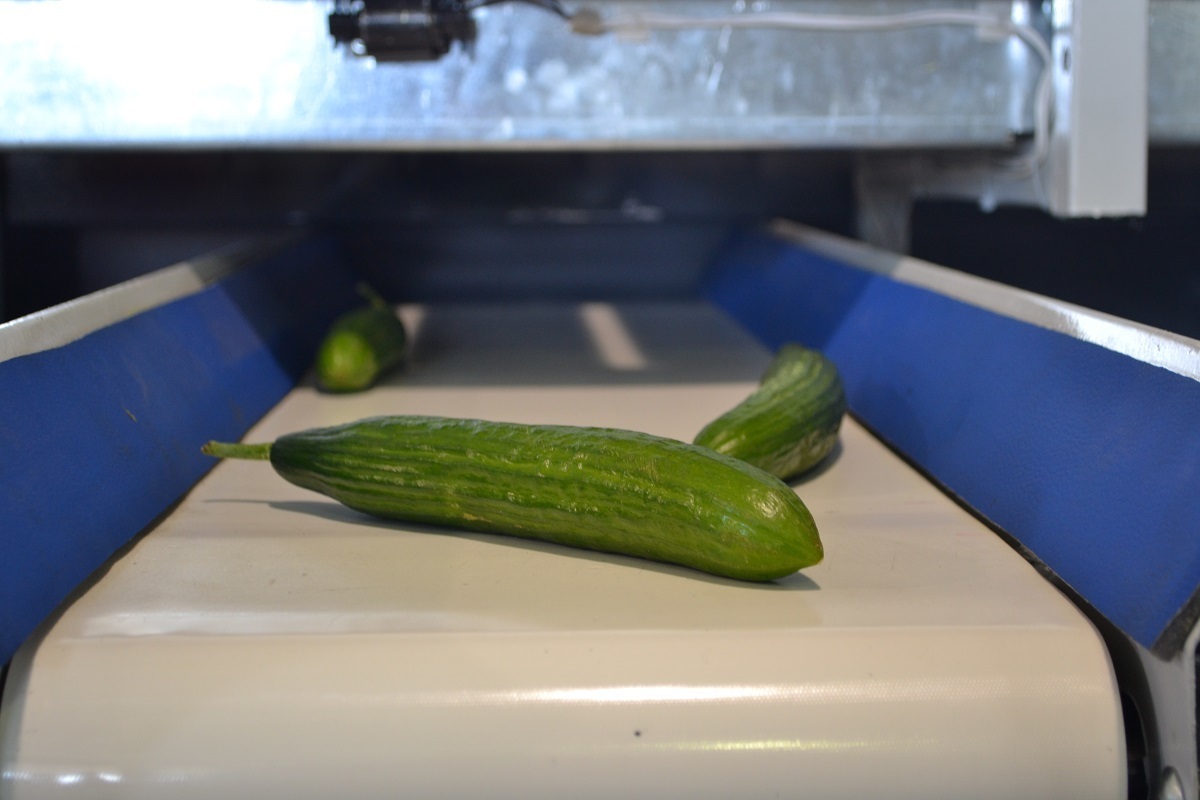
egypt cucumber export grading packing facility
The single most important thing to understand about Egypt cucumber pricing is the enormous gap between domestic wholesale prices and export prices. These are not two points on the same continuum — they reflect entirely different product grades, standards, and supply chain structures.
At the domestic wholesale level, Egypt's cucumber prices are among the lowest in the world. The Tridge benchmark as of April 2025 showed 7 EGP per kg — approximately $0.14 per kg at prevailing exchange rates. This reflects a market where production costs are very low, competition between growers is intense, and the EGP has depreciated significantly against the USD in recent years.
At the export level, the price picture is fundamentally different. Egyptian cucumbers entering the Gulf or European market as export-grade product are priced at $1.05–$1.30 per kg FOB or CIF. That 8–10× premium over domestic wholesale reflects the costs of: grading and sorting to export specifications, packaging in export-standard crates or cartons, cold chain from farm to port, phytosanitary certification and export documentation, freight charges, and exporter margin.
EGP depreciation and its effect on export competitiveness: Egypt's pound has depreciated substantially against the USD in recent years. This has a direct effect on export competitiveness: as the EGP weakens, Egyptian exporters' dollar-denominated costs fall relative to competitors operating in harder currencies. For USD-paying importers, this makes Egyptian cucumber increasingly attractive on price — even as domestic EGP prices appear stable or rising to local buyers.
| Market Level | Price (EGP/kg) | Price (USD/kg approx.) | Typical Buyer | Channel |
|---|
| Farm gate | 3–8 EGP | $0.06–$0.16 | Local traders, co-ops | Lowest |
| Domestic wholesale | 5–15 EGP | $0.10–$0.30 | Supermarkets, vendors | Reference |
| Cairo retail | 18–36 EGP | $0.36–$0.72 | End consumers | Retail |
| Export FOB (Alexandria) | 55–65 EGP equiv. | $1.05–$1.30 | International importers | Export |
| Gulf CIF landed | 42–70 EGP equiv. | $0.80–$1.40 | Gulf distributors | CIF |
Egypt's Major Cucumber-Growing Regions and Their Market Significance
Egypt's cucumber production is geographically concentrated in regions that combine fertile soils, reliable water access, and climate conditions suited to year-round or near-year-round production. Understanding where Egypt's cucumbers come from matters for buyers assessing quality, supply timing, and logistics.
🌾
Beheira
Nile Delta — Northern
Largest production zone
🌿
Dakahlia
Nile Delta — Central
High volume, export quality
🏞️
Sharqia
Nile Delta — Eastern
Strong spring peak supply
🌊
Kafr El-Sheikh
Nile Delta — Northern
Coastal climate advantage
🏔️
Fayoum
Oasis region
Year-round plastic tunnel
☀️
Upper Egypt
Luxor / Aswan zone
Winter off-season supply
The Nile Delta governorates — Beheira, Dakahlia, Sharqia, and Kafr El-Sheikh — collectively account for the majority of Egypt's cucumber production. The Delta's alluvial soil is among the most fertile agricultural land in the world, and the reliable Nile water supply supports irrigation-based production that is largely decoupled from rainfall variability.
Proximity to Port Alexandria is a critical logistics advantage for Delta growers. Product harvested in Beheira or Dakahlia can reach Alexandria's container terminal within 2–4 hours. This short supply chain from farm to port minimises post-harvest deterioration and cold chain costs — a competitive advantage over producers in more inland growing regions of competing countries.
Upper Egypt's southern governorates play a complementary role. During winter months when Delta temperatures drop below optimal ranges, Luxor and Aswan's warmer climate supports plastic tunnel production that extends Egypt's supply window. This winter supply is smaller in volume but commercially important for maintaining market presence in Gulf markets year-round.
Seasonal Price Patterns: When Egypt Cucumber is Cheapest and Most Expensive
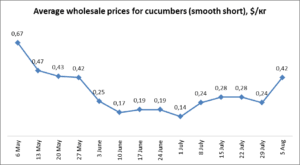
egypt cucumber seasonal price pattern chart
📅 Egypt Cucumber Price Seasonality — Monthly Overview
Jan
Feb
Mar
Apr
May
Jun
Jul
Aug
Sep
Oct
Nov
Dec
Peak supply — lowest wholesale prices
Good supply — moderate prices
Moderate — transitional season
Low supply — highest prices
Egypt's domestic cucumber price cycle is closely tied to the Nile Delta's spring planting season. The major open-field production push from March through May creates the year's highest supply volumes and drives domestic wholesale prices to their annual lows — typically 5–7 EGP per kg during peak supply weeks.
This spring supply peak coincides with what the Tridge intelligence platform described as Egypt cucumber prices dropping in March 2025 due to high supply — a pattern that repeats with notable consistency year over year. When multiple Delta governorates harvest simultaneously, the domestic market can face temporary oversupply that depresses prices further.
Summer (June–August) is Egypt's most challenging production period. High temperatures — regularly exceeding 35°C in the Delta — limit open-field production and drive up plastic tunnel cooling requirements. Supply tightens and prices rise. This summer gap in Egyptian supply is commercially significant for international buyers because it is precisely the period when European greenhouse production is at its peak, providing alternative supply sources.
Autumn (September–November) is arguably Egypt's most commercially valuable export window. Production recovers from summer heat, quality is high, and the international context is favourable: Northern European greenhouse production begins to wind down as days shorten and heating costs rise, creating space for competitively priced Egyptian product in Gulf and EU markets. This October–February window is when Egypt's export volumes are most commercially significant.
Buyer timing intelligence: For importers in the Gulf seeking the lowest possible landed cost on Egyptian cucumber, the October–December window typically offers the best combination of price, quality, and supply reliability. Egypt is in full production recovery, competition from European suppliers is minimal, and the short sea transit (3–5 days to Saudi Arabia/UAE) keeps product arriving in excellent condition. Spring supply (March–May) offers the lowest domestic prices but coincides with competing supply from multiple Mediterranean origins.
Egypt vs Competing Suppliers: Wholesale Price Comparison
🥒 Cucumber Wholesale Price Comparison — Key Origins (USD/kg)
Egypt's competitive position in the global cucumber market sits clearly between India (the lowest-cost producer) and Turkey (its closest direct competitor in Gulf and Levant markets). Against Spain and the Netherlands, Egypt has a very substantial price advantage — a function of dramatically lower production costs across land, labour, and energy.
Turkey is Egypt's most direct competitive rival. Both countries supply the Gulf via short Mediterranean and Red Sea routes, both produce predominantly open-field and low-cost tunnel cucumber, and both offer similar transit times to Saudi Arabia, UAE, and Kuwait. Egypt's price advantage over Turkey in recent years has been amplified by EGP depreciation, making Egyptian product increasingly attractive to Gulf buyers on a cost-per-kg basis.
Spain competes with Egypt primarily for European markets rather than Gulf markets. Spanish cucumbers — predominantly Dutch-type and mini cucumbers from Almeria's advanced greenhouse infrastructure — target premium retail in Northern Europe where food safety standards, consistent sizing, and product presentation command the price premium that Egyptian open-field product cannot. For commodity-grade fresh cucumber destined for food service and catering in Gulf markets, Egypt competes effectively on price against Spanish origin at the equivalent grade level.
What Drives Egypt Cucumber Price Fluctuations
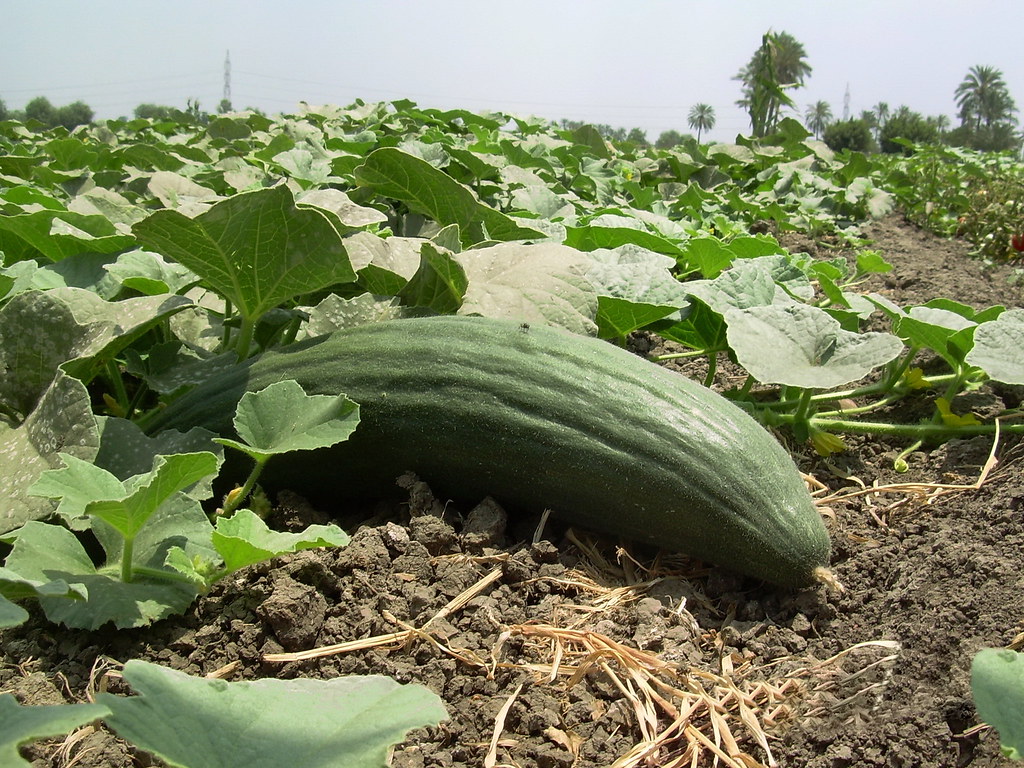
egypt cucumber farming nile delta irrigation beheira
Egypt's cucumber price is more volatile than buyers accustomed to stable European markets typically expect. Several interconnected factors drive that volatility.
Supply Concentration in Spring
The majority of Egyptian cucumber production is concentrated in the spring window. When Delta farmers harvest simultaneously — as reported in March 2025 when prices dropped due to high supply — wholesale markets can become temporarily oversupplied. This seasonal compression of supply can drive domestic prices down 30–50% in a matter of weeks. Exporters who maintain contract relationships with consistent buyers are better insulated from these swings than spot-market sellers.
EGP/USD Exchange Rate
Egypt's pound has experienced significant depreciation in recent years. For domestic buyers purchasing in EGP, this means nominal price stability can mask real cost changes. For international buyers purchasing in USD, a weaker EGP means Egyptian product becomes progressively cheaper in dollar terms — even when EGP-denominated prices are rising. This dynamic has materially improved Egypt's export price competitiveness in international markets.
Energy and Input Costs
Egypt has periodically adjusted fuel subsidies, electricity tariffs, and fertiliser pricing as part of ongoing economic reform programmes. These adjustments directly affect production costs for greenhouse and irrigated open-field cucumber farming. Sharp input cost increases — particularly for diesel (used in irrigation pumping) and fertilisers — can compress farm gate margins and influence growers' planting decisions for subsequent seasons.
Export Demand from Gulf Markets
The Gulf states' aggregate demand for fresh cucumber is large and relatively price-inelastic at the consumer level — cucumber is a dietary staple in GCC countries, used year-round in salads and cooking. Strong Gulf demand during Egypt's autumn-winter supply window helps support prices. Conversely, periods of strong competing supply from Jordan, Morocco, or Oman can soften the prices Egyptian exporters can achieve in those markets.
Buyer's checklist for Egypt cucumber sourcing: Verify exporter holds current HACCP and GlobalG.A.P. or equivalent certification. Specify cucumber variety, size grade, and maximum pesticide residue standards for your destination market. Request phytosanitary certificates and cold chain temperature logs. Confirm Port Alexandria booking lead time — peak export season (October–February) can create shipping schedule pressure. Build 3–5% waste buffer into quantity calculations for transit from Egypt to longer-haul destinations.
📊
Related Reading
Cucumber Price Index: Wholesale, Retail & Bulk Sourcing Costs Across Global Markets →
Frequently Asked Questions: Egypt Cucumber Wholesale Price
What is the wholesale price of cucumber in Egypt per kg?
Egypt's domestic wholesale price for fresh cucumber typically ranges from 5–15 EGP per kg depending on season and supply. The most recent benchmark (April 2025) was approximately 7 EGP per kg (~$0.14 USD). At the export level, Egyptian cucumbers are priced at $1.05–$1.30 per kg FOB/CIF — reflecting grading, packing, cold chain, and freight costs added to the domestic wholesale base.
What is the export price of Egyptian cucumber per kg?
Egypt's cucumber export price has ranged from approximately $1.03–$1.30 per kg in recent years at FOB/CIF level. This significant premium over domestic wholesale reflects grading to export specifications, export-standard packaging, cold chain to Alexandria port, phytosanitary certification, and exporter margin. Egypt's key export markets are the Gulf states (Saudi Arabia, UAE, Kuwait) and select European buyers.
Why are Egyptian cucumber prices cheaper than Spanish or Dutch cucumbers?
Egyptian cucumber prices are lower primarily because of significantly lower production costs — labour, land, and energy costs in Egypt are a fraction of European equivalents. Spanish Almeria cucumbers come from advanced greenhouse facilities; Dutch cucumbers from energy-intensive heated glass greenhouses. Egypt's competitive advantage is strongest in the autumn-to-winter export window when European production slows and heating costs for European greenhouse operators rise sharply.
When is the cheapest time to buy Egyptian cucumbers wholesale?
Egypt's cheapest domestic prices occur in spring (March–May) when Nile Delta open-field production peaks. This period regularly sees domestic wholesale prices fall to 5–7 EGP per kg. For international buyers, the autumn window (October–December) typically offers the best combination of competitive pricing, good quality, and reliable supply — without the competition from multiple Mediterranean origins that compresses prices in spring.
Which regions of Egypt produce the most cucumbers?
Egypt's major cucumber-producing regions are in the Nile Delta: Beheira, Dakahlia, Sharqia, and Kafr El-Sheikh governorates. These areas combine fertile alluvial soil with reliable water access and a Mediterranean-influenced climate ideal for production. Fayoum produces significant volumes under plastic tunnel conditions. Upper Egypt governorates (Luxor, Aswan) contribute to winter supply when Delta temperatures are lower than optimal.
How do Egyptian cucumber prices compare to Turkish or Spanish prices?
At the wholesale level, Egypt ($0.40–$0.80/kg) is competitively priced against Turkey ($0.59/kg) and significantly cheaper than Spain ($1.02/kg) and the Netherlands ($3.16/kg). India ($0.28/kg) is cheaper but faces longer transit routes and different quality positioning. Turkey is Egypt's closest direct competitor in Gulf markets, with comparable price levels and transit times. EGP depreciation has strengthened Egypt's dollar-denominated price competitiveness versus Turkey in recent periods.
