
Avocado Price in the UK Per Kg: Supermarket Rates, Wholesale Costs & Import Breakdown
From £0.59 at Aldi to £6+ per kg at Waitrose organic — UK avocado prices span an extraordinary range. Here's exactly what you should expect to pay, and why.
- The UK Avocado Market: Scale & Context
- UK Retail Avocado Prices Per Kg
- Supermarket-by-Supermarket Price Comparison
- UK Wholesale & Import Prices
- Price by Channel: From Import to Doorstep
- Where the UK's Avocados Come From
- Seasonal Price Patterns in the UK
- Post-Brexit Impact on UK Avocado Prices
- Organic vs Conventional: The UK Price Premium
- Frequently Asked Questions
- UK retail: £2.38–£6.34/kg — Aldi & Lidl cheapest, Waitrose premium
- Wholesale benchmark: ~£2.20/kg ($2.82) as of March 2026
- UK imports $290 million worth of avocados annually (2023, record high)
- Peru & South Africa are the UK's dominant supply origins
- Kenya supplies quality Hass avocados during East Africa's February–June season
- Peak supply (June–August) = cheapest UK retail prices
The UK Avocado Market: Scale and Context
The United Kingdom is one of Europe's most significant avocado import markets, and one of the most price-diverse. A single fruit category spans a retail range from under £0.60 at a discount retailer to well over £2 each at a premium organic grocer — prices that differ by a factor of three or four for essentially the same type of produce.
The UK imported approximately $290 million worth of avocados in 2023 — a 10% increase from the previous year and the highest import value recorded since 2018. The trajectory has been consistently upward over the past decade, with the sharpest growth period occurring between 2014 and 2015 when import value jumped from approximately $111 million to $170 million as the avocado trend took hold across British consumer culture.
Today, avocados are a genuinely mainstream product in the UK. They are stocked by every major supermarket chain — from budget-focused Aldi and Lidl to premium Waitrose and Marks & Spencer — and have become a staple in the ready-meal and food service sectors. The UK can be considered a high-value avocado market by global standards: British consumers pay more per kg than buyers in most other European countries, and the market supports premium price points across multiple quality and convenience tiers.
Understanding where prices sit — and why — requires looking at the full chain from import cost through to consumer retail. That chain is longer and more complex than most shoppers realise, particularly since Brexit added a layer of border logistics and inspection costs that mainland European buyers avoid.
The avocado's rise in the UK is also a story about evolving consumer behaviour. Millennials and Gen Z have embedded avocado into everyday eating — on toast, in salads, blended into smoothies, used as a dairy alternative in plant-based cooking — in ways that previous generations associated only with guacamole at Mexican restaurants. That demand is structural, not fleeting, which is why UK import volumes continue to grow even as individual price points remain high relative to comparable fruit categories.
UK Retail Avocado Prices Per Kg: The Full Range

The retail price of avocados in the UK is quoted in two ways: per piece (as individual avocados are typically sold in UK supermarkets) and per kilogram. Both framings are useful, and the per-kg figure reveals the true cost comparison across sizes and varieties more clearly than per-unit pricing, which varies with fruit size.
UK market data places the retail price range at GBP 2.38–6.34 per kilogram in London and Birmingham — a spread that reflects the enormous variation between discount retail and premium specialty channels. The lower end corresponds to promotional avocado pricing at Aldi or Lidl. The upper end reflects organic premium at Waitrose or Whole Foods Market.
In practical terms, a standard Hass avocado weighing approximately 200–250g translates to the following per-kg equivalents:
| Avocado Unit Price | Estimated Weight | Per Kg Equivalent | Typical Source |
|---|---|---|---|
| £0.59 each | ~200g | ~£2.95/kg | Aldi / Lidl (promotional) |
| £0.75 each | ~200g | ~£3.75/kg | Aldi / Lidl (standard) |
| £0.89 each | ~220g | ~£4.05/kg | Asda / Morrisons |
| £1.00–£1.20 each | ~230g | ~£4.35–£5.20/kg | Tesco / Sainsbury's |
| £1.50–£1.75 each | ~250g | ~£6.00–£7.00/kg | Waitrose / M&S |
| £2.00+ each | ~250g | £8.00+/kg | Organic/ready-to-eat premium |
Why per-kg comparison matters: UK supermarkets sell avocados by the piece, not by weight — which obscures real price comparisons. A "cheaper" avocado at £0.89 that weighs 180g is actually more expensive per kg (£4.94/kg) than a £1.00 avocado weighing 250g (£4.00/kg). Consumers who compare unit prices without checking fruit size may be making the wrong value judgement. The per-kg frame provides the honest comparison.
Supermarket-by-Supermarket Price Comparison
The UK's supermarket landscape spans one of the broadest price spectrums in European grocery retail — from hard discount (Aldi, Lidl) through the mainstream "Big Four" (Tesco, Sainsbury's, Asda, Morrisons) to premium (Waitrose, M&S) and online specialists (Ocado). Avocado pricing follows this tier structure closely.
Aldi and Lidl's dominance of the budget avocado tier is an extension of their broader grocery market positioning. Both chains negotiate high-volume supply contracts directly with major exporters — often bypassing the Dutch redistribution hubs that add cost — which allows them to price avocados at levels that the "Big Four" struggle to match without compromising margin. Aldi's regular promotional pricing below £0.65 has occasionally triggered media coverage as "the cheapest avocado in Britain."
The premium tier at Waitrose and M&S reflects a combination of quality differentiation (larger fruit, consistent ripeness, organic certification) and brand positioning. Both retailers have invested significantly in ready-to-eat avocado programmes where fruit arrives at precisely the right ripeness stage for same-day or next-day consumption — a value-added service that commands a meaningful premium over unripe commodity avocados. For consumers who have experienced the frustration of buying a rock-hard avocado and waiting a week for it to ripen, the price premium for ready-to-eat is arguably rational value.
UK Wholesale Avocado Prices: What the Trade Pays
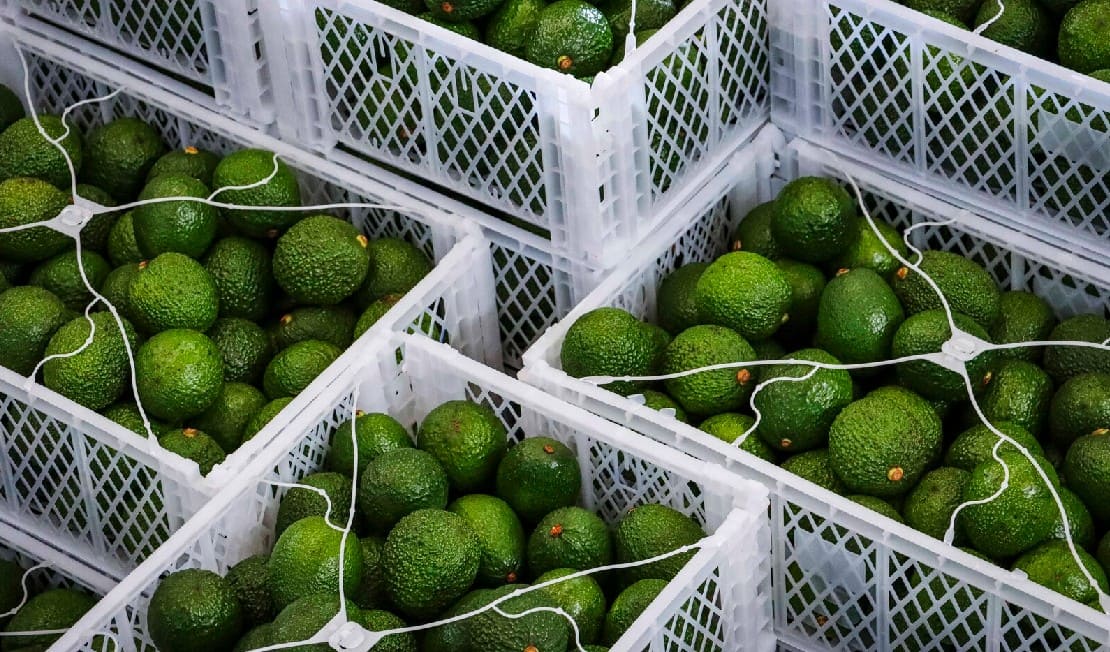
The wholesale avocado price in the UK sits at a very different level from retail — as it should, given the multiple cost layers that separate importer procurement from consumer checkout.
The most current reference point is Agro-Market24's March 2026 benchmark: the average UK avocado price at approximately $2.82 per kg (approximately £2.20/kg at prevailing exchange rates). This reflects a 1.4% decline from the prior month, attributed to adverse weather disruptions in Spain and Israel affecting supply timing.
Wigmore Trading's regional wholesale data adds geographic texture to the UK picture: the British Isles average of £2.19/kg, Scottish Highlands at £2.81/kg, and Wales at £3.38/kg. These regional variations reflect the additional distribution costs of serving markets farther from the main port and distribution centre infrastructure concentrated in southeastern England and the Midlands. The further from the import entry point, the higher the regional wholesale premium.
The 2025–2026 UK wholesale price range of $2.06–$5.50 per kg is notably wide. The lower end represents high-volume commodity-grade contract purchases from major importers with direct exporter relationships. The upper end reflects smaller-volume, premium-grade, or organic avocados sourced through specialty distributors — essentially a specialist premium market operating within the same "wholesale" category.
Importer margin structure: According to CBI market intelligence, UK and European avocado importers generally maintain a profit margin of at least 8% of wholesale price, excluding handling costs, ripening, and repackaging. When those additional costs are included — ripening facilities, ready-to-eat packaging, cold chain management, and promotional allowances to major retailers — the effective cost margin between import price and the price at which importers sell to retailers is typically 20–35% above the base commodity import cost.
Avocado Price by Channel: From Import to Doorstep
This channel stack reveals an important commercial truth about the UK avocado market: the gap between import cost and premium retail is substantial enough to support multiple business models simultaneously. Aldi can import at the same cost as Waitrose yet price avocados at less than half the per-kg equivalent, because Aldi's overhead, distribution model, and margin expectations are structured differently. The underlying fruit — both sourced from the same global supply chain — may be identical in origin. What differs is everything that happens between the port and the shelf.
Where the UK's Avocados Come From
The UK's £290 million annual avocado import bill is distributed across multiple producing countries, each supplying a different window of the year and a different market segment.
| Origin Country | Primary Season for UK | Variety | Market Tier | Role in UK Supply |
|---|---|---|---|---|
| Peru | May–September | Hass | Volume leader | Dominant Southern Hemisphere supplier; EU-UK FTA assists access |
| South Africa | April–August | Hass, Fuerte | Premium | Counter-seasonal to Northern Hemisphere; quality Hass |
| Kenya | February–June | Hass (Golden, Original) | Premium | East Africa's leading exporter; high-altitude quality; growing UK share |
| Spain | October–February | Hass, Fuerte | Standard–Premium | Both domestic producer and redistribution hub for Latin American supply |
| Israel | October–January | Hass, Ettinger | Premium | Mediterranean supply; affected by geopolitical disruption in recent seasons |
| Morocco | November–March | Hass | Volume | Expanding Mediterranean producer; competitive pricing |
| Chile / Colombia | Variable | Hass | Supplement | Gap-filler during supply transitions; growing Colombia presence |
Peru's dominance of the UK's avocado supply calendar is the most commercially significant feature of the import landscape. As Europe's primary Southern Hemisphere avocado supplier, Peru times its exports to fill the gap between Spain's winter season (which ends by February) and the next Northern Hemisphere production window. The EU-Peru Free Trade Agreement — now fully implemented — has eliminated tariffs on Peruvian avocados entering the EU, and while the UK has its own successor trade arrangements with Peru, the effect is broadly similar: competitively priced Peruvian Hass reaching UK consumers from May through September.
Kenya deserves particular attention in the context of FrutPlanet's export operations. Kenya is Africa's leading avocado producer, and its Hass avocado — grown in the high-altitude counties of Murang'a, Kirinyaga, Meru, and Embu — reaches the UK market primarily from February through June. At high altitudes, the extended growing period produces fruit with high dry matter content and excellent eating quality that competes directly with Peruvian and South African product in the premium segment of the UK market. For UK importers seeking quality East African supply during the early-year window, Kenya's export infrastructure — with KEPHIS phytosanitary certification and GlobalG.A.P.-compliant farms — provides a credible alternative to Latin American origins.
Seasonal Avocado Price Patterns in the UK
📅 UK Avocado Price Seasonality — Monthly Supply & Price Overview
The UK imports the bulk of its avocados during the summer months — June through August — when Peru, South Africa, and Kenya's harvest windows align and supply to European markets reaches its annual peak. This summer abundance typically produces the most competitive retail pricing of the year, with promotional deals most frequently appearing at discount retailers and the "Big Four" running avocado promotions as a basket-builder during the barbecue season.
October and November are the UK's most challenging months for avocado supply. Peru's season has wound down; South Africa and Kenya's windows have closed; Spain's Mediterranean production has yet to reach peak; and Israeli supply — which historically helped bridge this gap — has faced logistical disruption in recent seasons. The combination of tighter supply and seasonal transition predictably tightens UK retail pricing and reduces promotional activity during this period.
January through March benefits from the overlap of multiple winter origins — Spain, Morocco, Israel (in good years), and the tail of Southern Hemisphere stocks in controlled-atmosphere storage — which provides reasonable supply continuity at moderate prices. Freshela Exporters' data supports this, noting that the UK sources small amounts of avocado year-round from countries with different seasonal calendars, maintaining some baseline availability even in the supply-constrained months.
Post-Brexit Impact on UK Avocado Prices
Brexit has had a measurable, if frequently underacknowledged, effect on the cost of fresh produce in the UK — including avocados. Before leaving the EU, the UK benefited from frictionless access to the European single market's fresh produce distribution infrastructure, primarily the Rotterdam and Netherlands-based avocado ripening and redistribution hub that supplies much of Northern Europe.
Post-Brexit, UK importers face additional phytosanitary inspection requirements, border declaration costs, and — in some cases — additional logistics steps that their EU competitors simply do not encounter. The UK's island geography means product must cross the English Channel in any case, but the administrative overhead added by new import control regimes has increased per-unit landed costs.
Currency also matters. Sterling's relative weakness against the euro and dollar since the 2016 referendum has increased the GBP-denominated cost of avocados that are priced internationally in USD or EUR. An avocado wholesale market that cleared at $2.50/kg when sterling was at 1.30 to the dollar costs meaningfully more per kg in pounds when sterling trades at 1.26 to the dollar — a currency effect that falls entirely on UK buyers rather than the exporting countries.
UK-specific trade agreements mitigating Brexit impact: The UK has rolled over most of the EU's preferential trade agreements with major avocado suppliers, including Peru, South Africa, and Kenya under the UK-Kenya Economic Partnership Agreement. These arrangements preserve zero- or reduced-tariff access for certified avocados from these countries entering the UK market. However, the administrative complexity of demonstrating Rules of Origin compliance under these agreements adds cost that the EU's single-market arrangements did not previously impose.
Organic vs Conventional Avocados: The UK Price Premium
The UK organic produce market is one of the most developed in Europe, and avocados are among the premium organic items that command a consistent and substantial price premium in British retail. Understanding this premium is relevant both for consumers making buying decisions and for exporters seeking to position product for higher-value UK market segments.
Organic Hass avocados at Waitrose typically retail at £1.80–£2.00+ each, versus £0.90–£1.20 for conventional equivalents at the same store. That represents a premium of approximately 60–100% over conventional price for the organic certification. Across the UK market, the organic avocado premium sits broadly in the 40–80% range depending on retailer and origin.
From a supply perspective, organic UK-destined avocados are sourced primarily from certified farms in Peru, South Africa, Kenya, and — to a lesser extent — the Dominican Republic. Kenya's avocado sector includes a number of GlobalG.A.P.-certified farms producing to the standard required by UK supermarket specification buyers, though full USDA or EU organic certification requires additional compliance investment that not all Kenyan exporters have pursued.
The ready-to-eat premium is a separate but related tier in the UK market. Waitrose, M&S, and Ocado all offer "ripe and ready" avocados priced above their unripe equivalents — not because the fruit itself is different, but because the retailer has incurred ripening room costs, guaranteed consistent texture at point of sale, and reduced the consumer's waste risk. This service premium typically adds £0.20–£0.40 per fruit, which on a 200g avocado translates to a significant per-kg premium purely for the convenience of ripeness consistency.