
Avocado Price in India: City Rates, Import Costs & What Drives the Market
Avocado prices in India span a wide range — from ₹120 per kg at a Bangalore mandi to ₹600 per kg for premium Hass in a Mumbai supermarket. Here's exactly what you're paying, why, and how to buy smarter.
- Retail avocado prices range from ₹150–₹600/kg across India
- Bangalore has the lowest prices — closest to Karnataka farms
- Hass avocados command a 30–50% premium over green varieties
- 30% basic customs duty inflates all imported avocado prices
- Kenya offers India the shortest sea transit — 10–14 days
- Oct–Dec is the cheapest buying window in most Indian cities

Avocados have moved from a niche import item to a mainstream supermarket staple across India's metro cities — but prices still reflect the import-heavy supply chain and limited domestic production that define this market.
India's avocado market is growing at a pace that surprises even industry insiders. Import values have climbed from just $21,000 in 2014 to approximately $22.5 million in recent years — an increase of over 100,000% in a decade. That trajectory reflects a fundamental shift in Indian consumer behaviour.
But for anyone buying avocados in India — whether as a consumer, retailer, or bulk importer — the pricing picture is genuinely complex. A single avocado that costs ₹35 at a street market in Coorg can retail for ₹120 in a Bangalore supermarket and ₹200 in Delhi. A Hass avocado from Kenya or Peru might sit at ₹400–₹500 per kg in Mumbai's premium grocery chains.
What explains those differences? The answer involves import duties, cold chain costs, transit distances, variety premiums, and the evolving geography of domestic production. Each factor is quantifiable — and understanding them helps buyers make significantly better purchasing decisions.
This article breaks down avocado prices in India across every level — from mandi wholesale rates to city-by-city retail, from source country import costs to seasonal price patterns — with enough detail to be genuinely useful whether you are a home consumer, a restaurant buyer, or a bulk importer.
Why Avocados Are Expensive in India
India is not a natural avocado country. The fruit thrives in subtropical highland climates — the same conditions found in Kenya's Murang'a County, Mexico's Michoacán, or Peru's La Libertad region. India has equivalent zones in Coorg, the Nilgiris, parts of Maharashtra, and Sikkim. But commercial-scale cultivation there is still in early development.
The result: the majority of avocados consumed in Indian metro cities are imported. And every step of that import chain adds cost.
Customs duty. India levies a basic customs duty of approximately 30% on fresh avocados. On top of this, IGST (Integrated Goods and Services Tax) and other levies apply. These duties alone add ₹60–₹90 per kg to a landed import cost before any wholesale or retail margin.
Cold chain logistics. Avocados require refrigerated transport from port to distribution point to retail shelf. India's cold chain infrastructure, while rapidly improving, is still insufficient outside major metro corridors. Leakage — avocados ripening prematurely or being discarded due to temperature breaks — adds to effective landed cost.
Transit time from source. Avocados from Mexico or Peru take 28–35 days to reach Indian ports by sea. That extended transit requires tighter cold chain management and earlier harvest maturity, both of which add cost. Avocados from Kenya reach India in 10–14 days, reducing transit-related losses significantly.
Avocado Prices by City: What You Pay Across India

Avocado prices vary significantly between Indian cities — a function of proximity to domestic growing regions, import logistics, and the local retail landscape. Bangalore consistently offers the most competitive prices due to its proximity to Karnataka's avocado farms.
The same avocado sells at very different prices depending on where you are in India. City proximity to domestic production, local market competition, and the dominant retail channel all drive these differences.
Bangalore's pricing advantage is structural, not coincidental. Coorg (Kodagu district) in Karnataka is India's most established domestic avocado growing region. During Karnataka's peak harvest season from January to March, locally grown avocados flow into Bangalore markets at prices that significantly undercut imported product. No other major Indian city has that proximity to domestic supply.
Delhi and Mumbai's higher prices reflect two realities. First, they are the farthest from domestic production zones. Second, they are where imported premium varieties — particularly Hass from Kenya and Peru — command strong retail premiums from a large health-conscious consumer base willing to pay for quality.
Avocado Price Table: All Channels and Segments
| Channel / Segment | Variety / Grade | Price Range (₹/kg) | Origin | Notes |
|---|---|---|---|---|
| Mandi wholesale | Mixed green skin | ₹150–₹250 | Domestic | Cheapest |
| IndiaMART wholesale | A-grade imported | ₹180–₹300 | Mexico / Peru | B2B |
| Retail — standard | Green skin, medium | ₹250–₹380 | Import / domestic | Most common |
| Retail — Hass imported | Hass, small/medium | ₹350–₹500 | Kenya / Peru | Premium |
| Supermarket premium | Hass large, organic | ₹450–₹600 | Mexico / Kenya | Luxury tier |
| Online retail | Hass, packaged | ₹300–₹550 | Various | + delivery |
| Domestic (Coorg) in season | Local green skin | ₹120–₹200 | Karnataka | Seasonal low |
| Per piece (individual) | Single fruit, medium | ₹40–₹120 | Mixed | Street / kiosk |
Where India's Avocados Come From — and Why Source Matters for Price

Kenya is one of India's most strategically important avocado suppliers, offering a 10–14 day sea transit that significantly reduces cold chain costs and post-harvest losses compared to South American origins.
India's avocado imports come from multiple countries across different growing seasons. The source country is not just a geographic detail — it directly influences landed cost, freshness on arrival, and the price Indian buyers ultimately pay.
Kenya
Shortest sea route to India. Lower cold chain costs. Hass avocados from Murang'a and Meru. Strong value proposition for Indian importers.
Mexico
World's largest producer. Premium Hass. Longer transit increases cold chain cost. Best quality but higher landed price in India.
Peru
Major Hass exporter. Peak season May–September fills gaps. Extended transit requires careful harvest timing to avoid over-ripening.
Domestic India
Karnataka, Tamil Nadu, Kerala, Maharashtra. Limited volume. No import duty. Lowest price in season — fills Bangalore and Chennai markets.
Kenya's transit advantage is significant for India. A 10–14 day sea journey from Mombasa to Indian ports (Mumbai, Nhava Sheva) means avocados arrive with more shelf life remaining and lower temperature management costs than product from Mexico or Peru. For Indian importers managing thin margins, that logistics edge translates directly into more competitive wholesale pricing.
Import duty breakdown: Fresh avocados imported into India attract a basic customs duty of approximately 30%, plus IGST of 5%, plus any applicable cess. On a CIF import price of ₹200 per kg, total duty could add ₹70–₹80 per kg — pushing the effective landed cost to ₹270–₹280 per kg before any domestic logistics, cold chain, or wholesale margin is applied.
Avocado Price Seasonality in India: When to Buy and When to Wait
Avocado prices in India follow a seasonal pattern that smart buyers can use to their advantage. Understanding the supply calendar makes it possible to time purchases at annual price lows — or anticipate the premium periods and plan accordingly.
📅 Avocado Price Seasonality in India — Monthly Overview
January to March brings the best combination of supply. Karnataka domestic production peaks, and Southern Hemisphere imports from South Africa and Chile ramp up. Prices in Bangalore are at their annual lows. This is the best window for bulk buyers and food service operators to stock up on domestic avocados.
June and July are consistently the most expensive months. Mexico's season winds down, Southern Hemisphere supply is between peak periods, and Indian domestic production is essentially zero. Supply is at its thinnest relative to demand. Importers and retailers price accordingly.
October to December brings the second good buying window. Peruvian and Kenyan supply peaks, prices moderate again, and pre-Christmas demand from restaurants and hotels drives volumes that keep retail pricing competitive.
Buyer strategy: For restaurant and food service buyers procuring avocado puree, guacamole base, or bulk flesh, January–March and October–December offer the best procurement pricing. Forward contracting with importers for these windows — locking in price before the season opens — is increasingly standard practice among high-volume Indian buyers.
Hass vs Other Varieties: The Price Difference in the Indian Market
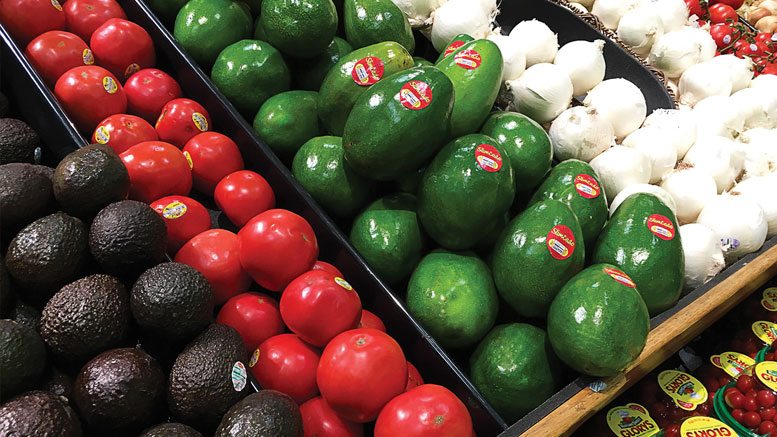
Hass avocados (left) command a consistent 30–50% premium over smooth green-skin varieties in Indian retail markets — driven by their higher fat content, longer shelf life, and strong brand recognition among health-conscious urban consumers.
Not all avocados in India sell at the same price. Variety is one of the most significant price determinants — and for Indian buyers, the Hass vs green-skin distinction is the most commercially important difference.
| Variety | Skin | Fat Content | Typical Retail Price | Market Position |
|---|---|---|---|---|
| Hass | Dark, pebbly when ripe | 15–20% | ₹350–₹600/kg | Premium |
| Fuerte | Smooth, stays green | 10–15% | ₹200–₹350/kg | Mid-range |
| Local green skin (Coorg) | Smooth green | 8–14% | ₹120–₹250/kg | Value |
| Mixed / ungraded import | Various | Variable | ₹150–₹280/kg | Wholesale |
Hass avocados earn their premium. They have a higher fat content — 15–20% versus 10–15% for Fuerte and similar varieties — which means richer flavour, creamier texture, and better performance in guacamole, toast, smoothies, and cooking applications that Indian consumers have embraced. They also have a longer shelf life once harvested, giving importers and retailers more margin for error in the supply chain.
Indian consumers have been educated by a decade of cafe culture and health media to associate avocado quality specifically with Hass. The brand recognition is real and commercially significant — urban Indian buyers will consistently pay more for the dark, pebbly-skinned Hass than for an equivalent or larger green-skin avocado, regardless of actual eating quality.
India's Avocado Market: Where Prices Are Heading
The structural drivers of Indian avocado pricing are shifting. Domestic production is expanding — government schemes and private investment have increased plantation area in Karnataka, Tamil Nadu, Himachal Pradesh, and the Northeast. As domestic volume grows, it will gradually reduce import dependency and — over time — pressure prices downward.
Cold chain infrastructure improvement is the other major factor. Better refrigerated transport and storage facilities from farm to retail will reduce the post-harvest losses that currently inflate effective prices. Improved infrastructure will also allow smaller retailers and local vendors access to quality product, broadening the market beyond premium supermarkets.
On the import side, trade relationships with major suppliers — particularly Kenya — are maturing. Established logistics corridors, reliable supplier relationships, and growing import volumes are gradually improving the economies of scale for importers, which will filter down to wholesale and retail pricing.
The overall trajectory for Indian avocado prices is lower over the medium term — particularly for domestically grown varieties. But premium-grade Hass from certified origin farms will likely maintain its price position as the Indian consumer's preferred eating avocado, commanded by brand recognition, fat content, and the consistent quality that supply chain maturity brings.
For bulk importers: The most cost-efficient sourcing strategy for the Indian market combines Kenya-origin Hass (short transit, strong quality, competitive cost) with domestic Indian supply during Karnataka's January–March season. Layering these two supply sources across the year minimises import duty exposure during peak domestic availability and maximises product freshness year-round.