
Golden Hass Avocado: Variety Profile, Key Traits & Why It Dominates Export Markets
Among the Hass sub-varieties cultivated for export, Golden Hass stands out with its distinctive shiny skin, high oil content, and consistent performance on long-haul supply chains. Here's everything that defines it.
- Distinctive shiny skin sets it apart from Original Hass
- High oil content — 15–20% — delivers creamy flavour
- Export-approved variety in Kenya alongside Original & Royal Hass
- Grows best at 1,200–2,000m altitude in East Africa
- Skin turns purplish-black when ripe like all Hass-group varieties
- Marginally thinner skin than Original Hass — slightly easier peeling
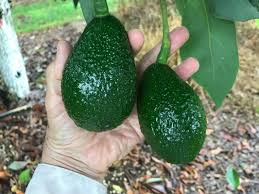
Golden Hass avocados on the tree — the shiny skin surface is the primary visual identifier that distinguishes this sub-variety from the more deeply textured, matte-surfaced Original Hass. Note the characteristic pear-to-oval shape and dark green colouration that transitions to near-black at full ripeness.
The Hass avocado is the most commercially important fruit variety on earth by trade volume. But "Hass" is not a single uniform cultivar. It is a family of related sub-varieties, each with distinct physical characteristics, growing behaviour, and market performance. Among these, the Golden Hass has earned particular recognition among East African export growers and international buyers.
Golden Hass is frequently mentioned alongside Original Hass and Royal Hass as one of the key export-approved Hass varieties in Kenya — Africa's largest avocado exporter. Yet detailed, accessible information about what specifically defines Golden Hass, how to identify it, and what drives its commercial value is surprisingly scarce.
That gap is significant for anyone in the avocado supply chain. Farmers choosing rootstock and scion combinations need to know what they are planting. Exporters grading product at the packhouse need to distinguish between varieties with confidence. Buyers receiving shipments need to know what performance to expect from each Hass sub-type on their market.
This article provides that information — a complete profile of the Golden Hass avocado from physical characteristics and identification to flavour, oil content, growing regions, and export grade specifications.
What Is the Golden Hass Avocado?
Golden Hass is a sub-variety within the broader Hass avocado cultivar group. All Hass sub-varieties trace their genetic origin to the single mother Hass tree planted by Rudolph Hass in La Habra Heights, California, in 1926 — a chance seedling that became the most commercially successful fruit variety in history.
Over decades of propagation across different growing environments, selected clonal lines of Hass have developed sufficiently distinct characteristics to be categorised as distinct sub-varieties by growers, agronomists, and certification bodies. Golden Hass is one such line — recognised specifically for the shiny appearance of its skin, which contrasts with the rough, matte texture of the Original Hass.
The distinction matters commercially. In Kenya's export avocado industry, the Kenya Plant Health Inspectorate Service (KEPHIS) and the Horticultural Crops Development Authority (HCDA) recognise specific Hass sub-varieties as export-approved. Golden Hass is among them. Growers who plant Golden Hass specifically choose it for its combination of recognised export approval, reliable yields, and the high oil content that delivers the eating quality export markets demand.
It is important to note that Golden Hass should not be confused with the Giant Hass — a much larger, commercially discouraged variety that has been described by Kenyan agronomists as the "frowned-upon" option that reduces export competitiveness due to its size exceeding market specifications.
Naming context: The "Golden" designation in Golden Hass does not refer to the colour of the fruit — like all Hass-group avocados, Golden Hass skin turns dark purplish-black when ripe. The name is understood in the Kenyan avocado farming community to reference the shiny, lustrous quality of the skin surface, or in some interpretations, the premium commercial value the variety commands.
Golden Hass Physical Characteristics: How to Identify It
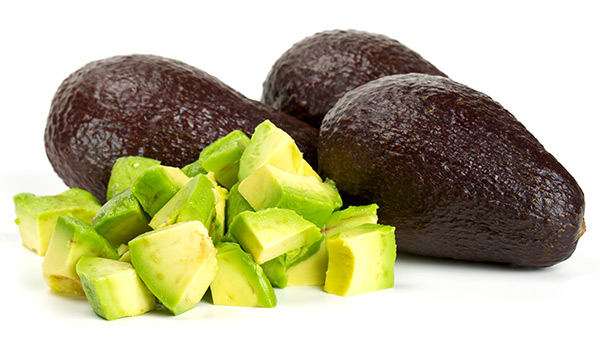
The shiny skin surface of Golden Hass is clearly visible at close range — particularly in fresh, recently harvested fruit. This is the primary visual differentiator from Original Hass, which has a deeply textured, rough, entirely matte surface even when freshly harvested.
Identifying Golden Hass confidently requires knowing which specific physical properties to look for. While all Hass sub-varieties share the family resemblance of the group, Golden Hass has several distinguishing features.
Shiny Skin Surface
The defining identifier. Golden Hass skin has a visible sheen or glossiness, especially when fresh. Original Hass has a uniformly matte surface with no sheen.
Size & Weight
Typically 200–350g — similar to Original Hass but often at the slightly larger end of the range. Smaller than Giant Hass, which exceeds export size specifications.
Shape
Pear-to-oval shaped, characteristic of the Hass group. Slightly less pronounced neck taper than Pinkerton Hass. Similar silhouette to Original Hass.
Skin Texture
Pebbly and bumpy like all Hass-group varieties, but the individual protrusions are marginally less angular and deep than Original Hass. Slightly smoother between bumps.
Colour Change
Green when unripe, turning dark purplish-black as it ripens — identical to Original Hass. This colour change is the primary consumer ripeness indicator for all Hass types.
Skin Thickness
Slightly thinner skin than Original Hass, which makes peeling marginally easier. Thick enough to protect the flesh during export logistics without structural compromise.
The shiny skin test is the most reliable field identification method. Run your thumb across the surface of a fresh, recently harvested fruit. Original Hass feels rough and entirely matte even under direct light. Golden Hass has a perceptible smoothness between the texture bumps and reflects light differently — the sheen is visible to the eye when the fruit is held in angled light.
This identification matters at the packhouse level. When multiple Hass sub-varieties enter the grading line together, experienced packhouse sorters can differentiate them by this surface quality. Buyers who specify Golden Hass in their purchase orders need the variety correctly identified and segregated before packing.
Flavour Profile and Oil Content: What Golden Hass Delivers to the Consumer
The primary reason Hass-group avocados dominate global markets is their eating quality — specifically the rich, creamy, nutty flavour produced by high oil content. Golden Hass fully delivers on this expectation.
At maturity, Golden Hass flesh has a fat content of 15–20% by weight, comparable to Original Hass. This high oil concentration is what creates the characteristic dense, buttery texture that distinguishes premium avocado from watery, low-fat varieties like Florida avocado or some green-skin types.
The flesh colour of Golden Hass follows the Hass-group pattern. Near the skin, it is pale green. Moving toward the centre, it deepens to a golden yellow-green. This distinctive interior colour gradient is one of the visual indicators of proper ripeness and oil development.
In terms of taste, some growers and buyers note that Golden Hass has a slightly milder flavour profile compared to Original Hass. Original Hass at peak ripeness has a particularly pronounced nutty, almost cheesy intensity. Golden Hass delivers the same family of flavour — rich, fatty, slightly earthy — but with marginally less assertiveness. This subtlety can actually be commercially advantageous in markets where consumers are new to avocado and prefer a less overpowering introduction to the variety.
Dry matter standard: In Kenya's export chain, avocados must meet a minimum dry matter content (DMC) before harvest. For Hass varieties including Golden Hass, the threshold is typically 21–23% DMC. Dry matter content is a reliable proxy for oil development — fruit harvested below this threshold fails to ripen correctly at destination, producing a rubbery, off-flavour product that damages buyer relationships. Golden Hass growers should use a microwave or oven dry-matter test regularly during the pre-harvest period to confirm readiness.
Golden Hass vs Other Hass Varieties: Full Comparison
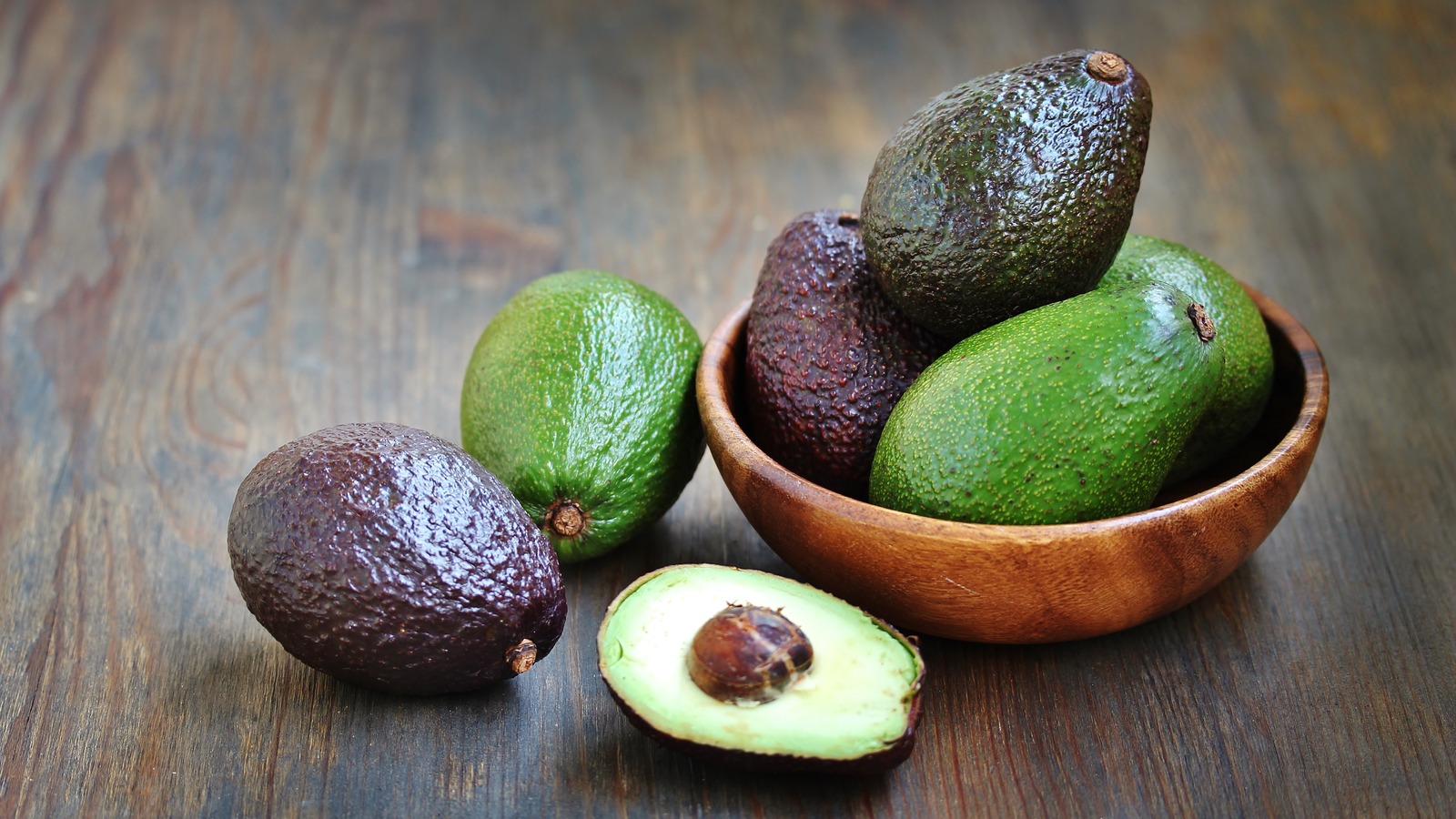
The four main Hass sub-varieties found in Kenyan avocado farming — Original Hass, Golden Hass, Giant Hass, and Royal Hass. Each has distinct physical properties, export performance, and market suitability. Golden Hass and Original Hass are considered the benchmark export varieties.
| Property | ✨ Golden Hass | Original Hass | Giant Hass | Royal Hass |
|---|---|---|---|---|
| Skin surface | Shiny / glossy | Rough, matte | Rough, matte | Smooth to slightly textured |
| Skin thickness | Slightly thinner | Thick | Thick | Moderate |
| Fruit size (weight) | 200–350g | 200–300g | 350–600g+ | 200–350g |
| Oil content | 15–20% | 17–20% | Lower relative | 15–19% |
| Flavour intensity | Rich, slightly mild | Richest, nutty | Watery, mild | Rich, balanced |
| Export approved (Kenya) | ✓ Yes | ✓ Yes | ✗ Discouraged | ✓ Yes |
| Export shelf life | Good | Excellent | Shorter | Good |
| Market reception | Premium | Premium | Domestic only | Premium |
| Identification ease | Shiny skin | Very rough matte | Large size | Protruding neck |
Giant Hass deserves particular mention in this comparison because it represents a significant risk for Kenyan farmers. As documented by Kenyan farming accounts, the rootstock of Giant Hass can outgrow and overtake a Golden or Royal Hass scion if the grafting process is not done correctly or not monitored over the first years of growth. Farmers who believe they have planted Golden Hass trees may discover, upon first fruiting, that a significant proportion of trees are actually Giant Hass — requiring costly regrafting to restore export viability.
Growing Golden Hass in Kenya: Optimal Regions and Conditions
Kenya is East Africa's dominant avocado producer and one of the world's top five avocado exporters. The country's high-altitude agricultural counties provide near-perfect conditions for Hass-group avocado production, including Golden Hass.
Altitude is the single most important growing condition for premium Golden Hass quality. At elevations above 1,200 metres, the diurnal temperature range — warm days and cool nights — slows the fruit's development, extending the time oils accumulate in the flesh. This extended maturation is what produces the high dry matter content that export quality demands.
Below 1,000 metres, Hass avocados develop faster, often fail to reach minimum dry matter thresholds, and produce a noticeably inferior eating experience at destination. Kenyan agronomists consistently advise against planting export Hass varieties at lower altitude sites regardless of other growing condition advantages.
Golden Hass, like all Hass-group varieties, is an A-type flowering cultivar. This means its flowers open as female in the morning and male in the afternoon. For optimal pollination and fruit set, B-type pollinator varieties (such as Fuerte) should be planted within 30 metres of Golden Hass trees — typically at a ratio of one pollinator per 8–10 Hass trees in commercial orchards.
Grafting vigilance required: As documented in Kenyan farming experience, the rootstock used for Hass avocado grafting — often Giant avocado — can outcompete and overtake the Golden Hass scion without the farmer's awareness. Regular inspection of young trees for characteristic Giant Hass fruit size is essential. Any trees identified as reverting to rootstock should be regrafted immediately. This is one of the most commonly cited quality-control challenges in Kenyan Hass avocado farming.
Reading Golden Hass Ripeness: A Stage-by-Stage Breakdown
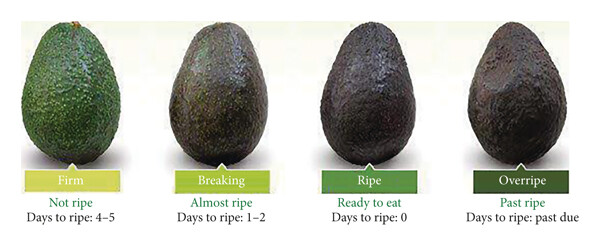
Golden Hass avocado at different ripening stages — the characteristic green-to-purplish-black colour change is the most reliable ripeness indicator for all Hass-group varieties, including Golden Hass. At stage 4-5, the flesh is at peak creaminess and oil expression.
The colour change from green to purplish-black is the most reliable consumer-facing ripeness indicator for Golden Hass. Unlike varieties like Fuerte that remain green when ripe, Golden Hass follows the full Hass-group colour change — which is one of its key advantages in retail environments where consumers are accustomed to the visual ripeness cue.
The stem test also works reliably with Golden Hass. If the small button at the stem end releases easily and shows green beneath, the fruit is ripe and in excellent condition. Brown beneath the button indicates the fruit is overripe. A firmly attached button means it needs more time.
Golden Hass in the Export Supply Chain
Golden Hass avocados harvested at the correct dry matter level (21–23% minimum DMC) handle the demands of international logistics well. They maintain their structure through the 10–14 day sea transit from Mombasa to European ports, ripen consistently at destination, and deliver the eating quality that European and Middle Eastern buyers have built their supply chains around.
At the packhouse, Golden Hass is graded by weight, visual quality (surface defects, skin consistency), and often by dry matter measurement using non-destructive near-infrared technology at larger operations. Export cartons are typically packed in 4 kg or 10 kg configurations, depending on buyer specifications.
Kenya's peak Golden Hass export season from the Central Kenya growing regions (Murang'a, Kirinyaga, Meru) runs approximately from mid-February to mid-June. Eastern county growing areas — including Machakos and Kitui — have a season that peaks slightly later, in mid-March. This staggered availability across regions helps maintain supply continuity for buyers who need consistent weekly volumes.
Sourcing Golden Hass: What Buyers Need to Know
For international buyers sourcing Golden Hass avocados, several specifications matter beyond simply requesting the variety name.
Dry matter verification. Insist on documented dry matter content from the exporter's pre-harvest testing programme. Minimum 21% DMC at harvest is the baseline; 23%+ indicates superior ripening potential at destination. Some premium buyers specify 24–25% DMC for the highest-quality product.
Variety segregation. Request that Golden Hass is packed and labelled separately from Original Hass in export cartons. Mixed variety packing creates ripening inconsistency at the retail end. The two varieties ripen at slightly different rates, and mixed cartons produce uneven shelf-life performance.
Size specifications. Most European buyers specify weight ranges — typically 160–220g (count 18–24 per 4 kg carton) or 220–300g (count 12–16 per 4 kg carton). Confirm that Golden Hass from your supplier consistently falls within your required size grade before committing to volume orders.
Certification documentation. For European Union market entry, Kenyan Golden Hass shipments require KEPHIS phytosanitary certificates and — where applicable — GlobalG.A.P. certification from the source farm. Importers should verify both the farm-level GlobalG.A.P. certificate and the current KEPHIS registration of the exporting company before placing orders.