
Hangzhou Cucumber Price: CNY & USD Rates, Wholesale Costs & Market Breakdown
China produces 78% of the world's cucumbers. Hangzhou's Zhejiang corridor is at the heart of it. Here's everything international buyers need to know — current prices, seasonal patterns, and how to source cost-effectively.
- What Is the Hangzhou Cucumber?
- Current Hangzhou Cucumber Price in CNY & USD
- 2023–2025 Price Trend Analysis
- Seasonal Price Patterns in Zhejiang
- Price by Channel: Farmgate to Retail
- China's Dominance in Global Cucumber Supply
- Hangzhou vs Other Cucumber Varieties
- Export Markets and International Trade
- How International Buyers Source Cucumbers
- Frequently Asked Questions
- China wholesale: CNY 2.94–3/kg (~$0.41–$0.42/kg) as of April 2025
- 4-week rolling range: $0.48–$1.08/kg — significant seasonal variation
- 2024 wholesale range: $0.48–$1.33/kg (rising from $0.42–$1.28/kg in 2023)
- China accounts for 78% of global cucumber production — 68+ million tonnes
- Zhejiang (Hangzhou) is a key production hub alongside Shandong and Henan
- Export price: $0.66–$1.11/kg — 30–60% premium over domestic wholesale
What Is the Hangzhou Cucumber?
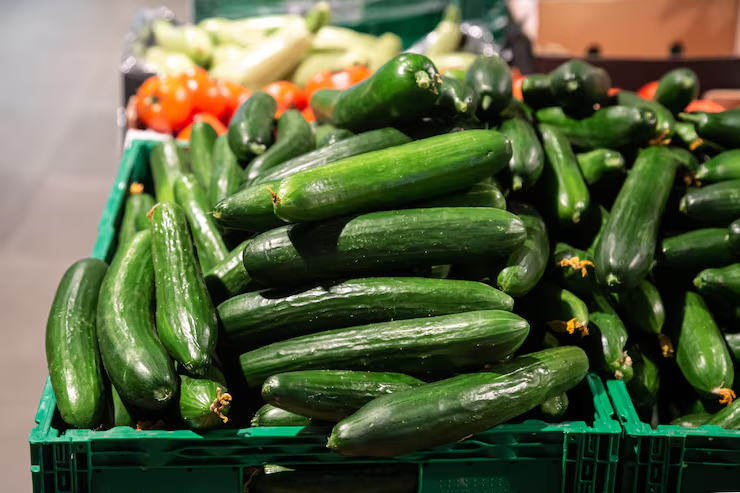
The Hangzhou cucumber refers to the slender, thin-skinned Chinese cucumber variety associated with the Hangzhou region of Zhejiang Province — one of China's most prosperous and agriculturally productive coastal provinces. Hangzhou, the provincial capital, serves as both a major consumption market for premium fresh produce and a key node in Zhejiang's regional wholesale distribution network for cucumbers grown in the surrounding counties and transported to coastal and inland markets.
In variety terms, the "Hangzhou cucumber" belongs to the broader category of Asian or Oriental cucumbers — characterised by their elongated shape (typically 20–35cm in length), smooth or lightly ribbed dark green skin, very thin and tender rind, small seed cavity, and mild, sweet flavour with little to no bitterness. These are what food specialists call "burpless cucumbers" — they lack cucurbitacin, the compound responsible for the bitter taste and digestive discomfort associated with Western-style slicing cucumbers.
Hangzhou-region cucumbers have been cultivated for centuries in the Yangtze River Delta's fertile agricultural zones. The region benefits from abundant rainfall, well-irrigated lowland fields, a warm subtropical climate, and highly experienced vegetable-growing communities who have developed local hybrid varieties optimised for the specific growing conditions around Hangzhou, Ningbo, and other Zhejiang cities. The cucumber is the second most important vegetable crop in China after Chinese cabbage, and Zhejiang is among the top producing provinces alongside Shandong, Henan, Hebei, and Jiangsu.
Current Hangzhou Cucumber Price in CNY and USD
The most recent wholesale price data for Chinese fresh cucumbers — the category that covers Hangzhou-style slender cucumbers — shows a benchmark rate of CNY 2.94–3.00 per kilogram as reported in March and April 2025. Converting at current CNY/USD rates, this translates to approximately $0.41–$0.42 USD per kilogram at the wholesale level in Chinese domestic markets.
It is important to understand what these numbers represent and what they don't. The CNY 2.94–3.00/kg figure reflects the wholesale price at major Chinese distribution markets — the price a wholesaler or trader pays when buying in volume from producers or first-stage aggregators. This price is representative of markets in the Tianjin, Beijing, Qingdao, and comparable major wholesale centre networks. Zhejiang/Hangzhou market prices track closely with these national benchmarks, though local supply-demand dynamics can create modest deviations during peak production and seasonal transition periods.
For international buyers looking to import Chinese cucumbers, the relevant price is the export price, which reflects the additional costs of export packaging, phytosanitary certification, logistics to port, customs clearance, and trader margins. Chinese cucumber export prices in 2024 ranged from $0.66 to $1.11 USD per kilogram — a premium of roughly 60–170% over the domestic wholesale price at the low end of the range, reflecting all of these additional cost layers.
| Price Level | CNY/kg | USD/kg equiv. | Period / Reference | Notes |
|---|---|---|---|---|
| Domestic wholesale low | ~CNY 3.0 | ~$0.41–$0.42 | Mar–Apr 2025 (Tridge) | Current benchmark rate |
| 4-week rolling range | CNY 3.5–7.8 | $0.48–$1.08 | 2025 recent | Seasonal variation included |
| 2024 wholesale range | CNY 3.5–9.7 | $0.48–$1.33 | Full year 2024 | Up from $0.42–$1.28 in 2023 |
| 2023 wholesale range | CNY 3.0–9.3 | $0.42–$1.28 | Full year 2023 | Prior year reference |
| China export price 2024 | CNY 4.8–8.1 | $0.66–$1.11 | Export transactions 2024 | FOB Chinese port |
| Suzhou (Zhejiang area) market | CNY 2–3.5 per 0.6kg | ~$0.46–$0.80/kg | Nov 2024 (HusFarm) | Retail-grade bag/box at market |
How to read these prices for procurement decisions: The CNY 3/kg wholesale figure is the floor price for domestic Chinese cucumber. For international buyers, add: export packaging (+15–25%), phytosanitary inspection (+$0.02–0.04/kg), logistics to port (+$0.05–0.10/kg), freight (highly variable by destination), and importer margin (+20–40%). A Hangzhou cucumber that leaves the Zhejiang farmgate at CNY 2.5/kg ($0.34/kg) may ultimately cost $1.20–$2.00/kg by the time it arrives refrigerated at a Rotterdam distribution centre — a 3.5–6× multiplier that reflects the reality of fresh produce global logistics.
2023–2025 Hangzhou Cucumber Price Trend Analysis
China's cucumber wholesale price has shown a consistent upward trend over the 2023–2025 period, reflecting broader market dynamics that international buyers and importers should factor into their procurement planning. The range of wholesale prices recorded in 2024 ($0.48–$1.33/kg) was higher than the 2023 range ($0.42–$1.28/kg) at both the low and high ends, confirming a structural upward shift rather than a one-off spike.
Several factors are driving this price trend. Input cost inflation — including fertiliser, labour, and energy costs for greenhouse production — has raised production costs across Chinese vegetable farming. Increasing domestic consumption from China's growing urban middle class puts baseline demand pressure on supply. And export growth, particularly to Central Asian and Russian markets following the restructuring of supply chains post-2022, has redirected some Chinese cucumber supply from domestic channels into export, modestly reducing domestic availability and supporting prices.
The weekly price change data confirms this momentum: China's cucumber wholesale prices were up 1.28% year-on-year as of December 2025, though the monthly figure showed a 11.36% monthly decline — illustrating how dramatically seasonal factors can override the medium-term trend within any given week or month. Understanding both the underlying trend and the seasonal overlay is essential for buyers timing procurement decisions.
Seasonal Price Patterns in Zhejiang and Hangzhou Markets
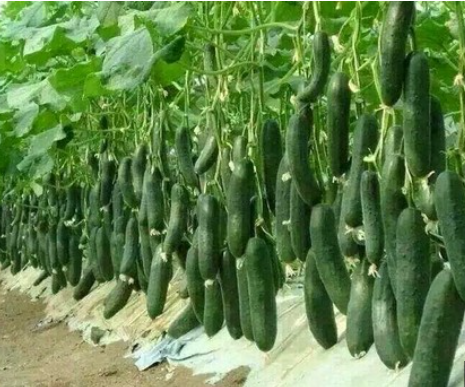
The Hangzhou cucumber price follows a pronounced seasonal cycle driven by the rhythm of outdoor field production in Zhejiang and neighbouring provinces, supplemented by greenhouse supply during winter months at significantly higher production cost. Understanding this cycle is the most practical tool for international buyers seeking to optimise procurement cost and timing.
📅 Hangzhou Cucumber Price Seasonality — Monthly Pattern
The summer peak (June–August) marks the lowest price period for Hangzhou cucumbers. Outdoor production in Zhejiang, combined with supply flows from Shandong and Henan provinces, creates market abundance. At this point, domestic wholesale prices approach their annual lows in the CNY 2.5–4/kg range ($0.35–$0.55/kg).
The winter period (December–February) is the most expensive time to source Chinese cucumbers. Outdoor production in Zhejiang ceases due to cold temperatures, and supply depends on heated greenhouse operations — significantly more expensive to run. Wholesale prices during this period can reach CNY 6–10/kg ($0.83–$1.38/kg), with price spikes during cold snaps that damage greenhouse crops. The 2024 data showing a high of $1.33/kg reflects this winter peak dynamics.
The spring transition (March–May) sees prices moderate as outdoor planting begins and early-season crops start entering the market from warmer growing zones in southern China. Zhejiang's early spring supply kicks in around late March to April, with prices typically falling from winter peaks as volumes recover.
Hangzhou Cucumber Price by Channel: Farmgate to Retail
China's Dominance in Global Cucumber Supply
Understanding Hangzhou cucumber pricing requires understanding China's extraordinary position in global cucumber production. No other crop category demonstrates quite the same degree of single-country dominance as cucumbers and China. The FAO's 2024 global production figure of 88 million tonnes includes approximately 68 million tonnes from China — roughly 78% of everything grown on the planet. This is not a marginal lead; it is categorical domination.
This production volume has grown consistently and substantially: up 3.35% year-on-year, 9.96% over three years, and 18.59% over five years. The trajectory shows no signs of reversal. China's dominance reflects a combination of enormous land area devoted to cucumber cultivation, highly developed hybrid breeding programmes producing high-yield varieties, efficient smallholder production systems with strong market integration, and the fundamental fact that cucumber is central to Chinese food culture in a way it is not in most other large economies.
Zhejiang's role in China's cucumber economy: Zhejiang Province, with Hangzhou as its capital, sits within China's most economically sophisticated agricultural zone. The Yangtze River Delta region's agricultural producers benefit from excellent transport infrastructure (rail, road, and port connections), strong links to export-oriented processing facilities, and access to the wealthy consumer markets of Shanghai, Hangzhou, and Ningbo. Zhejiang cucumber production — concentrated in areas like Jiaxing, Jinhua, and the counties surrounding Hangzhou — benefits from these logistics advantages and typically commands modest premiums over production from more remote inland provinces. Made-in-China.com data shows Zhejiang as the third-largest province for cucumber-related supplier registrations after Shandong and Guangdong.
Hangzhou Cucumber vs Other Varieties: Characteristics and Pricing
| Variety Type | Origin | Length | Skin | Flavour | Price Tier |
|---|---|---|---|---|---|
| Hangzhou / Chinese Slender | Zhejiang, China | 20–35cm | Thin, ribbed, dark green | Mild, sweet, burpless | Low — mass produced |
| English / Dutch Greenhouse | Netherlands/UK | 30–40cm | Very smooth, thin, wrapped | Mild, refreshing | Premium — controlled environment |
| Suyo Long | Northern China | 30–45cm | Ridged, dark green, knobbed | Sweet, mild, citrus note | Mid — specialty heirloom |
| American Slicer | USA/Mexico | 15–20cm | Thick, tough, waxy | Mild, slightly bitter rind | Mid — mass market |
| Persian / Mini | Middle East origin | 10–15cm | Thin, smooth, seedless | Crisp, mild, no bitterness | Premium — specialty/retail |
| Chinese Yellow (Heirloom) | China | 20–25cm | Yellow-orange variegated | Mild, lemony, apple notes | Specialty/rare |
| Gherkin / Pickling | Global | 5–10cm | Bumpy, spiny | Tart, crisp (for pickling) | Processing grade |
The price gap between Hangzhou-style Chinese slender cucumbers and Western alternatives reflects not just production cost differences but fundamental structural differences in how these cucumbers are grown and sold. Chinese slender cucumbers are produced at enormous scale in open-field farming systems with low labour costs per unit, while English greenhouse cucumbers grown in the Netherlands or the UK carry the full cost of climate-controlled environments, high-cost European labour, and premium logistics. This structural cost difference means that for buyers whose market can accept Asian-style cucumbers, sourcing from Chinese production zones delivers dramatically better price-to-quality economics than premium Western greenhouse supply.
China's Cucumber Export Markets and Trade Flows
Despite its overwhelming domestic production, China's cucumber export volume is relatively modest as a share of total production — most Chinese cucumbers are consumed within China. However, export transactions are documented and growing, particularly toward Russia, Kazakhstan, and other Central Asian markets that have historically been major recipients of Chinese fresh vegetable exports.
A February 2025 Tridge transaction confirms cucumbers described as "ОГУРЦЫ СВЕЖИЕ" (fresh cucumbers in Russian) being exported from China to Kazakhstan — one of many such transactions that characterise China's Central Asian produce export corridor. This corridor has grown significantly in the post-2022 period as Russian and Central Asian markets have become more receptive to Chinese agricultural supply.
Export prices in 2024 ranged from $0.66 to $1.11/kg, representing a significant premium over domestic wholesale ($0.48–$1.08/kg range). This premium reflects export packaging requirements (typically individual wrapping or tray-pack formats), phytosanitary certification from Chinese authorities, compliance with destination country import standards, and trader/agent margins for the export transaction. Markets like Russia and Kazakhstan accept Chinese cucumbers with Chinese export documentation; EU and UK markets require additional compliance with EU MRL pesticide standards and EUDR-adjacent food safety frameworks that add cost and complexity to the supply chain.
The import price reality for European buyers: European importers considering Chinese cucumber supply should factor in: refrigerated container freight from Shanghai/Qingdao to Rotterdam (typically $4,000–$8,000 per 40ft reefer container at 20–22 tonnes net cargo = $0.18–$0.40/kg freight); EU customs duty (7.7% for fresh cucumbers from China, unless an FTA applies); MRL pesticide testing ($0.02–$0.05/kg for a certified test); and cold chain distribution within Europe. Starting from a $0.66/kg FOB export price, a realistic all-in landed cost at a European distribution centre is $1.20–$2.00/kg — still competitive with many European-grown varieties but not the dramatic discount that raw farmgate pricing might suggest.
How International Buyers Source Cucumbers from China
For buyers outside China seeking access to Hangzhou-region and broader Chinese cucumber supply, the sourcing landscape involves multiple channel options depending on volume requirements, quality standards, and logistical capability.
Option 1: Direct from Zhejiang Exporters
The most cost-efficient channel for volume buyers. Zhejiang has an active community of agricultural export companies serving the Central Asian and Russian markets, many of whom are registered on platforms like Made-in-China.com and Alibaba. Direct contact with Hangzhou Suncamry Agricultural Development Co. and similar Zhejiang-based agri-exporters allows buyers to negotiate FOB pricing at the $0.66–$1.11/kg range with control over specification and packaging.
Option 2: Trading Companies via Qingdao or Shanghai
Major Chinese trading hubs aggregate fresh produce from Zhejiang and other producing provinces for consolidated export containers. This model suits buyers who need mixed vegetable containers or who lack the volume for a dedicated cucumber shipment. The price premium over direct exporter pricing is typically 10–20% for the trading company's aggregation service.
Option 3: Alternative Origins for Asian-Style Cucumbers
International buyers who need Asian-style slender cucumbers but face compliance complexity with Chinese imports — EU MRL standards, phytosanitary concerns, or geopolitical supply chain risk preferences — increasingly turn to alternative origins. Kenya, Thailand, Vietnam, and India all produce slender cucumber varieties compatible with the Hangzhou/Chinese cucumber market specification. East African origins like Kenya offer competitive farmgate pricing, EU-compliant food safety certification, and air freight transit times to European markets of 8–10 hours — allowing fresh delivery that sea-freighted Chinese supply cannot match on freshness.
FrutPlanet's cucumber supply: FrutPlanet sources and exports fresh cucumbers from Kenya — including slender Asian-style varieties comparable to Hangzhou cucumber specifications — with full KEPHIS phytosanitary documentation meeting EU import requirements. Our cucumbers offer competitive bulk pricing, consistent quality grading, and logistics flexibility for buyers in Europe, the Middle East, and Asia who need a reliable, compliant cucumber supply alternative to Chinese-origin product. Contact our wholesale team for current availability and pricing for slender and English-style cucumber varieties.