
Mushroom Farming in Zimbabwe: Varieties, Setup Costs, Profit & Market Access
Zimbabwe's urban farmers are earning $200–$400 per week from backyard mushroom operations. A 3×3m growing space can generate $3,000 worth of mushrooms per year. Here's the complete commercial breakdown.
- Why Mushroom Farming Makes Sense in Zimbabwe
- Best Varieties for Zimbabwe's Climate
- Zimbabwe-Specific Substrate Options
- Getting Spawn in Zimbabwe
- Step-by-Step: Setting Up Your Zimbabwe Farm
- Real Profit Analysis in USD
- Zimbabwe Climate Zones & Growing Conditions
- Selling Mushrooms in Zimbabwe
- Managing Load Shedding Challenges
- Frequently Asked Questions
- Zimbabwe wholesale price: $5–$10/kg — strong commercial economics
- Real Harare farmers earning $200–$400/week at backyard scale
- Cotton husk — Zimbabwe's unique substrate advantage from cotton belt
- Spawn sourced primarily from South Africa; some local producers in Harare
- Oyster mushrooms: first harvest in 3–4 weeks; best for beginners
- Primary market channels: Harare supermarkets, hotels, restaurants, and direct sales
Why Mushroom Farming Makes Sense in Zimbabwe Right Now
Mushroom farming has moved from agricultural curiosity to genuine mainstream urban income source in Zimbabwe over the past decade — and the reasons are structural, not temporary. In a country where formal employment has contracted dramatically, protein costs have risen, and disposable incomes for most families remain constrained, mushrooms address multiple economic problems simultaneously for both producers and consumers.
For producers, the economics are compelling. Mushroom farming requires no land. It demands minimal capital to start — a functional small-scale setup can be assembled for under $500. The return on that investment arrives in weeks rather than months, creating cash flow faster than virtually any other agricultural enterprise. The growing cycle does not wait for rain seasons or depend on soil fertility. And demand in Zimbabwe's urban centres consistently outpaces supply, meaning established producers rarely face the market access problems that plague other crops.
For consumers, the proposition is equally clear. As Zimbabwe's protein costs — beef, chicken, pork — have risen beyond the reach of many urban households, mushrooms provide a nutritionally dense, affordable alternative rich in protein, vitamins, minerals, and immune-supporting compounds. This dual pressure — from producers seeking income and from consumers seeking affordable nutrition — makes the Zimbabwe mushroom market structurally different from more mature Western markets where mushrooms are a premium indulgence. In Zimbabwe, they are increasingly a staple for urban middle-income households.
Best Mushroom Varieties for Zimbabwe's Climate

Two commercial varieties dominate Zimbabwe's mushroom farming sector, and choosing between them is one of the first decisions a new farmer must make. The choice has significant implications for technical difficulty, startup cost, substrate requirements, and market positioning.
Oyster Mushroom
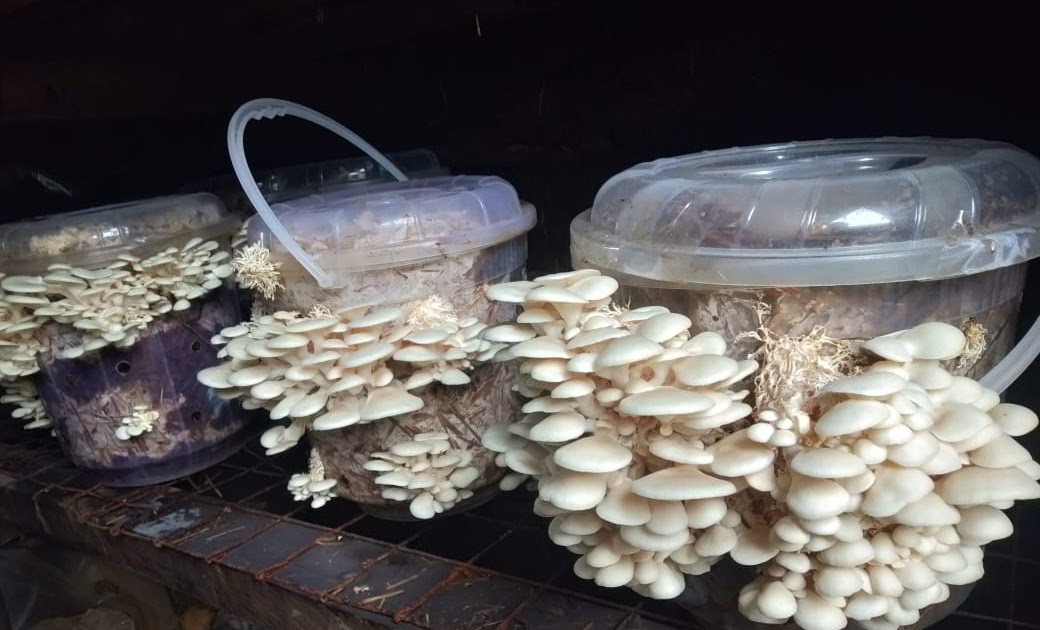
Fastest growing (3–4 weeks). Tolerates Zimbabwe's warm climate best. Cotton husk, wheat straw, maize stalks all work as substrate. Multiple harvest flushes. Sold in homes, markets, and restaurants.
Button Mushroom
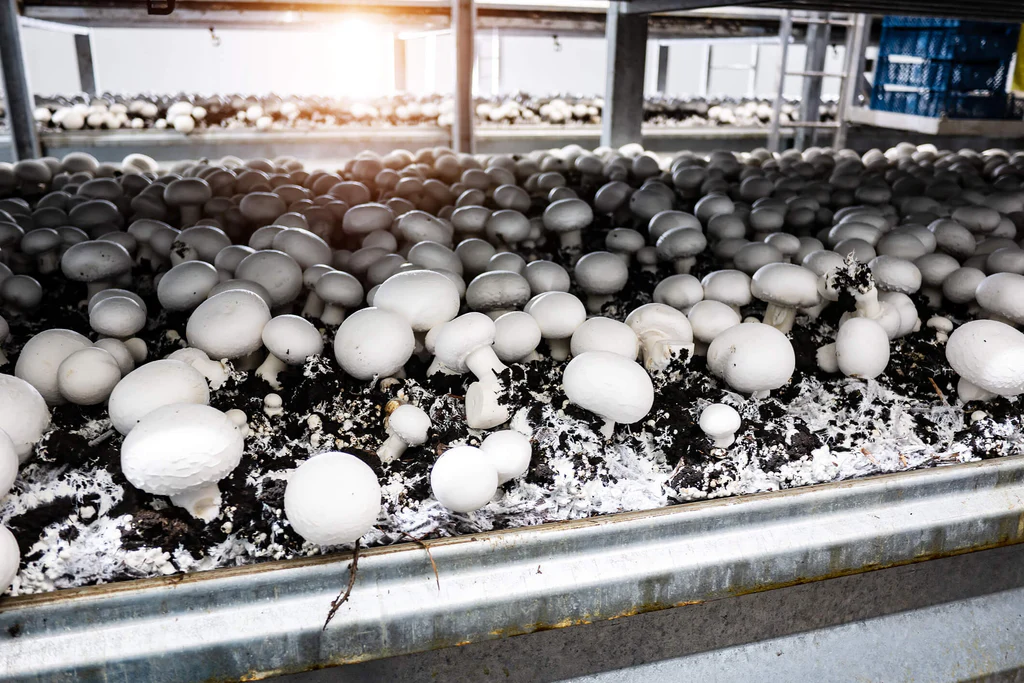
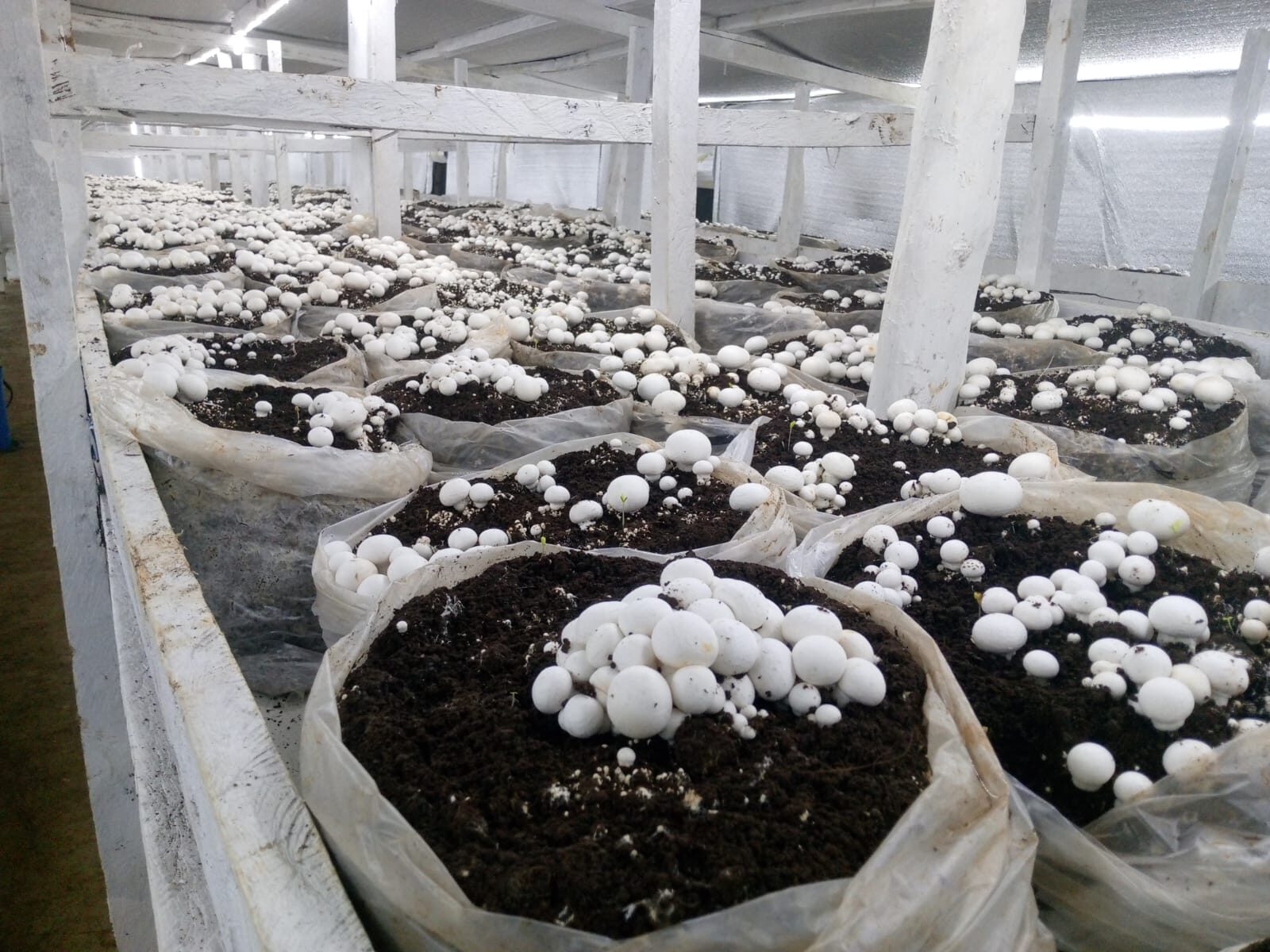
Higher retail price. Dominant in Harare supermarkets. Requires composted manure substrate and stricter temperature control (16–20°C). Best for highveld regions. Preferred by hotels and restaurants.
Shiitake
Emerging niche. Grows on hardwood sawdust. High-end restaurant demand. Longer production cycle (4–6 weeks). Potential for export to regional markets. Currently underexplored in Zimbabwe.
Reishi / Medicinal
Growing health supplement market. Dried for powder and extract production. Long cultivation cycle. Premium pricing in export channels. Small but growing regional demand in SADC market.
Soko Mushrooms — Zimbabwe's most recognisable commercial mushroom brand, founded by the Soko sisters in Ruwa in 2012 — built their business on both oyster and button varieties, supplying Harare's supermarket chains and hospitality sector. Their experience confirms that these two varieties cover the full commercial spectrum: oyster for volume, accessibility, and cash flow; button for premium positioning, supermarket supply, and higher per-kg margins.
The Zimbabwe climate consideration: Unlike temperate countries where temperature control is a significant cost, Zimbabwe's highveld climate around Harare (altitude 1,490m) provides natural temperatures between 15–24°C for much of the year — falling naturally within or close to optimal oyster mushroom fruiting conditions. During Zimbabwe's hot season (October–November), temperatures in poorly insulated growing structures can rise above the 28°C upper tolerance for oyster mushrooms, requiring management strategies. During the cold season (June–August), night temperatures in highveld areas can drop to 8–12°C — slowing growth but rarely damaging established crops. Understanding Zimbabwe's seasonal climate cycle directly shapes when and how mushrooms are grown most efficiently.
Zimbabwe-Specific Substrate Options: Cotton Husk and Beyond
Zimbabwe has a genuine agricultural advantage in mushroom substrate that most other African markets cannot match: cotton husk. Zimbabwe is one of Africa's major cotton-producing countries, with cotton grown extensively in Mashonaland West, Midlands, and parts of Manicaland. The ginning process produces cotton husk (cotton seed hulls and gin trash) in large quantities — a highly effective substrate for oyster mushrooms that is available at minimal cost directly from cotton ginning operations.
| Substrate | Best For | Cost Level | Zimbabwe Availability | Preparation |
|---|---|---|---|---|
| Cotton Husk | Oyster mushroom | Very low — near-free from ginners | Excellent (cotton belt) | Pasteurise 70–80°C, 1–2 hrs |
| Wheat Straw | Oyster, Straw mushroom | Low — from commercial farms | Very Good | Pasteurise or lime treatment |
| Maize Stalks / Cobs | Oyster mushroom | Very low — agricultural waste | Excellent nationwide | Chop + pasteurise |
| Hardwood Sawdust | Shiitake, King Oyster | Low — from sawmills | Good (timber areas) | Sterilise under pressure |
| Composted Horse / Cattle Manure | Button mushroom | Medium — requires composting | Good — rural areas | Phase I & II composting (21+ days) |
| Sugarcane Bagasse | Oyster mushroom | Very low — from sugar estates | Good (Triangle, Hippo Valley) | Pasteurise + supplement |
Cotton husk deserves special attention as Zimbabwe's most distinctive substrate advantage. Cotton gin trash — the fibrous residue remaining after lint is separated from cotton seed — contains the right carbon-to-nitrogen ratio for oyster mushroom colonisation. Commercial mushroom growers who establish supply relationships with Cottco or other ginning operations in Mashonaland West access this material at essentially zero cost beyond collection and transport. When combined with 5–10% wheat bran as a nitrogen supplement and pasteurised correctly, cotton husk produces oyster mushroom yields comparable to the best results achieved on wheat straw.
Lime pasteurisation — Zimbabwe's practical solution: Hot-water or steam pasteurisation requires either a large drum and firewood (widely available in rural areas) or electricity (problematic with load shedding). Cold lime pasteurisation provides an alternative that requires no heat source. Substrate is soaked in hydrated lime solution (pH 12+) for 12–18 hours, which kills competing moulds through high alkalinity rather than heat. The lime-treated substrate is then drained, allowed to drop to neutral pH, and packed directly for inoculation. This method is particularly suited to Zimbabwe's load-shedding environment and has been widely adopted by small-scale farmers across Harare's suburbs.
Getting Mushroom Spawn in Zimbabwe
Spawn is the lifeblood of mushroom production — the inoculated grain or wooden medium carrying live mushroom mycelium that you introduce into your prepared substrate. In Zimbabwe, spawn sourcing has been one of the most significant practical constraints for new farmers, and understanding the supply landscape is critical before committing to production.
The primary source of quality commercial spawn for Zimbabwe's mushroom sector is South Africa. South African spawn producers — particularly those in Gauteng's produce and agri-input corridor — supply both oyster and button mushroom spawn to Zimbabwe buyers, typically through agricultural supply networks and occasional cross-border purchasing trips by Harare-based distributors. Spawn crosses into Zimbabwe through Beit Bridge and Plumtree border posts as standard agri-input material.
Within Zimbabwe, spawn availability has improved but remains less consistent than in Kenya or South Africa. Natutech Zimbabwe and several Harare-based mushroom training and consultancy companies supply spawn alongside training services — a bundled model that helps new farmers get started with both technical knowledge and inputs simultaneously. The University of Zimbabwe's Department of Biological Sciences has also been involved in spawn production for research and extension purposes, though commercial consistency varies.
Spawn quality warning: Poor spawn quality is the single most common cause of Zimbabwe mushroom farming failures. Old spawn (more than 4–6 weeks from production), improperly stored spawn (kept in heat), or contaminated spawn produces low or zero yields and demoralises new farmers. Always request the production date from any spawn supplier. Viable oyster spawn should be fully white (no green, black, or yellow patches), firm, and smell pleasantly mushroom-like or earthy — not sour or musty. If possible, ask to see the supplier's current growing bags to verify their spawn is producing actual mushrooms before purchasing.
Step-by-Step: Setting Up a Mushroom Farm in Zimbabwe
Prepare Your Growing Space
Any enclosed space works: an unused room, a brick structure, a shade-netting enclosure, or even a repurposed container. The space must exclude direct sunlight, maintain humidity, and allow some ventilation. Clean and disinfect walls, floor, and ceiling with a dilute bleach solution before use. In Zimbabwe's hot season, north-facing or east-facing structures stay cooler. Thatch roofing dramatically reduces heat buildup compared to corrugated iron sheeting.
Source and Prepare Substrate
For oyster mushrooms, collect cotton husk, wheat straw, or maize stalks. Chop straw to 5–8cm lengths. Adjust moisture to 60–65% (substrate holds shape when squeezed but doesn't drip). Pasteurise using hot water immersion (70–80°C for 1–2 hours in a drum over fire) or cold lime treatment. Allow to cool completely. Do not inoculate warm substrate — heat kills spawn.
Inoculate with Spawn
Work as cleanly as possible — wash hands thoroughly, use a dedicated workspace. Layer substrate and spawn alternately in polypropylene bags (1–2kg per bag), mixing spawn at roughly 15–20% of substrate weight. Seal bags with cotton wool plugs or breathable filter patches. Avoid introducing any external moisture or contamination during this critical step.
Incubation Period (Spawn Run)
Move bags to a dark, warm area (22–28°C). Over 14–21 days, white mycelium spreads through the bag — this is the spawn run. Healthy colonisation looks bright white and fluffy. Remove any bags showing green (Trichoderma mould), black, or pink contamination immediately to prevent spread to neighbouring bags. Turn bags gently after 7 days to promote even colonisation.
Trigger Fruiting
Move fully colonised bags to the fruiting area. Cut cross-shaped slits or open bag tops. Maintain humidity at 80–90% by misting walls and floors 2–3 times daily. Introduce fresh air exchange using fans or natural ventilation (high CO₂ causes long, thin stems without proper cap development). Indirect light for 10–12 hours daily directs mushroom orientation. Pins should appear within 5–7 days.
Harvest and Multiple Flushes
Harvest oyster mushrooms just as caps begin to flatten and before edges wave. Twist entire clusters off rather than cutting. Each bag typically yields 3–5 flushes over 6–8 weeks before substrate is exhausted. Rest bags for 7–10 days between flushes, misting lightly. Exhausted substrate makes excellent compost for vegetable gardens — a zero-waste circular farming model.
Real Profit Analysis in USD: Zimbabwe Mushroom Farm Economics
Zimbabwe's dual-currency environment — US Dollars for business transactions alongside the Zimbabwe Gold (ZiG) — means mushroom pricing and business analysis is most reliably conducted in USD. The following reflects real farmer economics based on documented Zimbabwe mushroom market data.
📊 Small Zimbabwe Mushroom Farm — Weekly P&L (150 active oyster bags)
At retail channels (direct sales to restaurants and hotels at $10–$12/kg), the same 30 kg weekly yield generates $300–$360 gross and a net profit of $256–$316 per week — consistent with the $200–$400 weekly earnings documented for established Harare mushroom farmers. The difference between wholesale and retail fundamentally determines whether mushroom farming is supplementary income or a primary livelihood.
Scaling economics: The beauty of Zimbabwe mushroom economics is that scaling from 150 to 500 bags does not proportionally scale all costs. Spawn, bags, and substrate costs scale linearly. But rent, transport, and time costs per bag fall as volume increases. A 500-bag operation in Zimbabwe — producing approximately 100 kg per week at $7–$10/kg — can generate weekly revenues of $700–$1,000 gross, with net profits in the $500–$700 range. This is the scale at which mushroom farming becomes a genuine primary business rather than a supplementary income activity.
Zimbabwe Climate Zones and Mushroom Growing Conditions
Zimbabwe's diverse climate — spanning tropical lowveld in the south and east, temperate highveld across the central plateau, and Eastern Highlands with cool highland conditions — creates different growing environments that affect which mushroom varieties perform best in each region.
| Region | Key Cities | Typical Temp Range | Best Varieties | Key Challenge |
|---|---|---|---|---|
| Highveld Central | Harare, Gweru | 15–24°C year-round | Oyster + Button | Oct–Nov heat spikes above 28°C |
| Matabeleland / SW | Bulawayo | 12–26°C (cooler winters) | Oyster excellent | Cold nights Jun–Aug slow growth |
| Eastern Highlands | Mutare, Nyanga | 10–22°C (cool highland) | Shiitake + Button | Cool temps ideal — lowest contamination risk |
| Lowveld South | Masvingo, Chiredzi | 20–35°C (hot) | Tropical Oyster only | High temperatures require insulated structures |
| Mashonaland West | Chinhoyi, Karoi | 18–27°C | Oyster excellent | Cotton belt — substrate advantage |
Zimbabwe's highveld — which includes Harare, the country's dominant consumer market — offers the most naturally suited growing conditions for commercial mushroom farming. Temperatures are moderate enough for oyster and button mushroom cultivation for most of the year without expensive climate control systems. The Eastern Highlands presents an interesting niche opportunity: Mutare's cool climate is naturally close to ideal shiitake conditions, and the region's timber industry provides abundant hardwood sawdust. No significant commercial shiitake operation has yet emerged in Zimbabwe — making it an underexplored opportunity for farmers in that region with market access to Harare.
Selling Mushrooms in Zimbabwe: Market Access Channels
Zimbabwe's mushroom market is characterised by strong demand that consistently exceeds supply, particularly in Harare. One documented farmer noted that buyers sometimes queue at her farm because she cannot keep pace with orders — a seller's market that is the envy of most agricultural producers. Understanding how to access different channels at different price points is the key to maximising farm revenue.
One key insight from Zimbabwe's mushroom sector: the buyer pricing problem is real. As Linda Choto — one of Harare's most successful mushroom farmers — documented, buyers often attempt to underprice mushrooms because producers lack organised market price information. The solution is building direct relationships with institutional buyers (hotels, supermarkets, caterers) rather than relying on market traders who have the incentive and power to push prices down. Producers who supply hotels and restaurants at agreed contracted prices earn 40–60% more per kilogram than those selling to middlemen at market prices.
Managing Load Shedding: Zimbabwe's Biggest Mushroom Farming Challenge
Load shedding — Zimbabwe's chronic power supply interruptions, sometimes reaching 16–18 hours per day — is the most significant operational challenge that separates Zimbabwe's mushroom farming context from most other African markets. Mushroom farming's environmental control requirements (humidity management, air exchange, temperature monitoring) typically involve electrical equipment, and the unpredictability of power availability complicates automated production management.
The most resilient Zimbabwe mushroom operations have designed around load shedding from the outset rather than retrofitting solutions afterward. The core principles are passive environmental control wherever possible, with active electrical systems serving only as enhancement rather than the primary mechanism.
Passive humidity management: A growing structure built with shade-netting or hessian-covered walls allows external air movement to naturally regulate internal humidity when weather permits. Wetting the walls and floor manually during power-available periods maintains adequate moisture levels between active misting sessions. Growers who mist heavily before expected outages report that substrate bags retain adequate surface moisture for 4–6 hours without active misting.
Solar-powered ventilation: A 12-volt DC computer fan running from a small solar panel (40–80W) provides continuous air exchange regardless of grid power. This single addition — costing approximately $50–$80 for panel, battery, and fan — eliminates the most damaging consequence of load shedding, which is CO₂ buildup causing deformed, stalk-heavy mushrooms rather than well-formed caps.
Gravity-fed misting system for load-shedding resilience: A 200-litre elevated water tank, gravity-fed through drip irrigation tubing to a perforated pipe running along the fruiting room ceiling, provides continuous gentle misting without any electricity. This setup — used by experienced Harare mushroom farmers — costs approximately $40–$60 in materials and completely eliminates the dependency on electric misting systems. When power is available, an electric pump refills the elevated tank. When power is out, gravity does the work. It is the most practical zero-electricity humidity management solution currently in use in Zimbabwe's mushroom sector.