
Gucchi Mushroom Price in Nepal: Market Rates, Export Value & What Drives the Cost
Nepal's high-altitude forests produce some of the world's most prized gucchi mushrooms — yet prices vary dramatically from forest floor to global export. Here's exactly what they cost at every level of the chain.
- Local Nepali market prices: NPR 7,000–15,000 per kg
- Black gucchi earns 20–30% more than yellow varieties
- India and Tibet are Nepal's primary export destinations
- Nepal government collects NPR 300 per kg export tax
- Season lasts just weeks — price spikes in low-harvest years
- Cannot be commercially cultivated — all supply is wild-harvested
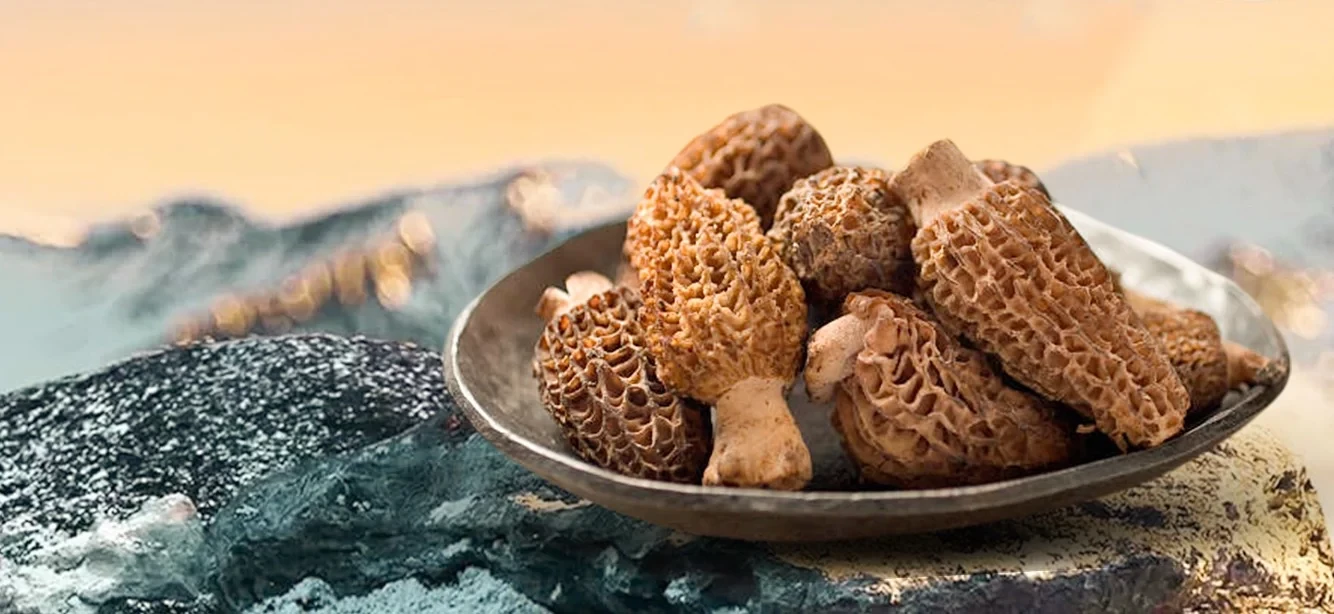
Sun-dried gucchi mushrooms laid out after hand-harvesting — a labour-intensive process that begins within hours of collection to preserve quality and lock in the earthy, umami-rich flavour that commands premium prices globally.
In the high-altitude districts of Nepal's Karnali and Gandaki provinces, spring arrives with a brief and lucrative window. Snow melts, forests warm, and in the leaf litter beneath pine and oak trees, one of the world's most expensive fungi emerges.
Gucchi mushrooms — known locally as guchhi chyau (गुच्छी च्याउ) and scientifically as Morchella esculenta — are true morel mushrooms. Their distinctive honeycomb cap and hollow stem make them unmistakable. Their flavour — intensely earthy, nutty, rich with umami — makes them irreplaceable in gourmet kitchens worldwide.
What drives the price to levels that can exceed NPR 30,000 per kilogram? It begins with a fundamental constraint: gucchi mushrooms cannot be cultivated. They grow only in wild forest environments, only under specific conditions, and only for a few weeks each year. Every kilogram sold anywhere in the world traces back to a forager trekking through remote mountain terrain.
Nepal sits at the geographic heart of this supply chain. The country's high-altitude forested districts are among the most productive natural habitats for gucchi on earth. Understanding how price is formed — from the forager's basket to the export container — tells the full story of why this mushroom commands what it does.
Why Gucchi Cannot Be Cultivated — And Why That Defines Its Price
Most commercial mushrooms — button, oyster, shiitake — are grown in controlled environments on prepared substrate. The economics of cultivation bring prices down, supply becomes predictable, and price volatility largely disappears.
Gucchi operates on entirely different terms. Despite decades of research, Morchella esculenta has resisted all reliable commercial cultivation attempts. The mushroom requires a complex interaction between its mycelium and specific soil conditions, forest ecology, moisture levels, and temperature gradients that are extraordinarily difficult to replicate artificially.
In practice, gucchi appears in the wild under a narrow set of conditions. It tends to emerge in spring, following heavy winter snowfall, often in areas that experienced forest fires in recent years. The fire-and-snow combination appears to create the disturbed, nutrient-rich soil environment the fungus requires.
This means every kilogram of gucchi mushroom that reaches a market in Kathmandu, Delhi, or Dubai was physically collected by hand from remote Himalayan forest. No factory, no greenhouse, no substrate system substitutes for this process. Scarcity is not a marketing claim — it is a biological constraint.
Nepal government tax: The Nepal government recognises gucchi as a significant non-timber forest product. An export tax of NPR 300 per kilogram is levied on gucchi mushrooms leaving Nepal. This revenue forms part of the income of district forest offices in producing regions.
Where Gucchi Grows in Nepal: Key Producing Districts
Nepal's gucchi mushroom production is concentrated in the remote high-altitude districts of Karnali Province and Gandaki Province — areas with the snowfall patterns, forest cover, and altitude ranges that morel mushrooms require.
Nepal's gucchi-producing regions are among the most remote in the country. They share common characteristics: elevations between 2,000–4,000 metres, mixed coniferous and hardwood forest cover, significant winter snowfall, and limited road access that keeps production largely in the hands of local communities.
Mugu district is the most documented producer, with approximately 35 quintals of mushrooms produced annually according to local district forest office records. During peak season, entire villages empty as households of all ages — from children to elderly — trek into community forests to collect the harvest.
The remoteness of these districts is both a challenge and a quality advantage. The isolation ensures minimal pollution exposure and genuinely wild-foraged product. It also means transport to the nearest road or market town can take days, adding cost to each kilogram that eventually reaches Kathmandu.
The Gucchi Price Chain: From Forest to Global Market
Gucchi mushroom prices are not uniform. They shift significantly at each stage of the supply chain. Understanding this is essential for buyers, traders, and producers alike.
🍄 Gucchi Mushroom Supply Chain — Nepal to Global Market
At the forager level, prices reflect the physical risk and effort of the harvest — but also the limited market access in remote districts. A forager in Mugu who collects 2–3 kg of dried gucchi per day during the short season earns income that can sustain an entire household for months.
District traders aggregate supply from multiple foragers, handle initial grading and drying quality checks, and arrange transport to the nearest accessible market. Their margin reflects storage risk and logistics costs in areas with no cold chain.
At the Kathmandu level, gucchi enters a more formal market. Pricing is influenced by the season's overall harvest quality, demand from Indian traders who cross the border to purchase, and competition from Tibetan buyers accessing the same supply via northern border crossings.
Gucchi Mushroom Price Comparison Table: Nepal vs Regional Markets
| Market / Channel | Grade / Form | Price Range (NPR/kg) | Price Range (USD equiv.) | Notes |
|---|---|---|---|---|
| Forager (field price) | Fresh/sun-dried | 5,000–10,000 | $37–$75 | Source price |
| District market (Nepal) | Dried, mixed grade | 7,000–15,000 | $52–$112 | Wholesale |
| Kathmandu wholesale | Dried, graded | 15,000–25,000 | $112–$187 | Key benchmark |
| India border export | Dried, export grade | 20,000–30,000 | $150–$225 | India demand |
| Black gucchi premium | Dark variety, dried | 25,000–40,000 | $187–$299 | +20–30% vs yellow |
| Premium export (Europe/Gulf) | Select grade, packaged | 35,000–65,000+ | $262–$487+ | Luxury segment |
| Online retail (INR-priced) | 50g–100g packs | Equiv. 30,000–60,000 | $224–$449 | Consumer end |
Black vs Yellow Gucchi: The Colour Premium
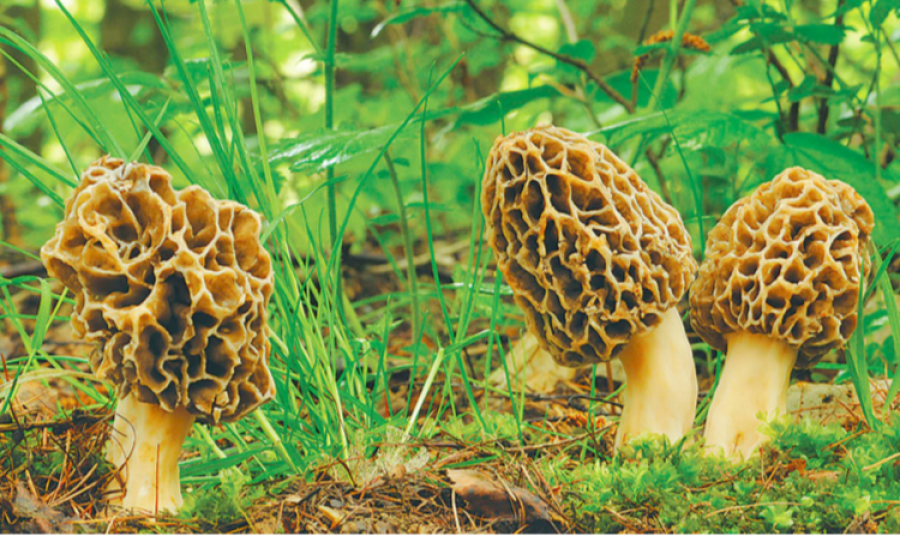
Black and yellow gucchi mushrooms grow in the same Himalayan forests but command significantly different prices. Black varieties — seen here on the left — consistently fetch a 20–30% premium due to their more intense flavour and higher international demand.
Gucchi mushrooms occur in two primary colour variants in Nepal: black (dark brown to near-black cap) and yellow (pale tan to light brown). This colour difference is not cosmetic. It correlates with meaningful differences in flavour intensity, texture, and market value.
Black gucchi is considered the premium grade in both Nepali domestic markets and export markets. Traders report that black varieties command a consistent 20–30% price premium over yellow varieties at the same moisture content and size grade.
The reason lies in flavour chemistry. Black gucchi tends to have higher concentrations of the volatile aromatic compounds responsible for the mushroom's characteristic deep, earthy, smoky-umami profile. After rehydration, black gucchi holds its texture better — a property valued by chefs who require defined pieces in soups and risottos rather than a paste-like texture.
Indian and Chinese buyers specifically request black gucchi. Nepal's Mugu and Humla districts produce a higher proportion of black varieties than lower-altitude sites, which partly explains why supply from those specific districts commands higher prices even before grading.
Grading insight: Beyond colour, Nepali traders grade gucchi by size (whole caps versus broken pieces), moisture content (optimal sun-dried moisture is 8–12%), presence of foreign matter, and cap-to-stem ratio. Whole, intact caps with low moisture and no debris achieve the highest prices. Broken or partially decomposed material is sold as a lower grade, often blended into powders or extracts.
What Drives Gucchi Mushroom Prices in Nepal
Gucchi prices fluctuate more than most agricultural commodities. Several interconnected factors drive that volatility.
Snowfall and Climate Variability
The single most important price driver is the quality of the preceding winter's snowfall. Heavy, sustained snowfall at altitude creates the moisture and temperature conditions the fungus needs to fruit. Dry winters produce poor harvests, sharply reducing supply and driving prices upward. Foragers and traders in Mugu report that annual production can vary by 50–80% between good and bad years.
Harvest Season Duration
The productive window lasts four to six weeks at most, from late March to mid-May depending on altitude and district. Once temperatures warm past the optimal range, gucchi stops emerging and the harvest is over for the year. A late snowstorm or early heat can shorten this window to two to three weeks, concentrating supply pressure and reducing volume significantly.
Indian Export Demand
India is Nepal's dominant export market for gucchi. Demand from Indian traders — who cross the border specifically to purchase Nepal's harvest — has a direct effect on Nepali prices. Strong Indian demand in a given season pulls prices upward at every level of the Nepali chain. Indian gucchi prices (commonly quoted up to INR 25,000–40,000 per kg at the retail level) set the ceiling that Nepali wholesale prices trend toward.
Competition from Tibetan Buyers
Tibet is the second major export destination. Tibetan traders access Nepal's northern districts via mountain passes that are inaccessible to Indian buyers. In years when Tibetan demand is strong, northern district prices are bid up, creating regional price divergence even within Nepal.
Transport and Logistics Costs
The remoteness of producing districts creates a significant embedded cost in every kilogram. Carrying dried gucchi from Mugu to a road head can require multiple days of mule or porter transport. From there, road transport to Kathmandu adds further cost. These logistics costs form a price floor below which trade is not economically viable — and they mean that even low-priced "forager-level" gucchi already reflects substantial labour and transport input.
Nutritional Properties That Support the Price Premium
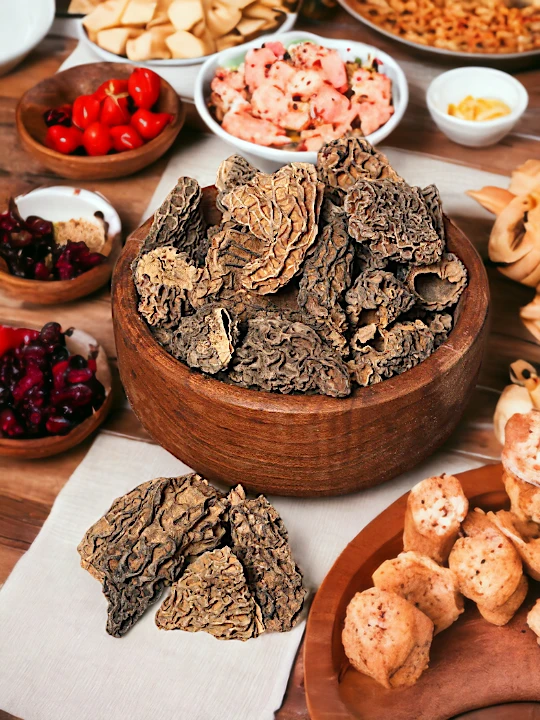
Dried gucchi mushrooms are used across gourmet cuisine and traditional Himalayan medicine. Their nutritional profile — rich in protein, vitamin D, iron, and antioxidants — supports both the culinary and medicinal demand that underpins global pricing.
Price in a premium food commodity is not driven by supply constraints alone. There must be corresponding demand — and gucchi's demand is anchored in genuine nutritional and culinary value.
Per 100g, dried gucchi mushrooms provide approximately 31 kcal in their fresh form, 12.2mg of iron (a remarkable concentration), significant vitamin D, copper, manganese, and a range of antioxidant polyphenols including selenium compounds. For a wild-foraged product with essentially no cultivation input, this nutritional density is remarkable.
In Ayurvedic and traditional Himalayan medicine, gucchi has been used for centuries to support immunity, improve digestion, and promote general vitality. This traditional demand base, particularly in India and Nepal, adds a medicinal purchasing motivation alongside culinary use.
In international gourmet markets, gucchi's flavour profile is the primary value driver. Its deep, earthy, nutty-smoky character is difficult to replicate with any substitution. Michelin-starred restaurants across Europe, the Gulf, and North America use gucchi as a signature ingredient — at price points that make Nepal's export price look modest by comparison.
Rehydration ratio: Dried gucchi mushrooms rehydrate at approximately 5:1 to 6:1 by weight — meaning 1kg of dried gucchi produces 5–6kg of rehydrated mushroom. This ratio means the effective cost-per-use in a professional kitchen is significantly lower than the per-kg dried price suggests, making premium gucchi economically viable in high-value culinary applications.
Buying Gucchi Mushrooms from Nepal: What Importers Need to Know
For international buyers and importers, sourcing gucchi from Nepal requires navigating a fragmented supply chain. There is no single centralised exchange or trading platform. Most export-level transactions happen through established trader relationships built over multiple seasons.
Quality verification is the primary challenge. Dried gucchi can vary significantly in moisture content, proportion of broken pieces, presence of foreign material, and whether black and yellow varieties have been mixed or separated. Export buyers purchasing premium-grade product should specify colour grade (black preferred), minimum cap size, maximum moisture content, and require inspection at the Kathmandu consolidation point before shipment.
Nepal's government export documentation for gucchi requires phytosanitary certificates from the Department of Plant Resources, export permits through relevant government ministries, and payment of the NPR 300 per kg export levy. Buyers should factor these compliance costs into landed price calculations.
For buyers sourcing smaller quantities — 500g to 5kg — reputable Kathmandu-based traders and online export platforms now offer packaged, graded gucchi with international shipping. These channels trade at higher per-kg prices than bulk export but provide verified quality, packaging, and documentation suited to retail or restaurant end-use.