
Carolina Reaper Scoville Rating: Exact Heat, Science & Full Comparisons
The Reaper averages 1,641,183 SHU — hotter than most pepper sprays. Here's the full science behind that number, why the burn lasts so long, and how it compares to every major chilli on the planet.
- Certified average of 1,641,183 SHU by Winthrop University
- Peak individual peppers measured at 2,200,000 SHU
- 200–650× hotter than a jalapeño depending on sample
- High dihydrocapsaicin causes burns lasting 30–60+ minutes
- Sweet, fruity flavour precedes extreme heat onset
- Surpassed by Pepper X in 2023 — still the most iconic superhot
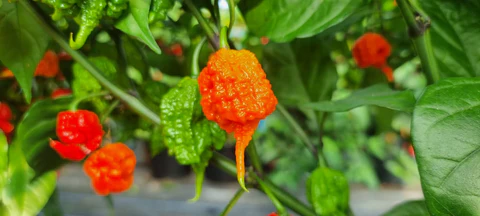
The Carolina Reaper is immediately recognisable by its deep red skin, heavily gnarled texture, and the distinctive pointed tail that inspired its name. Each of those morphological features correlates with extreme capsaicin density.
Some peppers are hot. The Carolina Reaper is in a different category entirely.
With a certified average of 1,641,183 Scoville Heat Units, the Reaper doesn't just outperform other chillies — it competes with the concentrations found in law enforcement pepper spray. A single pepper, improperly handled, can cause respiratory distress, intense skin burns, and temporary vision impairment.
But here is what makes the Reaper genuinely fascinating beyond its raw heat number: it tastes good. Before the inferno ignites, there's a real sweetness — fruity, with hints of cinnamon and chocolate. That flavour arc, from pleasant to devastating, is part of what made the Reaper a cultural phenomenon and a commercial sensation.
This article unpacks the exact Scoville science behind the Carolina Reaper — how that number was produced, what drives the heat at a chemical level, why the burn lasts so long, and exactly how the Reaper compares to every major pepper on the scale.
How the Carolina Reaper's Scoville Rating Was Officially Certified
The Carolina Reaper's official rating did not come from a single measurement. It came from rigorous batch testing conducted at Winthrop University in Rock Hill, South Carolina — the institution that has handled certification testing for Guinness World Records pepper submissions.
Multiple individual peppers from a defined batch were tested using High-Performance Liquid Chromatography (HPLC). This method identifies and quantifies each capsaicinoid compound present in the pepper — primarily capsaicin and dihydrocapsaicin, along with trace amounts of nordihydrocapsaicin, homocapsaicin, and homodihydrocapsaicin.
The results are expressed as ASTA (American Spice Trade Association) pungency units, then converted to Scoville Heat Units by multiplying by 15. The average across all tested samples from the batch produced 1,641,183 SHU. That average is the official record — not the highest single pepper, which reached 2,200,000 SHU.
This distinction matters. When you read "the Carolina Reaper is 1.64 million SHU," you are reading a batch average. The pepper you hold in your hand could be significantly hotter or measurably cooler than that figure, depending on growing conditions, soil, climate, and harvest timing.
First tested in 2010. The Carolina Reaper was initially measured at Winthrop University in 2010, returning 1,474,000 SHU. By the time the Guinness World Record was officially certified in 2013 and updated in 2017, the average had risen to 1,641,183 SHU — reflecting refinements in growing practices and selection of the hottest plant lines.
The Capsaicinoid Profile: Why the Reaper Burns Longer Than Other Superhots
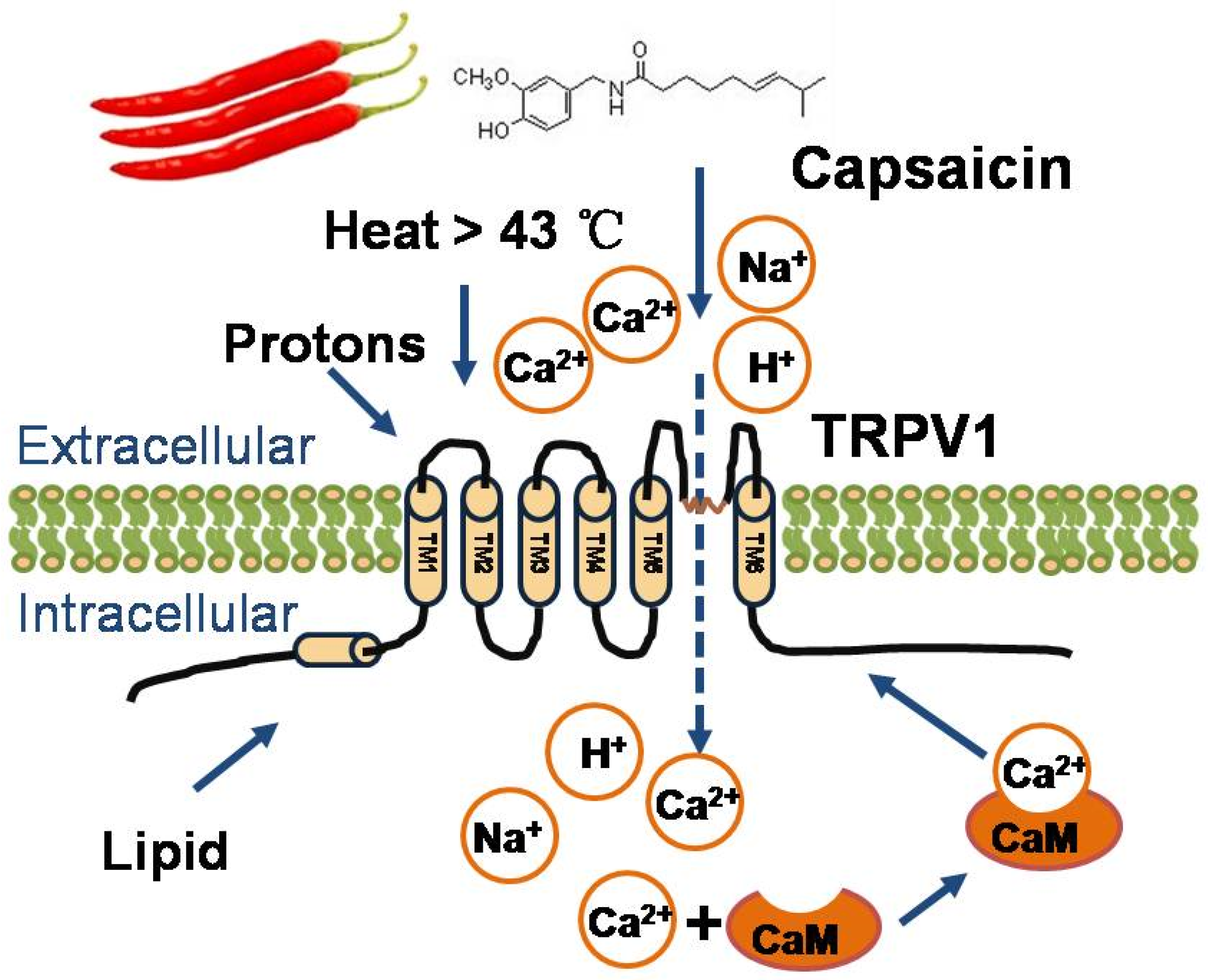
Capsaicinoids bind to TRPV1 pain receptors in the mouth and throat. The Carolina Reaper's unusually high dihydrocapsaicin ratio means those receptors stay activated far longer than in most other chillies.
The Scoville number tells you how much heat is present. It doesn't tell you how that heat behaves — and with the Carolina Reaper, behaviour is everything.
Two primary capsaicinoids drive the Reaper's heat: capsaicin and dihydrocapsaicin. In most chilli varieties, capsaicin dominates, typically accounting for 70% or more of total capsaicinoid content. The Carolina Reaper is different.
This elevated dihydrocapsaicin ratio is the primary reason the Carolina Reaper produces what researchers call "thermal persistence" — a slow-building, back-of-throat burn that escalates over time and lingers long after the pepper is gone.
A ghost pepper at 1,000,000 SHU hits hard immediately. Its heat peaks within minutes and fades relatively quickly. The Reaper at 1,641,183 SHU may feel comparably manageable for the first 30–60 seconds. Then the dihydrocapsaicin takes hold. By the 10-minute mark, many people describe the sensation as escalating rather than subsiding. At 30 minutes, the burn is often still at or near its peak.
Carolina Reaper Scoville Comparison: The Full Heat Scale
Context transforms a number. Placed against the full spectrum of chilli heat, the Carolina Reaper's position becomes genuinely staggering.
🌶 Scoville Scale — Full Visual Comparison
Real-World Comparisons: What 1.64 Million SHU Actually Means
Numbers are abstract. Real-world comparisons make the Reaper's heat tangible in a way that SHU alone cannot.
The Reaper's average SHU sits at, or above, the capsaicin concentration used in many law enforcement and military pepper spray formulations. The critical difference is concentration and delivery — but it illustrates that the Carolina Reaper is not merely "very spicy food." It is operating in a physiological range that warrants genuine caution.
Handling warning: Always wear nitrile gloves when handling fresh Carolina Reapers. Never touch eyes, nose, or skin after contact. If consumed and causing severe distress, dairy (milk, yoghurt, ice cream) is far more effective than water — capsaicin binds to casein protein in dairy, not to water molecules. Seek medical advice if respiratory symptoms develop.
Carolina Reaper Variants and Their Scoville Differences
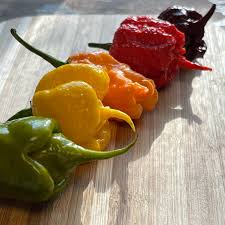
Reaper variants exist beyond the iconic red. Yellow, peach, and white morphs each carry distinct flavour profiles and marginally different SHU readings — though all remain firmly in superhot territory.
Red Reaper
The original. Highest average heat, deepest flavour complexity. The benchmark for all official Scoville certifications and the most commercially available variant.
Yellow Reaper
Fruiter, more tropical flavour notes. Slightly lower average heat than red but still firmly superhot. Popular in artisan hot sauce blending.
Peach Reaper
Closest to the red in heat profile. Distinctive warm-toned skin. Favoured by growers for its sweeter, jam-like initial flavour before the intense heat hits.
White Reaper
The mildest Reaper variant — still in superhot territory. Unique floral and slightly herbal flavour. Less commonly available commercially.
Scoville Comparison Table: Carolina Reaper vs Major Chillies
| Pepper | SHU Range | Avg SHU | × vs Jalapeño | Heat Profile | Category |
|---|---|---|---|---|---|
| Bell Pepper | 0 | 0 | 0× | No heat | Mild |
| Jalapeño | 2,500–8,000 | 5,000 | 1× | Quick, front-of-mouth | Medium |
| Cayenne | 30,000–50,000 | 40,000 | 8× | Sharp, fast fade | Hot |
| Habanero | 100,000–350,000 | 200,000 | 40× | Fruity, intense, fades 15 min | Very Hot |
| Ghost Pepper | 855,000–1,041,427 | 1,000,000 | 200× | Slow build, lingers 30 min | Superhot |
| 🔥 Carolina Reaper | 1,400,000–2,200,000 | 1,641,183 | 328× | Sweet then nuclear, 60+ min | Record |
| Pepper X | 2,693,000 | 2,693,000 | 539× | Immediate full-body assault | World Record |
Origin: How Ed Currie Created the World's Hottest Pepper
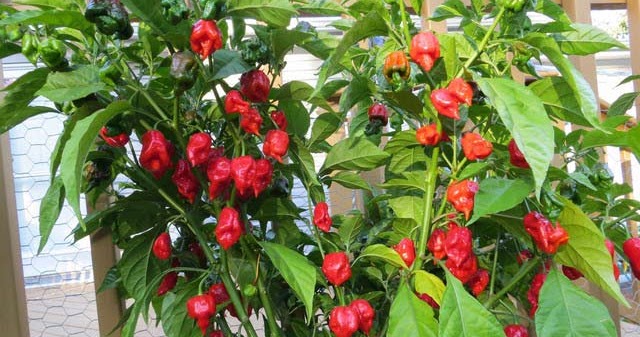
The Carolina Reaper was the result of over a decade of selective crossing — a painstaking process of testing hundreds of hybrid combinations to identify the plants consistently producing the highest capsaicin concentrations.
The Carolina Reaper did not happen by accident. Ed Currie of the PuckerButt Pepper Company in Fort Mill, South Carolina, began working toward it around 2001. The goal wasn't simply to create the hottest pepper — Currie was initially researching the potential of high-capsaicin peppers for cancer treatment applications.
The Reaper is a cross between two exceptional parents. The first is a La Soufrière habanero from the Caribbean island of Saint Vincent — a variety prized for its sweet flavour profile. The second is a Naga pepper (bhut jolokia) from the Assam region of India — already one of the hottest documented chillies at the time of the cross.
What Currie didn't anticipate was the degree to which the offspring would exceed both parents in heat. The resulting hybrid — originally labelled HP22B for its greenhouse row designation — had both the sweetness of the habanero and heat levels that surpassed the Naga parent by a factor of nearly two.
The official name came from its most distinctive physical feature: a pointed, curved tail resembling the scythe of the Grim Reaper. Guinness World Records certified it as the world's hottest chilli in 2013. The same team went on to develop Pepper X — which surpassed the Reaper in 2023 — proving that the upper limit of capsaicin production in Capsicum chinense had not yet been reached.
Commercial importance: Despite its extreme heat, the Carolina Reaper has become a commercially significant chilli. It is widely available in dried, powdered, and extract form and is the base ingredient in a growing category of premium, extreme-heat food products. Its identifiable name recognition drives consumer demand in a way few other superhots can match.
Carolina Reaper in Food: Culinary Applications at Commercial Scale
At over 1.6 million SHU, the Carolina Reaper cannot be used in food at anything close to full strength. Its practical culinary value is almost entirely as a concentrated flavour and heat additive.
Hot sauce production is the dominant commercial application. Reaper-based sauces typically dilute the pepper with other ingredients to bring the finished product into a range consumers can actually taste without incapacitation — typically 50,000–500,000 SHU for mainstream superhot sauces. The Reaper's flavour contribution — that distinctive sweet-fruit note — survives dilution better than its raw heat.
In powdered form, Carolina Reaper is used in snack seasoning, spice rubs, and flavouring blends. A very small percentage by weight delivers significant heat. Food manufacturers typically work with tested, standardised powder to ensure consistent heat delivery per gram across production batches.
Capsaicin extraction from Carolina Reaper biomass is also commercially relevant — high-capsaicin extracts are used in topical pain relief products, veterinary deterrents, and agricultural pest control applications. The pharmaceutical and personal care industries are among the more lucrative secondary markets for high-capsaicin chilli biomass.