Farm gate (Spanish-grown)
$1.73–$1.86/kg
Málaga / Costa Tropical origin
Wholesale avg (2025–26)
$4.53–$4.61/kg
Rising 3-year trend
Retail (Madrid/Barcelona)
€3.19–€5.02/kg
per kg equivalent
Import value (2023)
$559 million
+36% year-on-year
Key Takeaways
- Spain is Europe's #1 avocado producer — farm gate avg $1.73–$1.86/kg
- Spain wholesale: $4.53/kg (2025) — rising trend since 2022
- Madrid/Barcelona retail: €3.19–€5.02/kg
- Spain imported $559M worth of avocados in 2023 — up 36% YoY
- Hass harvest starts November 20; Fuerte/Bacon from late September
- Drought in Málaga & Granada redirecting production to Valencia, Cádiz, Huelva
Spain's Unique Dual Role: Europe's Largest Producer and a Major Importer
Spain's position in the European avocado market is unlike any other country on the continent. It is simultaneously Europe's largest avocado-producing nation — home to Andalusia's subtropical coastal orchards that supply Northern European markets from November through May — and a significant net importer, bringing in approximately $559 million worth of avocados in 2023 alone, a figure that increased by 36% year-on-year. No other European country both grows and imports avocados at this scale.
This dual role is not a contradiction. It reflects Spain's geography and its position as a continental redistribution hub. Spanish consumers demand avocados year-round, but domestic production is seasonal — concentrated in the November–April window. During the summer months, Spain bridges the gap between its domestic season and the next harvest by importing primarily from Peru, South Africa, and increasingly from Kenya. These imports don't just serve Spanish consumers; they also pass through Spanish ports and distribution infrastructure to supply the rest of Europe.
The result is that avocado prices in Spain operate across two distinct market layers simultaneously. The farm gate price for Spanish-grown avocados reflects Andalusia's low production costs and Mediterranean climate advantages. The wholesale and import price reflects global supply dynamics, sea freight costs from Latin America and Africa, and the competitive dynamics of the European redistribution market. Understanding where any given price figure sits in this layered structure is essential for making sense of why Spanish avocado prices look the way they do.
#1Spain — Europe's largest avocado producer
$559MSpain avocado import value (2023)
1 kgPer-capita Spanish consumption — low vs EU peers
$4.61/kgSpain wholesale average (2026 YTD)
Farm Gate Avocado Prices in Spain
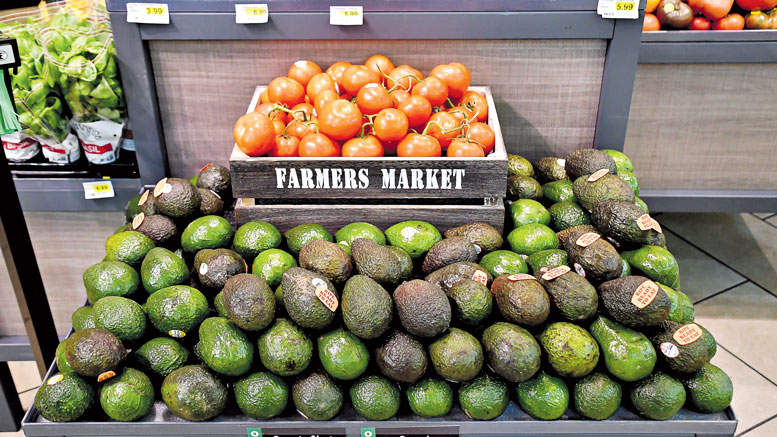
Spain's farm gate avocado price — the price growers receive at origin before any distribution costs are applied — is among the lowest in the European context, reflecting the country's production cost advantages and proximity to major consumer markets.
Farm gate prices for Spanish-grown avocados averaged $1.73 per kg in 2024 and $1.86 per kg in 2025, according to production market data. These prices represent what Andalusian and Canary Islands growers receive from packers and cooperatives for their freshly harvested fruit. The upward trend from 2024 to 2025 reflects the improving commercial environment for Spanish avocado growers, driven by consistent demand from Northern European buyers who prize Spanish-origin avocados for their freshness and short supply chain.
However, farm gate prices vary considerably by variety, size, and quality grade. Hass avocados command the highest farm gate prices in Spain because market demand is strongest. Fuerte and Bacon varieties receive lower prices per kilogram due to their seasonal nature and more limited export market relative to Hass. Size also matters significantly — the Spanish export market and domestic retail both pay premiums for larger fruit sizes (20-count and below per carton) while smaller sizes clear at discounted rates.
Spanish grower vs importer economics: The gap between Spain's $1.73–$1.86/kg farm gate price and the $4.53–$4.61/kg wholesale average is substantial and reflects several cost layers: packing and cooling costs (€0.20–0.40/kg), domestic transport to distribution centres, exporter margin, and the competitive premium that buyers pay for Spanish-origin freshness. Spanish growers selling direct to cooperatives or export packers capture more of this margin than those selling through intermediary traders. The gap also reflects the mixing of Spanish-origin product with imported product at the wholesale level — imported Peruvian Hass at a different cost structure enters the same wholesale market, influencing the average.
Spain's Avocado-Growing Regions and Their Price Significance
Spain's avocado production is geographically concentrated in southern Andalusia's subtropical coastal zone — one of the few areas of continental Europe with the frost-free winters and warm summers that commercial avocado cultivation requires. Each growing region has distinct characteristics that affect both production costs and the pricing of its fruit.
☀️
Málaga
€1.20–€1.80/kg farm gate
Historically Spain's #1 region. Drought slowing expansion. Quality benchmark for Spanish Hass.
🌊
Costa Tropical (Granada)
€1.15–€1.75/kg farm gate
Subtropical coastal climate. Also hit by drought. Known for premium Hass quality.
🍊
Valencian Community
€1.10–€1.70/kg farm gate
Expansion phase. Irrigated orchards. Growing share of Spain's domestic supply.
🌿
Cádiz & Huelva
€1.05–€1.65/kg farm gate
Emerging western Andalusia growing areas. Expanding as drought affects eastern zones.
🏝️
Canary Islands
€1.30–€2.00/kg farm gate
Year-round subtropical climate. Small volumes but high quality. Niche premium positioning.
🌧️
Cantabrian Coast
Emerging — prices TBC
New experimental production zone. Northern Atlantic climate trials underway. Very early stage.
Málaga and the Costa Tropical have historically been the heart of Spanish avocado production, but both regions have faced intensifying water scarcity driven by drought cycles. The consequence has been a geographic redistribution of new planting activity toward the Valencian Community, Cádiz, and Huelva, where water infrastructure is somewhat better positioned. This redistribution is not just an agricultural story — it has pricing implications, because production costs in newer growing zones differ from the mature Andalusian coastal operations, and logistics costs to northern European distribution centres vary by region.
Variety Pricing: Hass, Fuerte, Bacon and Spain's Avocado Range

Spain grows a more diverse range of avocado varieties than any other European producer, and each variety occupies a different position in the pricing spectrum — both at farm gate and at retail.
🥑
Hass
€0.90–€1.40 each retail
Dominant variety. Dark skin, creamy flesh, long shelf life. Starts harvest from late November. Highest farm gate price. Most widely distributed in Spanish supermarkets.
🟢
Fuerte
€0.80–€1.20 each retail
Pear-shaped, green-skinned, larger. Available from October onwards. Rich buttery flavour. Some Spanish consumers prefer it for its size. Slightly lower retail premium than Hass.
🍐
Bacon
€0.70–€1.00 each retail
Earliest season variety — September/October harvest. Thinner skin, milder flavour. More affordable. Used to extend the Spanish domestic season and bridge the summer import period.
🌿
Pinkerton / Strong
€0.85–€1.25 each retail
Elongated pear shape. Small seed, high flesh ratio. Grown in smaller volumes. Available through specialist retailers and organic channels. Niche positioning in the Spanish market.
Hass's dominance in Spanish retail reflects a global pattern. The variety's dark skin colour change as it ripens gives Spanish consumers a reliable visual ripeness indicator that green-skin varieties cannot match. Retailers and their fresh produce buyers strongly prefer Hass because the skin colour change reduces in-store waste and consumer returns — when a Hass avocado looks black and yields to gentle pressure, it is ready to eat. When a Fuerte avocado looks the same shade of green whether it is rock-hard or perfectly ripe, managing ripeness perception becomes a retail challenge.
Spain Wholesale Avocado Prices: Six-Year Trend
Spain's wholesale avocado price trajectory tells a clear story of a market recovering from a supply-oversupply dip and returning to stronger pricing territory.
| Year | Spain Wholesale Avg (USD/kg) | Change YoY | Key Market Driver |
|---|
| 2021 | $3.92/kg | — | Post-COVID demand recovery; supply constraints |
| 2022 | $3.34/kg | ▼ −15% | Major Peru crop — supply glut depressed prices sharply |
| 2023 | $3.65/kg | ▲ +9% | Demand recovery; Spain 20–25% production increase forecast |
| 2024 | $4.01/kg | ▲ +10% | Supply tightening; drought impacts; import value +36% |
| 2025 | $4.53/kg | ▲ +13% | Continued tightening; Israel supply disruptions; organic growth |
| 2026 (YTD) | $4.61/kg | ▲ +2% | Sustained elevated pricing; April entries $3.47–$5.52/kg range |
The 2022 price floor at $3.34/kg is a reference point that market analysts still use when discussing what a "value" avocado market looks like in Spain. That year's price decline was driven by Peru's unusually large export volume flooding European markets, combined with Israel and Morocco providing additional supply pressure at the same time. The result was the lowest Spanish wholesale price in the recent data series — a year when Spanish growers faced margin compression despite good domestic production.
The subsequent recovery to $4.53/kg in 2025 and $4.61/kg in early 2026 reflects tighter global supply conditions, drought-related Spanish production constraints, and the organic avocado segment's growing contribution to the market, where premium pricing lifts the weighted wholesale average. The April 2026 data showing a range from $3.47 to $5.52/kg in a single month illustrates the variety-and-size differentiation that characterises the Spanish wholesale market at any given time.
Supermarket Avocado Retail Prices in Spain
Spain's supermarket landscape ranges from domestic mass-market giants to international discounters and premium food retailers — and avocado pricing follows this spectrum closely.
🛒
Mercadona
€0.79–€1.09 each
Spain's market leader — competitive pricing
🛒
Lidl Spain
€0.59–€0.85 each
Hard discount — cheapest avocados in Spain
🛒
Carrefour Spain
€0.89–€1.19 each
Mid-market — broad range including organic
🛒
Alcampo (Auchan)
€0.85–€1.15 each
Mid-market hypermarket — competitive on promotions
🛒
El Corte Inglés
€1.20–€1.80 each
Premium department store retail — organic tier
🛒
Eroski / Dia
€0.75–€1.05 each
Regional chains — competitive pricing
Mercadona is Spain's most important fresh produce retailer by market share, and its avocado pricing sets a de facto benchmark for the Spanish mainstream market. Mercadona sources significant volumes of Spanish-grown avocados during the domestic season (November–May) and switches to imported Peruvian and Moroccan supply in summer — a sourcing cycle that is reflected in subtle quality and sometimes price shifts that attentive regular shoppers notice.
Lidl Spain's discount pricing — sometimes below €0.65 per avocado during promotional cycles — makes it the most aggressive avocado price point in the Spanish market. Lidl's European sourcing network allows it to access large volumes of Peruvian supply at very competitive container-load pricing, and it passes these savings through to Spanish consumers in weekly promotions. The result is that Lidl's avocado promotions often pull competing Spanish chains to respond with their own deals in the same week.
Avocado Price by Channel: From Spanish Farm Gate to Consumer
🥑 Spain Avocado Price Per Kg by Channel (EUR/USD equivalent)
Spanish farm gate
~€1.59 avg
Import landed cost
~€2.40 avg
Wholesale market
~€3.10 avg
Discount retail (Lidl)
~€3.60 avg
Supermarket (Mercadona)
~€4.10 avg
Premium / organic
~€6.10 avg
Spain's channel stack reveals a distinctive feature compared to other European markets: the domestic farm gate price is meaningfully lower than even the cheapest imported competition. Spanish growers at €1.59/kg average farm gate are producing at costs that — when combined with packing and domestic logistics — still land product in Spanish distribution centres more cheaply than imported Peruvian avocados arriving by sea. This domestic cost advantage is why Spanish retailers strongly prefer Spanish-origin avocados during the November–May domestic season, reserving import procurement for the summer months when Spanish production is not available.
Spain Avocado Seasonal Supply and Price Calendar
📅 Spain Avocado Seasonal Calendar — Domestic vs Imported Supply
🇪🇸 Domestic Spanish production window:
Jan
Feb
Mar
Apr
May
Jun
Jul
Aug
Sep
Oct
Nov
Dec
🌍 Import supply window (Peru/Kenya/S.Africa):
Jan
Feb
Mar
Apr
May
Jun
Jul
Aug
Sep
Oct
Nov
Dec
Domestic Spanish Hass season (peak)
Early domestic (Bacon/Fuerte)
Import-dominant window (Peru/Kenya)
Supply transition / lower availability
Spain's avocado supply calendar is driven by two parallel systems running in sequence. From late November through May, Spanish domestic production dominates retail and wholesale — providing fresh, short-supply-chain Hass avocados at prices that reflect local growing costs and minimal logistics overhead. Spanish companies work with Peruvian supply until approximately weeks 43–44 (late October) to ensure smooth transition to domestic production.
From June through late October, Spain operates as an import market — purchasing heavily from Peru (the dominant summer supplier), South Africa, and increasingly Kenya to meet continued domestic demand during the domestic off-season. This summer import window is also when Spain acts as a transit hub for imported avocados entering the rest of Europe, adding a redistribution function on top of its domestic consumption role.
The transition periods — September–October and November–December — are the most complex price environments. In September and October, early domestic Spanish varieties (Bacon, Fuerte) begin reaching markets alongside continued Peruvian import supply. Prices during this overlap period can be volatile, as the market adjusts to the changing supply mix. In November–December, as Spanish Hass volumes ramp up and Peruvian supply winds down, domestic Spanish product commands a freshness premium that the imported competition cannot match.
Drought Impact on Spanish Avocado Production and Pricing

Water scarcity has become one of the most commercially significant factors in Spanish avocado production — and therefore in the pricing of Spanish-origin avocados. Avocado is one of the most water-intensive crops in Mediterranean agriculture, and the drought cycles that have intensified across Andalusia in recent years directly threaten the production viability of Spain's traditional avocado heartland.
The Málaga and Granada coastal zones — historically the most productive avocado areas in Spain — have seen orchard expansion slow or halt in response to drought restrictions on water use. Some orchards in drought-affected zones have experienced yield reductions. New plantings that would normally have expanded Spanish production capacity have been delayed or redirected to regions with better water security. The FreshPlaza market analysis confirms that "the drought in recent years in Malaga and along the coast of Granada has slowed the expansion of avocados in these areas and has led to a geographical redistribution."
The commercial consequence is that Spanish avocado supply is tighter than it would be in a drought-free scenario — which means prices for Spanish-origin product are higher than they would otherwise be. For buyers who specifically source Spanish avocados for their freshness and proximity advantages, drought-driven supply constraints in peak season can create unexpected availability gaps that require contingency sourcing from non-Spanish origins.
Geographical redistribution opportunity: As traditional Andalusian coastal zones face water constraints, Spain's avocado production footprint is diversifying northward and westward. The Valencian Community, which has more developed irrigation infrastructure from its citrus farming heritage, is seeing significant new avocado investment. Cádiz and Huelva in western Andalusia have Atlantic moisture advantages over the drier eastern Mediterranean coastal zones. These shifts mean that "Spanish avocado" is becoming a more geographically diverse origin — with different growing conditions, harvest timing, and quality profiles emerging from the new production areas. Over the next 5–10 years, Spain's avocado geography will look meaningfully different from what it does today.
For international buyers sourcing avocados for Spanish markets or sourcing Spanish avocados for export, Kenya and East African origins provide an important supply diversification opportunity during the periods when Spanish domestic supply is constrained. FrutPlanet sources GlobalG.A.P.-certified Hass avocados from Kenya's high-altitude growing counties, providing a complementary supply window (February–June) that bridges the transition between Spanish and Peruvian seasons.

Spain's per-capita consumption gap and market opportunity: At approximately 1 kg per capita annual consumption, Spain consumes roughly half what France consumes and one-third of Scandinavian levels. The Spanish avocado industry — growers, packers, and retailers — actively works to stimulate domestic consumption toward French levels. For exporters seeking to grow Spanish market presence, this consumption growth trajectory represents a structural opportunity: as Spanish consumers eat more avocados per year, import volumes will need to grow proportionally, creating expanding commercial space for Kenya, Peru, and other origins during the summer gap window.
Frequently Asked Questions: Avocado Price in Spain
How much does avocado cost per kg in Spain?
Retail avocado prices in Spain range from EUR 3.19 to EUR 5.02 per kilogram in Madrid and Barcelona. A single regular Hass avocado at Spanish supermarkets typically costs EUR 0.80–1.30 each. Budget chains like Lidl and Mercadona offer the most competitive pricing (€0.59–€1.09 each), while El Corte Inglés and premium organic retailers price higher. Spain's wholesale price ranges from $2.42–$3.80/kg (2025), and the farm gate price for Spanish-grown avocados averages $1.73–$1.86/kg.
Is Spain the biggest avocado producer in Europe?
Yes. Spain is Europe's largest avocado producer, growing primarily in Málaga, the Costa Tropical (Granada), the Valencian Community, Cádiz, and Huelva in Andalusia, plus the Canary Islands. Despite this, Spain still imports approximately $559 million worth of avocados annually to supplement domestic supply during the summer off-season when domestic production is between harvests.
What is the wholesale price of avocado in Spain?
Spain's wholesale avocado price has risen from $3.34/kg (2022 low) to $4.53/kg (2025) and $4.61/kg (2026 YTD). The 2025 wholesale range is $2.42–$3.80/kg. Farm gate prices for Spanish-grown avocados average $1.73–$1.86/kg. Recent April 2026 wholesale entries ranged from $3.47 to $5.52/kg, reflecting variety and size grade differentiation.
When is the Spanish avocado harvest season?
Spain's avocado harvest begins in late September–October with early green-skin varieties (Bacon, Fuerte). The main Hass harvest — Spain's dominant commercial variety — starts from approximately November 20 and runs through April–May. During June–September, Spain relies on imports from Peru, South Africa, and Kenya to meet domestic demand. Spanish companies transition from Peruvian imports to domestic supply around weeks 43–44 (late October–early November).
Which avocado varieties are grown and sold in Spain?
Hass is the dominant Spanish commercial variety, commanding the highest prices and widest distribution. Fuerte (large, green-skinned) is the second most important domestic variety, followed by early-season Bacon and smaller volumes of Pinkerton and Strong. Spanish supermarkets also sell imported Peruvian Hass during the summer import window, and shoppers may find both domestic and imported avocados available simultaneously during the November–May transition period.
How has drought affected avocado prices in Spain?
Drought in Málaga and the Granada coastal areas has slowed production expansion and reduced yields in Spain's historically dominant growing zones. This has tightened domestic supply, contributing to the rising wholesale price trend (from $3.34/kg in 2022 to $4.61/kg in 2026). Production is geographically redistributing toward the Valencian Community, Cádiz, and Huelva, where water infrastructure is better positioned. During drought-affected seasons, Spanish buyers increase import volumes to compensate for domestic shortfalls.
