Retail (Paris/Marseille)
€3.50–€5.00/kg
mainstream supermarkets
Wholesale price
€2.50–€3.50/kg
French wholesale markets
Import value (2023)
$585 million
+10% year-on-year
Single avocado
€1.10–€1.60
regular Hass at retail
Key Takeaways
- France retail: €3.50–€5.00/kg; Paris/Marseille range €3.94–€6.63/kg
- Wholesale: €2.50–€3.50/kg — tracked officially by FranceAgriMer
- France imported 202,000+ tonnes and $585 million worth in 2023
- Peru supplies ~62,500 tonnes — France's dominant avocado source
- Consumption: 2.3 kg per capita — France is a mature, high-value market
- Single Hass: €1.10–€1.60; on promotion as low as €0.75
France's Avocado Market: Scale and Context
France is the second-largest avocado market in Europe — a status built over two decades of steady consumption growth and structural trade investment that has made the country one of the most commercially significant avocado import destinations in the world. With 202,000 tonnes imported in 2024 and an import value reaching approximately $585 million in 2023, France commands attention from every major avocado-producing country seeking European market access.
The French avocado market is described by industry analysts as "mature" — a label that carries specific commercial meaning. Maturity here means that consumer education is complete, avocado is embedded in mainstream French food culture, and distribution infrastructure is sophisticated enough to move product efficiently from port to consumer. Per-capita consumption of 2.3 kg in 2024 reflects a market where avocados are not a novelty but a regular purchase across household income groups.
France's hypermarket culture — dominated by Carrefour, Leclerc, Intermarché, Auchan, and Casino — has been the primary driver of avocado's mass-market penetration. French hypermarkets run weekly promotional pricing on high-demand produce including avocados, which has normalised the fruit as a value-for-money purchase rather than a premium impulse item. That promotional dynamic is one reason France's per-capita consumption has grown more slowly than some Northern European markets: consumers are price-aware and responsive to weekly deals, which stabilises demand rather than allowing the rapid growth seen in less established markets.
$585MFrance avocado import value (2023)
202,000TTonnes imported by France (2024)
2.3 kgPer-capita annual consumption (2024)
+10%Year-on-year import value growth (2023)
Retail Avocado Prices in France Per Kg
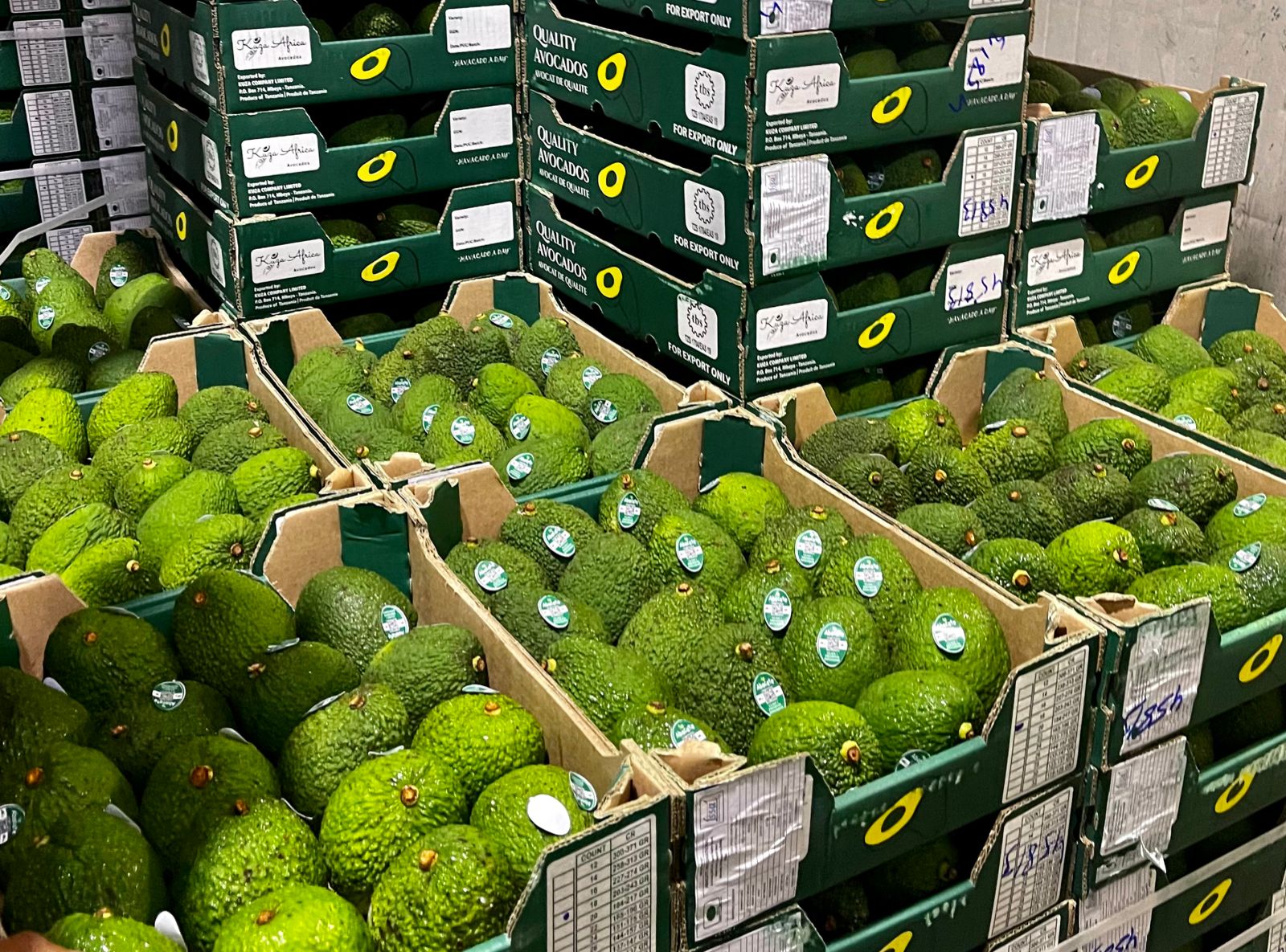
French retail avocado pricing operates across a wide spectrum — from deep promotional pricing at hypermarkets to premium organic positioning at specialist food retailers. Understanding the full price range requires disaggregating what "avocado retail price in France" actually means across different purchasing contexts.
At mainstream supermarkets and hypermarkets in Paris and Marseille, the standard retail price range sits at €3.50–€5.00 per kilogram. A regular-sized Hass avocado — typically 150–200g — retails at €1.10–€1.60 each in this segment. Promotional pricing is common and frequent; French hypermarkets regularly discount avocados to as low as €0.75 each, driving significant volume purchases when deals appear.
At the premium end, organic avocados and ready-to-eat (RTE) packaged avocados command substantially higher price points. Organic Hass at premium French retailers reaches €1.50–€2.00 per unit, and packaged ready-to-eat avocados sold in pairs can command €2.99+ per twin pack. On a per-kilogram basis, the Paris and Marseille market data places the full retail range at EUR 3.94–6.63/kg when organic and specialty premium products are included.
FranceAgriMer wholesale price tracking: France has an official wholesale price monitoring system — the FranceAgriMer Market News Network — that tracks real-time import and wholesale prices for fresh produce including avocados. The platform is publicly accessible (search "avocat" on the FranceAgriMer RNM portal) and provides the most authoritative reference point for French avocado pricing at the wholesale and import level. This is the French equivalent of the USDA AMS terminal market reports that US buyers reference, and it is the primary data source used by French supermarket buyers and importers for price benchmarking.
Supermarket-by-Supermarket Price Breakdown
France's retail grocery landscape is dominated by a distinctive mix of large hypermarkets, hard discounters, and premium food chains — each with different avocado pricing strategies, sourcing programmes, and consumer positioning.
🛒
Lidl / Aldi
€0.75–€0.99 each
Hard discount — cheapest in France
🛒
E.Leclerc
€0.89–€1.19 each
Budget hypermarket — competitive deals
🛒
Carrefour
€1.00–€1.35 each
France's largest retailer — mid-market
🛒
Intermarché
€0.99–€1.30 each
French cooperative chain — competitive
🛒
Monoprix
€1.30–€1.80 each
Urban premium — organic range strong
🛒
Naturalia / Bio
€1.50–€2.20+ each
Organic specialist — top price tier
E.Leclerc is one of France's most price-competitive hypermarket chains and a consistent driver of avocado affordability. The chain's philosophy of price leadership across fresh produce categories means avocados appear regularly in its weekly promotional catalogue — and Leclerc's promotional pricing has been known to pull the market towards more competitive pricing across competing chains. When Leclerc runs avocados at €0.89 each, Carrefour and Intermarché typically respond within the same week's promotional cycle.
Monoprix occupies a distinctive position in the French food retail landscape — a premium urban chain with strong presence in Paris, Lyon, and Bordeaux city centres, where its organic produce range and food quality positioning attract a health-conscious, higher-income demographic. Avocados at Monoprix command a premium that reflects both the store's real estate costs in prime urban locations and the quality standards it applies to its fresh produce sourcing programmes.
Wholesale & Import Avocado Prices in France

France's avocado wholesale market is well-structured and transparent — a consequence of the country's sophisticated agricultural market infrastructure and the FranceAgriMer monitoring system. For buyers and traders operating in the French avocado supply chain, the wholesale pricing environment is more accessible and better documented than in many comparable European markets.
Current wholesale prices in France sit at €2.50–€3.50 per kilogram for standard Hass avocados, representing the pricing tier at which French importers and distributors sell to supermarkets and foodservice buyers. This wholesale band implies a retail markup of approximately 35–40%, consistent with European industry benchmarks where fresh produce retail markups cover distribution costs, shrinkage, labour, and profit margin.
At the import level — the price at which avocados clear French customs before domestic distribution costs are applied — the picture is more nuanced. Transaction data shows import unit prices ranging from $0.62/kg to $1.77/kg in recent months, reflecting different origin-country pricing and contract structures. The average import price of €3–€4/kg quoted by French customs reflects the all-in landed cost including freight and import duties, not the bare FOB price at origin.
France's wholesale market benefits from its geographic position within Europe. Rotterdam and the Netherlands act as the primary redistribution hub for avocados entering the EU — with product arriving by sea, being ripened and repacked, and then distributed by road to major European markets including France. This hub-and-spoke distribution model reduces per-unit logistics costs for French buyers compared to markets that require dedicated direct shipping, but it also means French wholesale prices are strongly correlated with Rotterdam market dynamics.
Container-load economics in France: Buyers capable of purchasing full container loads of approximately 24,000–26,000 kg achieve 25–35% savings versus smaller consolidated shipments. Small buyers purchasing 1–5 pallets pay €3.00–3.60/kg wholesale. Large retailers and importers buying container loads from major exporters can access €2.40–€2.80/kg for Peruvian volume supply — competitive enough to support promotional retail pricing at French hypermarkets while maintaining viable margins.
Where France Imports Its Avocados From
🌍 France Avocado Import Origins — Volume Share (2024)
🇵🇪 Peru
~62,500 tonnes — dominant supplier
🇪🇸 Spain
Significant domestic-proximate supply
🇮🇱 Israel
Oct–Feb Mediterranean supply
🇲🇦 Morocco
Growing Mediterranean share
🇰🇪 Kenya
Feb–Jun premium Hass supply
🌎 Other
Chile, Colombia, S. Africa
Peru's dominance of France's avocado import calendar is the defining structural feature of the French market. Accounting for approximately 62,500 of the 202,000 tonnes France imported in 2024, Peru's volume is simply unmatched by any competing origin. Peru's advantage in the French market stems from its Southern Hemisphere counter-seasonal position — supplying European markets heavily from May through September, exactly when Spain and Israeli production is between seasons — and from price competitiveness that allows major French hypermarkets to run promotional pricing that no other origin can match at comparable volume.
Spain holds a strategically important position in the French market — one that goes beyond raw volume. Spain is the preferred origin for quality-focused French retailers because of its geographic proximity, which means Spanish Hass avocados can reach French distribution centres by road within 12–24 hours of packing. That short supply chain delivers fresher fruit with better colour and shelf life than product arriving by sea from Latin America after 10–14 days of transit. For premium French retailers and the food service sector serving Michelin-starred restaurants in Paris and Lyon, Spanish avocados command a freshness premium that justifies their higher per-kg cost.
| Origin | Peak Supply Season | Approximate FOB Price | Market Positioning | France Volume |
|---|
| Peru | May–September | €1.80–€2.80/kg | Volume leader | ~62,500T (2024) |
| Spain | Oct–Feb (domestic) | €2.80–€3.40/kg | Freshness premium | Significant |
| Israel | October–January | €3.20–€3.80/kg | Quality focus | Moderate |
| Morocco | November–March | €2.20–€3.00/kg | Value volume | Growing |
| Kenya | February–June | €2.50–€3.50/kg | Premium quality | Growing |
| South Africa | April–August | €2.50–€3.00/kg | Counter-seasonal | Supplementary |
Avocado Price by Channel: From Import to French Consumer
🥑 France Avocado Price Per Kg by Channel (EUR equivalent)
Import landed cost
~€2.30 avg
French wholesale
~€3.00 avg
Discount retail (Lidl/Aldi)
~€4.35 avg
Hypermarket (Carrefour)
~€4.25 avg
Monoprix / urban premium
~€6.10 avg
Organic / Naturalia
~€7.40 avg
The channel stack reveals the typical 35–40% wholesale-to-retail markup that France's market benchmarks indicate. A kilogram of Peruvian Hass landing in France at €2.30 average import cost becomes a wholesale product at €3.00/kg after importer handling and ripening, then retails at €4.25/kg at Carrefour — a mark-up of approximately 84% over the import cost, distributed across importer margin, ripening, distribution, retail overhead, and profit. This is entirely consistent with European fresh produce margin structures and somewhat lower than the equivalent markups in the UK market.
Seasonal Price Patterns for Avocados in France
📅 France Avocado Price Seasonality — Monthly Overview
Jan
Feb
Mar
Apr
May
Jun
Jul
Aug
Sep
Oct
Nov
Dec
Peak supply — most competitive prices, highest promotions
Good supply — moderate pricing
Transitional — variable pricing
Tighter supply — elevated pricing
France's avocado pricing seasonality is driven by the same supply calendar that governs all of northern Europe — primarily Peru's export season, which peaks May through September and drives the most competitive wholesale pricing of the year. This summer abundance is reflected directly in French hypermarket promotional cycles: June through August sees the highest frequency of avocado "têtes de gondole" (endcap promotions) in French supermarkets, with pricing regularly dropping to €0.75 each.
October and November represent France's most supply-challenged period. Peru's season winds down; Spanish autumn production has not yet fully ramped; Israeli supply — which would normally provide October–January continuity — faces volume uncertainty. The result is predictable tightening in French wholesale markets and a reduction in promotional activity. Prices at the wholesale level have been observed dropping below €2.50/kg for large fruit during supply gluts, while rising above €3.50/kg during supply-tight periods in October. France imports small quantities year-round from different countries to maintain supply continuity, but the October–November window remains the structural pinch point.
January through February is the French market's secondary competitive window. Israeli and Moroccan supply provides solid availability, Spanish winter production contributes, and controlled-atmosphere stored Peruvian product extends supply continuity. For restaurant buyers and food service operators planning menus and purchasing contracts, this window can offer decent pricing with reliable supply.
France's Avocado Import Regulatory Framework

For exporters seeking to access the French market, understanding France's avocado import regulatory pathway is essential — both because France's compliance requirements are detailed and because compliance directly affects the cost structure that flows into retail pricing.
Avocado imports into France must pass through the Directorate General of Customs and Indirect Taxes (DGDDI), France's national customs authority. As an EU member state, France applies EU-wide import regulations for fresh produce, including the UNECE FFV-42 marketing standard for avocados, which specifies grading classes (Extra, Class I, Class II), size requirements, and presentation standards.
Pesticide residue compliance is enforced by ANSES — the French Agency for Food, Environmental and Occupational Health and Safety. ANSES conducts Maximum Residue Level (MRL) testing on fresh produce imports, and avocados are included in its monitoring programme. French standards align with EU MRL regulations, which are among the strictest in the world. Exporters whose product fails MRL testing face rejection at port or costly re-routing — which is why GlobalG.A.P. certification and documented pesticide management records are increasingly required by French buyers as a baseline procurement condition.
Labelling regulations add a specific French requirement: product cartons and consumer packaging must comply with guidelines from the Ministry of Economic Diplomacy and Foreign Trade, which mandates bilingual labelling — French being one of the required languages. This is a practical requirement that exporters shipping directly to France (rather than through Dutch redistribution) must address in their packing specifications.
EUDR compliance affecting French avocado imports: The EU Deforestation Regulation (EUDR) is progressively being implemented across EU member states including France. Avocados are within scope as a product from deforestation-risk supply chains. French importers will increasingly require exporters to provide verified geolocation data for the orchards from which their avocados originate, demonstrating that product was not produced on deforested land after December 2020. Exporters from Kenya, with its well-documented land use and smallholder certification infrastructure, are well-positioned to meet EUDR documentation requirements compared to some larger-volume Latin American origins where deforestation traceability is more complex.
Kenya Avocados and the French Premium Market

Kenya is a growing presence in the French avocado market — and for well-considered commercial reasons. More than 80% of France's avocado imports come directly from developing countries, which reflects France's commitment to direct-sourcing relationships that support origin-country agricultural development. Kenya fits naturally into this strategic sourcing orientation.
Kenyan Hass avocados, grown at high altitudes in the counties of Murang'a, Kirinyaga, Meru, and Embu, produce fruit with elevated dry matter content that translates directly to better eating quality at destination. French premium retailers — Monoprix, La Grande Épicerie, and the specialist organic network — value this quality positioning because their consumer base is discerning and willing to pay for consistent eating experience over raw price competitiveness.
Kenya's export season (February–June from Central Kenya) complements rather than competes with Peru's dominant summer supply window. For French buyers seeking supply diversification — and particularly for those building organic or sustainability-certified supply chains — Kenya's February–June window provides a valuable opportunity to source premium East African Hass at a time when Peruvian supply is not yet at full volume and Spanish supply is finishing its winter season.
FrutPlanet sources Kenyan Hass avocados — Original Hass, Golden Hass, and Royal Hass — from GlobalG.A.P.-certified farms across Kenya's key producing counties, with KEPHIS phytosanitary documentation and full cold-chain management from farm to export container. For French importers evaluating African avocado supply as part of supply chain diversification or EUDR compliance strategy, this documented traceability structure is commercially essential.
🥑
Source Directly
Buy Avocados in Bulk — GlobalG.A.P.-Certified Kenyan Hass for European & French Markets →
Buying Avocados in France: Practical Intelligence for Different Buyer Types
For consumers and retail buyers, timing around promotional cycles produces the best per-unit value in the French market. The French hypermarket promotional system is predictable — Leclerc, Carrefour, and Intermarché publish weekly promotional catalogues both in-store and online, and avocados appear regularly during peak Peruvian supply season (June–August). Subscribing to a hypermarket's promotional newsletter or using a cashback app that tracks fresh produce deals provides reliable advance notice of avocado promotional pricing.
For food service and restaurant buyers in France, the most cost-effective route is purchasing through a French wholesale market (marché de gros) or through a specialist fresh produce importer with weekly avocado deliveries. The Rungis International Market — located 7 km south of Paris and the world's largest fresh produce wholesale market — is the central hub for Paris-region food service procurement. Buyers with direct access to Rungis can access wholesale pricing of €2.50–€3.50/kg, significantly below supermarket retail.
For importers and large-volume buyers sourcing avocados for the French market, the strategic imperative is supply calendar diversification. Relying exclusively on Peruvian supply creates concentration risk in the April–May and September–October shoulder periods when Peruvian volume is lower and pricing rises. Building complementary supply relationships with Spain (freshness play), Morocco (affordable October–February bridge), and Kenya (February–June quality supply) creates a more resilient year-round supply programme.
Organic market opportunity in France: France has one of Europe's most developed organic food retail sectors, and organic avocado consumption is growing steadily. Organic certification (either EU Organic, which is the reference standard for France, or equivalent national standards from producing countries) commands a €0.80–€1.50/kg wholesale premium — and significantly more at organic specialty retail. Exporters able to supply certified organic Hass avocados with full traceability documentation are well-positioned to access France's premium organic retail channel, which offers substantially better per-kg pricing than conventional commodity supply chains.
Frequently Asked Questions: Avocado Price in France
How much does avocado cost per kg in France?
Avocado retail prices in France range from EUR 3.50–5.00/kg at mainstream supermarkets and hypermarkets. Paris and Marseille market data shows a full retail range of EUR 3.94–6.63/kg including organic. A single regular Hass retails at EUR 1.10–1.60; on promotion as low as EUR 0.75. Wholesale prices are EUR 2.50–3.50/kg, tracked officially by FranceAgriMer.
Where does France import most of its avocados from?
Peru is France's dominant supplier at approximately 62,500 tonnes of the 202,000+ tonnes imported in 2024. Spain is the second most important source, valued for proximity and freshness. Israel, Morocco, Kenya, South Africa, Chile, and Colombia supply complementary volumes. The Netherlands acts as a redistribution hub through which much of the Latin American and African supply enters France.
What is the wholesale price of avocado in France?
France's avocado wholesale price range is EUR 2.50–3.50/kg for standard Hass. Official wholesale prices are tracked by FranceAgriMer's Market News Network (search "avocat" on the RNM portal). Container-load buyers access EUR 2.40–2.80/kg for volume Peruvian supply. Import unit prices before French distribution costs range from $0.62–$1.77/kg depending on origin and contract structure.
Why is France such a large avocado market?
France is Europe's second-largest avocado market with 202,000+ tonnes imported in 2024 and $585 million import value in 2023. Key drivers include France's mature avocado consumption culture (2.3 kg per capita), the hypermarket system that drives high-volume promotional sales, strong organic food culture supporting premium pricing, and France's established position as a high-income European market attracting major exporters.
What avocado varieties are sold in France?
Hass avocado dominates the French retail market, accounting for the vast majority of sales. Fuerte avocado (larger, green-skinned, pear-shaped) is available seasonally, particularly from Spanish production. Minor green-skin varieties appear in some markets. French consumers reportedly prefer smaller-sized Hass for their more affordable price point. Organic Hass is available and growing in market share at premium retailers and organic supermarkets.
When is avocado cheapest in France?
Avocados are most affordable in France during June through August, when Peru's peak export season drives wholesale prices to annual lows and French hypermarkets run frequent promotional deals — sometimes to EUR 0.75 each. January through March offers a secondary competitive window with solid Israeli, Moroccan, and Spanish supply. October and November are typically the most expensive period as seasonal supply transitions create temporary tightening in wholesale markets.
