
Buying Apples in Bulk: Varieties, Wholesale Pricing, Quality Standards & Supplier Selection
Wholesale apple prices vary by 150% across varieties and grades. The difference between getting this right and getting it wrong is understanding what each grade, variety, and channel actually means for your business — before you place an order.
- Why Buy Apples in Bulk?
- Best Apple Varieties for Bulk Buyers
- Wholesale Pricing Breakdown by Variety
- Apple Grading Standards Explained
- Buying Apples in Bulk by Business Type
- Major Apple-Producing Origins for Bulk Supply
- Seasonal Pricing Strategy
- Storage Requirements and Shelf Life by Variety
- Choosing and Verifying a Bulk Apple Supplier
- Frequently Asked Questions
- Premium varieties (Honeycrisp, Pink Lady) cost 2–2.5× standard apple wholesale prices
- Processing grade "seconds" cost 40–60% less — ideal for juice, cider, and sauce
- September–November peak harvest offers 15–25% price savings vs winter
- Fuji has the longest commercial shelf life — up to 12 months in CA storage
- China produces ~50% of global apples; Washington State leads premium quality
- Kenya grows apples at high altitude — offering East African buyers a local premium source
Why Buy Apples in Bulk?

Apples are one of the world's most consistently demanded fresh fruits — consumed fresh, pressed into juice, fermented into cider, processed into sauce, baked into pastries, and dehydrated for snacking. This versatility means that the commercial market for bulk apples spans an unusually wide range of business types, from artisan cider producers who need tonnes of processing-grade fruit at minimum cost to luxury supermarkets sourcing premium Honeycrisp with exacting size and colour standards.
Buying in bulk consistently delivers lower per-unit cost than purchasing in smaller quantities, provided you have the storage capability and volume requirement to justify it. The economics are straightforward: suppliers incur fixed transaction costs on every order regardless of size, so a large order spreads those costs across more units. Wholesale pricing for standard apple varieties like Gala and Fuji runs at £0.80–£1.20 per kg, compared to retail prices of £1.80–£2.50 per kg in UK supermarkets — a wholesale margin that represents real commercial value for businesses incorporating apples into their supply chain.
Beyond pure price, bulk purchasing delivers supply continuity advantages that spot-market purchasing cannot. A hotel restaurant chain that places weekly orders from a local market faces availability uncertainty, grade variability, and pricing volatility. A comparable chain with a standing supply agreement with a certified bulk apple supplier gets agreed sizing, consistent grade, scheduled delivery, and pricing transparency that makes menu planning and cost management significantly more reliable. The administrative savings alone — fewer purchase orders, single supplier relationship, consistent documentation — frequently justify the operational commitment of bulk purchasing even before the per-unit price saving is calculated.
Best Apple Varieties for Bulk Buyers
Variety selection is the most consequential decision in bulk apple procurement because it determines your price point, your market positioning, your storage requirements, and your supplier options simultaneously. Not all apple varieties suit all buyers — and the variety that represents outstanding value for a cider producer may be entirely wrong for a premium food retailer. Here's how the most commercially significant apple varieties compare for bulk buyers.
Gala
World's most widely grown commercial apple. Sweet, mild flavour with red-streaked skin. Excellent consumer recognition. Year-round availability from multiple origins. Best all-round value for fresh retail bulk buying.
Fuji
Exceptionally long shelf life (up to 12 months CA). Dense, sweet flesh with very low acid. Dominant in Asian markets. Best variety for buyers who need long storage windows or year-round supply continuity.
Honeycrisp
Highest wholesale price of any mainstream variety. Explosive crunch, sweet-tart balance. Very strong consumer demand. More demanding storage requirements. Best for premium positioning and high-margin retail contexts.
Granny Smith
Tart, firm, versatile. Holds shape during cooking — essential for baking. High acid content ideal for juice and cider blending. Long storage life. Best value for food manufacturers and catering companies.
Pink Lady / Cripps Pink
Distinctive pink-red skin, sweet-tart balance, excellent shelf life. Globally recognised brand with consumer loyalty. Premium retail positioning. Available from South Africa, Chile, and European producers.
Braeburn / Golden Delicious
Reliable commercial workhorses. Golden Delicious has the sweetest profile; Braeburn offers a more complex sweet-tart balance. Good value for high-volume buyers serving standard retail and food service channels.
Club varieties: a special consideration for bulk buyers. Some apple varieties — including SweeTango®, Cosmic Crisp®, and Jazz™ — are "club varieties" owned and licensed to specific producers. Only licensed growers can produce them, which means lower supply volume, higher pricing, and potential licensing complications for resellers. Before committing to club varieties in bulk, verify the supplier's licence status and confirm your right to retail or resell the branded product. Purchasing club variety apples from unlicensed sellers risks receiving repackaged rejects — a documented problem in the online wholesale market.
Wholesale Apple Pricing Breakdown: What You Should Expect to Pay
| Variety | UK Wholesale (per kg) | US Wholesale (per carton) | Grade | Best Use |
|---|---|---|---|---|
| Honeycrisp | £1.30–£2.00 | $44.50–$60.00 | Premium | Specialty retail, gourmet |
| Pink Lady / Cripps Pink | £1.20–£1.80 | $20.95–$24.95 | Premium | Premium retail, export |
| Gala (Washington Extra Fancy) | £0.85–£1.10 | $30.95–$38.95 | Standard | Fresh retail, food service |
| Fuji | £0.90–£1.20 | $22.95–$28.95 | Standard | Premium fresh, Asian export |
| Granny Smith | £0.80–£1.10 | $18.95–$24.95 | Standard | Baking, juice, catering |
| Golden Delicious | £0.80–£1.10 | $22.00–$28.95 | Standard | Fresh retail, baking |
| Braeburn | £0.80–£1.20 | $20.00–$25.00 | Standard | Retail, processing |
| Red Delicious | £0.70–£1.00 | $20.95–$25.95 | Standard–Low | Retail (declining), juice |
| McIntosh | £0.80–£1.05 | $22.00–$30.95 | Standard | Fresh, applesauce |
| Processing / Seconds | £0.40–£0.70 | Below £18/carton equiv. | Processing | Juice, cider, sauce only |
These figures represent the wholesale tier — what a buyer purchasing in pallet to container quantities would pay from an established supplier. Retail prices for the same varieties in UK supermarkets typically run 80–150% above these wholesale figures, which illustrates the margin opportunity that wholesale purchasing creates. The wide spread between Honeycrisp (up to £2.00/kg) and processing grade (as low as £0.40/kg) reflects the extraordinary variety in what "buying apples in bulk" actually means — these are not the same product at different prices, but fundamentally different commercial propositions serving different markets.
Apple Grading Standards Explained for Bulk Buyers
Apple grading is a commercial language that both buyers and suppliers use to define quality expectations with enough precision to build a commercial agreement around. The problem for new bulk buyers is that grading systems differ between markets — the US Extra Fancy designation means something different from the EU's Class I classification, and both differ from what an orchard might call "premium" in their own marketing. Understanding this language is essential before negotiating any bulk purchase.
US Grading Standards (USDA)
US Extra Fancy is the highest commercial grade — representing the top 10–15% of a harvest by appearance. It requires specific minimum colour coverage (80–85% depending on variety), no visible bruising, strict size minimums, and minimal surface defects. Washington Extra Fancy is the gold standard for export and premium retail. US Fancy permits slightly lower colour coverage and minor blemishes. US No. 1 is commercial grade — suitable for standard retail but with more relaxed appearance standards. Utility and Combination grades are for processing use only.
EU/UK Grading Standards (UNECE FFV-50)
Class Extra is the EU's premium tier — equivalent to US Extra Fancy. Class I is the standard commercial retail grade — allows minor defects in shape, development, and colouring. Class II is for commercial purposes where appearance is secondary to eating quality — suitable for food service, catering, and some retail uses. Below Class II is processing grade, intended only for industrial use.
The practical implication of grade selection for your bulk order: Always specify the grade standard you require in your purchase order — not just the variety. A supplier delivering Class II when you ordered Class I has technically not fulfilled your order, but without documented grade specification, you have limited commercial recourse. The grade specification should include: colour percentage coverage, minimum diameter, maximum surface defect area, and whether firmness testing is included. For first-time bulk purchases, requesting a sample box at the specified grade before committing to a full pallet or container order allows you to verify the supplier's interpretation of your quality standard before large financial commitment.
Buying Apples in Bulk by Business Type
| Business Type | Recommended Varieties | Grade | Typical Volume | Key Consideration |
|---|---|---|---|---|
| Supermarket / Retail Chain | Gala, Fuji, Pink Lady, Honeycrisp | Extra Fancy / Class I | 5–50 tonnes/week | Strict size uniformity; consumer-facing appearance standards |
| Restaurant / Hotel Group | Gala, Fuji, Granny Smith | Class I / US Fancy | 100–2,000 kg/week | Consistency over appearance; delivery schedule reliability |
| Juice / Cider Producer | Granny Smith, Golden, mixed seconds | Processing / Seconds | 5–50 tonnes/batch | Sugar/acid ratio, juice yield, cost per litre output |
| Food Manufacturer | Golden Delicious, Granny Smith | Class II / Processing | 10–100 tonnes/month | Consistent Brix, contract pricing, certification |
| School / Institution Caterer | Gala, Fuji, Braeburn | Class I | 500–5,000 kg/week | Safe-to-handle sizes; nutrition standards; cost caps |
| Importer / Distributor | Full range by destination market | Extra Fancy / Class I | Full containers (18–22T) | FOB pricing, documentation, cold chain execution |
Major Apple-Producing Origins for Bulk Supply
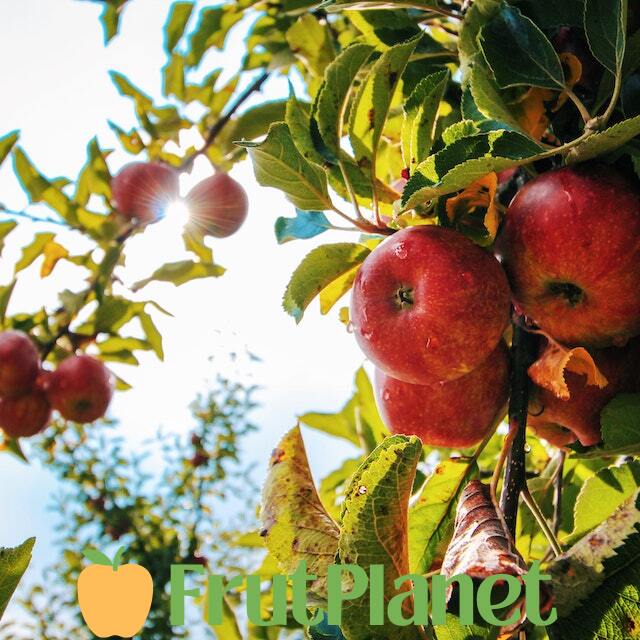
Global apple production is more geographically concentrated than most buyers realise. China alone accounts for approximately half of all apples produced worldwide, with Shandong, Shaanxi, and Henan provinces forming the production heartland. Washington State in the US dominates the premium quality segment, producing the Fuji, Gala, Honeycrisp, Granny Smith, and Pink Lady varieties that define international quality benchmarks. Understanding each origin's strengths helps buyers align their sourcing with their market's specific requirements.
| Origin | Key Varieties | Season | Price Tier | Primary Export Markets |
|---|---|---|---|---|
| 🇺🇸 Washington State, USA | Gala, Fuji, Honeycrisp, Granny Smith, Pink Lady | Aug–Nov (harvest); year-round (CA) | Premium | Mexico, Canada, India, Asia, Europe |
| 🇨🇳 China (Shandong, Shaanxi) | Fuji, Golden Delicious, Gala, Red Delicious | Sep–Nov (harvest); year-round | Value–Mid | Southeast Asia, Middle East, South Asia |
| 🇵🇱 Poland | Gala, Golden Delicious, Jonagold, Idared | Sep–Nov | Value–Mid | EU markets, Russia (historically), Middle East |
| 🇿🇦 South Africa | Fuji, Golden Delicious, Pink Lady, Granny Smith | Feb–May (NH off-season) | Mid–Premium | EU, UK, Middle East, Asia |
| 🇳🇿 New Zealand | Gala, Fuji, Braeburn, Envy™ | Mar–Jun (NH off-season) | Mid–Premium | UK, EU, Asia, Pacific |
| 🇨🇱 Chile | Gala, Fuji, Pink Lady, Granny Smith | Feb–May (NH off-season) | Mid | USA, EU, Latin America |
| 🇰🇪 Kenya | Fuji, Golden Delicious, local varieties | May–Aug; Nov–Feb (2 seasons) | Mid (regional) | East African regional markets |
Kenya's apple production is one of the more surprising elements of East African agriculture for buyers encountering it for the first time. Apples are grown at high altitude in Kenya's cool highland regions — particularly around Timau in Meru County (on the slopes of Mount Kenya at approximately 2,000–2,500m elevation), and parts of Limuru and the Central Highlands. The altitude provides the cold nights and temperature differentials that apple trees require for proper fruit development and sugars accumulation, which lower-altitude tropical zones cannot replicate.
Kenya's apple season provides East African buyers — hospitality operators, supermarket chains, and distributors — with access to locally grown, fresh-from-orchard apples during periods when imported alternatives from South Africa or Europe face significant logistics costs and transit time. For buyers in Kenya, Uganda, Tanzania, and neighbouring markets, domestically produced apples offer freshness and cost advantages that imported alternatives simply cannot match during peak local production. FrutPlanet's network includes high-altitude Kenyan apple producers, making locally sourced bulk apple supply accessible to East African business buyers.
Southern Hemisphere origins: the off-season advantage: For Northern Hemisphere buyers (Europe, USA, Middle East, Asia), Southern Hemisphere producers — South Africa, New Zealand, Chile — supply the market during the February–June window when Northern Hemisphere storage inventories are depleting and new-crop fruit is months away. This counter-seasonal supply is commercially valuable because it allows retailers, food service operators, and processors to maintain year-round supply continuity without relying entirely on multi-month cold-stored Northern Hemisphere fruit. Southern Hemisphere apples command a modest premium over equivalent CA-stored Northern Hemisphere fruit, reflecting the freshness advantage of newly harvested crop.
Seasonal Pricing Strategy for Bulk Apple Buyers
📅 Apple Wholesale Pricing Seasonality (Northern Hemisphere)
Seasonal timing is one of the most powerful cost management levers available to bulk apple buyers. The Northern Hemisphere harvest from August to November — when Washington, Poland, and European orchards are clearing inventory — consistently produces wholesale prices 15–25% below mid-winter levels. This is the optimal window for buyers who can purchase forward inventory and store it in controlled-atmosphere cold storage.
The January–February window is consistently the most expensive period for Northern Hemisphere buyers. Storage inventories from the autumn harvest are depleting, Southern Hemisphere new-crop fruit hasn't yet arrived in volume, and any weather disruptions to the previous harvest compound supply tightness. Buyers who fail to forward-buy during autumn peak season routinely pay the highest per-kg prices of the year during this two-month window.
For buyers without cold storage capacity, the Southern Hemisphere supply from March to June (South Africa, New Zealand, Chile) provides a mid-priced bridge between the expensive January–February window and the next Northern Hemisphere harvest in August. South African Pink Lady and Golden Delicious, in particular, arrive in European markets during March–May at competitive pricing and excellent quality from new-crop harvesting.
Storage Requirements and Shelf Life by Variety
Cold storage capability is the critical infrastructure requirement that determines whether bulk purchasing is viable for your business. Without adequate temperature-controlled storage, the cost savings of bulk purchasing are rapidly consumed by quality losses, waste, and the commercial damage of delivering poor-quality product to your customers. Understanding the storage requirements of each variety — and matching them to your storage infrastructure — is essential planning before committing to bulk volumes.
Standard refrigerated storage at 0–2°C with 90–95% relative humidity extends shelf life to 4–8 weeks from receipt for most varieties — sufficient for regular restocking cycles but not for seasonal forward-buying. Controlled Atmosphere (CA) storage — which reduces oxygen concentration to 1–3% and manages CO₂ levels to halt the respiration and ethylene-driven ripening process — is what enables the multi-month storage periods that make autumn forward-buying commercially viable. CA storage is widely available through commercial cold storage operators who offer third-party facility rental, which means a business without its own CA infrastructure can still benefit from seasonal pricing by contracting third-party storage.
Honeycrisp requires special attention in storage. Unlike most varieties that prefer 0–1°C, Honeycrisp performs better at 2–4°C — colder storage causes chilling injury that manifests as brown spots in the flesh. This temperature specificity means Honeycrisp cannot always be stored alongside other varieties in the same cold room, adding logistics complexity for buyers managing multiple variety inventory.
Choosing and Verifying a Bulk Apple Supplier
The single most important decision in bulk apple procurement is supplier selection — because the variety, grade, and price you negotiated are only as good as the supplier's ability to consistently deliver them. A supplier who prices competitively but delivers inconsistently, misrepresents grade, or has inadequate cold chain infrastructure will cost more in the medium term than a slightly more expensive supplier who executes reliably. Here's how to evaluate suppliers before committing.
Certification Requirements
For professional B2B buyers, certification is non-negotiable. GlobalG.A.P. (farm-level certification covering pesticide management, food safety, and worker welfare) is required by virtually all major supermarket chains and large importers. BRC Global Standard (British Retail Consortium) is required for many UK retail and food service buyers. HACCP certification confirms the packhouse operates food safety management systems. For organic produce, EU Organic or USDA NOP certification must be verified against the issuing body's database.
Evaluating Cold Chain Capability
A supplier's cold chain infrastructure determines whether product arrives in the condition described at the point of purchase. Before committing to a bulk order, ask suppliers for their pre-cooling protocol, reefer container temperature settings, and whether they use temperature data loggers. Request download records from previous shipments to verify actual temperature maintenance during transit. Suppliers who cannot provide this documentation have inadequate cold chain transparency — a risk indicator that should give any serious buyer pause.
Trial Orders Before Volume Commitment
The most reliable verification method is a trial order. Purchasing 1–2 pallets at your specified grade, variety, and packaging specification before committing to full container volumes costs relatively little and provides direct evidence of whether the supplier's product matches their claims. A legitimate bulk apple supplier will accommodate trial orders — they want to establish the supply relationship too. Any supplier who refuses trial orders or demands full container-level commitment before any trial is a red flag.
FrutPlanet's apple supply offering: FrutPlanet supplies bulk apples to wholesale buyers, importers, food service operators, and distributors across East Africa, Europe, and the Middle East. Our network includes Kenyan highland apple producers — offering fresh, altitude-grown apples to regional buyers — alongside access to export-grade apple supply from other origins for international buyers. We accommodate trial orders for buyers establishing new supply relationships, and our export team provides full documentation support including quality certificates, phytosanitary documentation, and cold chain management from origin to destination. Contact us to discuss variety availability, current pricing, and supply arrangements for your business requirements.