Rotterdam wholesale
€3.25/kg (Apr 2025)
€13 per 4 kg Hass carton
Retail (Amsterdam/RTM)
€4.29–€6.91/kg
range incl. organic
Import value (2023)
$1.2 billion
+28% YoY — European record
Single avocado (retail)
€1.10–€1.60
€0.75 on promotion
Key Takeaways
- Rotterdam wholesale: €3.25/kg (€13/4kg carton) — April 2025 benchmark
- Amsterdam/Rotterdam retail: €4.29–€6.91/kg range
- Netherlands imported $1.2 billion in avocados in 2023 — +28% YoY
- Weekly Rotterdam price adjustments affect ALL European markets
- Single Hass: €1.10–€1.60; RTE pair at €2.99; Organic €1.50–€2.00 each
- Netherlands re-exports to Germany, France, UK, Belgium and 15+ countries
The Netherlands: Europe's Avocado Pricing Capital
Understanding avocado prices in the Netherlands requires first understanding what the Netherlands actually is in the context of global avocado trade. It is not simply a consumer market. It is the distribution engine for the entire European continent — a role that makes Rotterdam's avocado wholesale market the most commercially significant price reference point in Europe.
The Netherlands imported approximately $1.2 billion worth of avocados in 2023, a 28% increase from the previous year and the highest import value since the record set in 2019. That figure is larger than any other country in Europe. But not all of it stays in the Netherlands. A significant portion — hundreds of thousands of tonnes annually — is ripened, repacked, and re-exported to Germany, France, Belgium, the United Kingdom, Poland, Scandinavia, and more than a dozen other European countries. When a German consumer buys a Peruvian Hass avocado at Aldi, there is a strong probability it passed through a Dutch ripening facility before reaching the shelf.
This hub function means that Rotterdam's weekly avocado price adjustments — tracked and published for Hass avocados from Colombia, Kenya, and Peru on a week-by-week basis — are the primary pricing reference that traders, importers, and buyers across all of Europe use to benchmark their own procurement and sales. When the Rotterdam market moves, the rest of Europe moves with it, typically within one to two weeks.
$1.2BNetherlands avocado import value (2023)
374K TTonnes re-exported from Netherlands (2020)
184Import partner companies tracked (Netherlands)
208Export partner companies distributing from NL
Rotterdam Wholesale Price: The Continental Benchmark
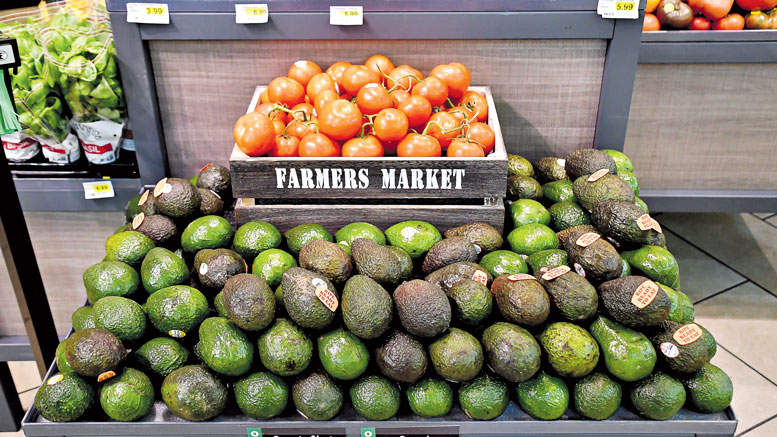
The Rotterdam avocado wholesale market is the most closely watched fresh produce price reference in Europe. Every week, the market publishes adjusted prices for Hass avocados from the dominant supply origins — Colombia, Kenya, and Peru — and these adjustments ripple through the European supply chain within days, affecting what importers pay, what distributors charge, and ultimately what consumers see on shelf.
The most recent reference point: the Rotterdam wholesale price for Hass avocados was €13 per 4 kg carton — equivalent to €3.25 per kilogram — as of April 2025. The four-week rolling wholesale range sits at $2.98–$4.23 per kilogram, reflecting the spread between smaller-sized Hass (which trade at the lower end) and larger-sized premium fruit from premium origins (which command the higher end). This range is consistent with the CBI market intelligence reporting that confirmed wholesale pricing in the Netherlands aligns broadly with the €2.50–€3.50/kg band that characterises mature Northern European markets.
For international exporters seeking access to the European market, the Rotterdam price is both an opportunity and a discipline. Suppliers whose product can enter the Dutch supply chain — through established importers like Nature's Pride, TFC Holland, or Bakker Barendrecht — access a market that redistributes their product across 15+ European countries simultaneously. But it also means their product will be price-benchmarked against all competing origins in real time. A Kenyan exporter whose FOB price doesn't allow the Dutch importer to land product, ripen it, repack it, and still achieve a workable margin versus Peruvian competition will not sustain a commercial relationship with the Dutch trade.
How Rotterdam weekly price adjustments work: The Rotterdam wholesale market publishes "adjusted prices" for Hass avocados each week by week number (W15, W17, W18, etc.), specifying origin (Colombia, Kenya, Peru) and size grade. These adjustments reflect supply volumes arriving at Rotterdam port, ripening room capacity, demand signals from major Dutch and European retailers, and competitive price pressure between origins. Exporters, importers, and buyers across Europe track these weekly numbers to understand market direction — rising Rotterdam prices signal supply tightening; falling prices signal volume oversupply from a major origin.
Six-Year Netherlands Wholesale Price Trend: 2021–2026
| Year | NL Wholesale Avg (USD/kg) | Change YoY | 4-Week Range (USD/kg) | Key Market Driver |
|---|
| 2021 | $4.12/kg | — | — | Post-COVID demand surge; supply constraints globally |
| 2022 | Data gap in series | — | Peru supply surge suppressed European prices |
| 2023 | $2.61/kg | ▼ Major decline | $1.82–$4.12 | Record Peruvian exports; wholesale floor reached |
| 2024 | $2.80/kg | ▲ +7% | $2.16–$4.65 | Supply normalisation; import value +28% |
| 2025 | $2.77/kg | ▼ −1% | $2.98–$4.23 | Stable — Israel disruption offset by Africa growth |
| 2026 (YTD) | $3.18/kg | ▲ +15% | $2.98–$4.23 | Supply tightening; Feb imports $1.89–$2.71/kg |
The 2023 price floor at $2.61/kg is the most commercially significant data point in this series. That year, Peru exported record volumes to Europe at a time when Israeli supply was also strong and Colombian production was increasing. The result was European market oversupply that pushed the Rotterdam benchmark to its lowest point in years — a challenging environment for producers in all origins, but a good year for buyers who could fill forward contracts at near-floor pricing. The subsequent recovery to $3.18/kg in 2026 reflects tightening conditions as geopolitical disruptions affected Israeli exports and the supply dynamics began to rebalance.
Retail Avocado Prices in the Netherlands Per Kg
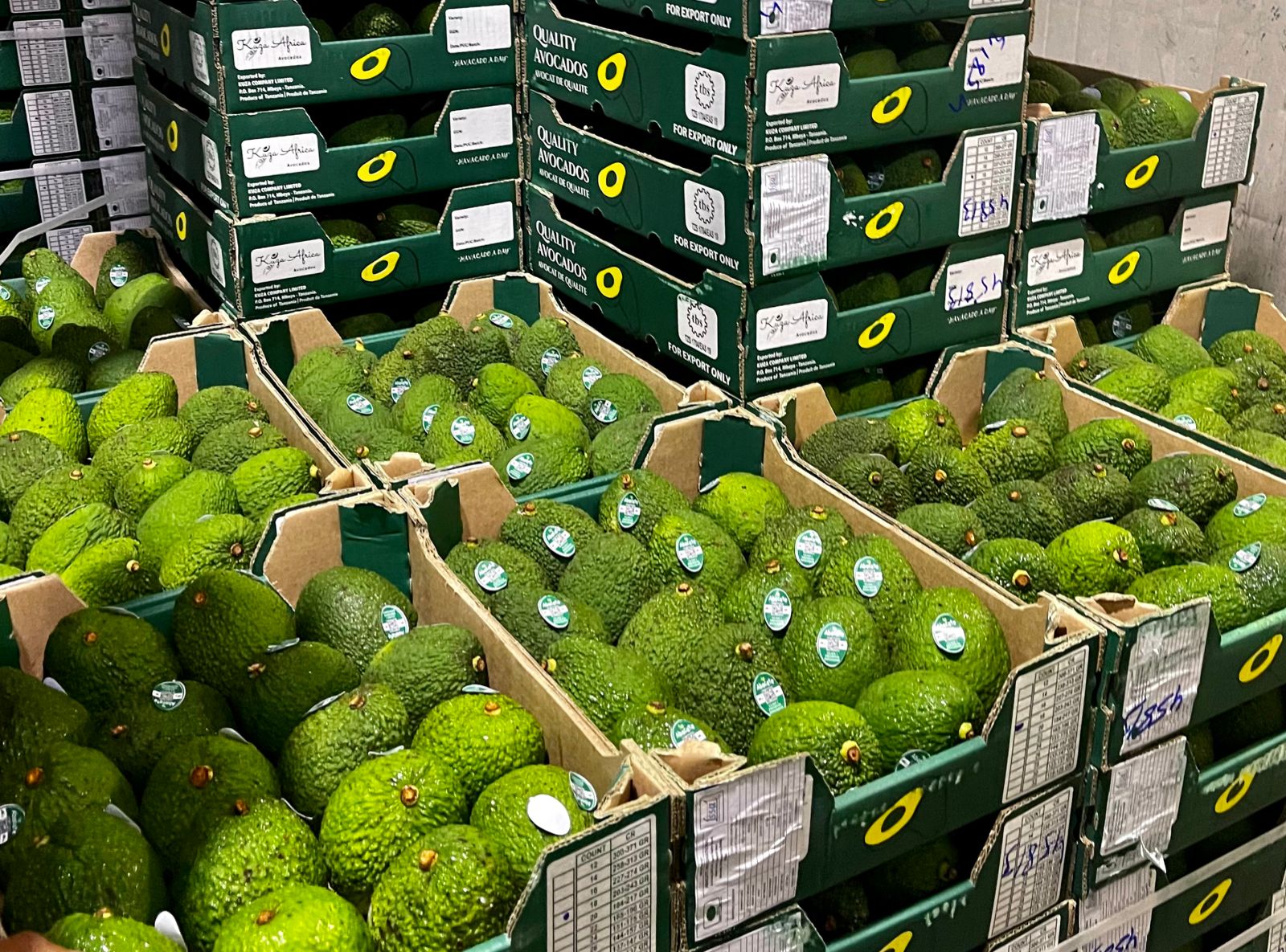
Dutch retail avocado pricing spans one of Europe's widest ranges — a consequence of the sophisticated market structure that exists in the Netherlands, from deep-discount hard retailers through to premium organic specialists and ready-to-eat programme retailers.
The headline retail range in Amsterdam and Rotterdam is EUR 4.29–6.91 per kilogram across all channel types and varieties. But this figure requires unpacking, because the "€6.91/kg" ceiling reflects organic or RTE premium products, not the everyday experience of most Dutch shoppers. Standard Hass avocados at Albert Heijn, Jumbo, and Plus sit at €1.10–€1.60 per unit — equivalent to approximately €4.50–€6.50/kg when calculated by weight on a 200–250g fruit. Promotional pricing regularly brings the price down to €0.75 each at discount retailers.
Three distinct retail price tiers define the Dutch market. The discount tier (Lidl, Aldi) prices avocados at their lowest promotional rates. The mainstream tier (Albert Heijn, Jumbo, Plus, Dirk) prices at mid-range with ready-to-eat programmes adding a premium layer. And the organic/specialty tier (Ekoplaza, Marqt, specialist delicatessens) operates at the premium end where organic certification and provenance transparency command the highest per-kg rates. Understanding which tier your buying context sits in determines the price range that applies.
Ready-to-eat avocados: the Dutch premium segment: The Netherlands is one of Europe's most developed markets for ready-to-eat (RTE) avocados. Supermarkets like Albert Heijn actively promote RTE avocado twin packs at €2.99 — a product that requires the retailer's supply chain partner (Bakker Barendrecht, part of Greenyard) to ripen the fruit to precise eating readiness before delivery. On a per-kg basis, this RTE product is significantly more expensive than unripe avocados. But Dutch consumers are demonstrably willing to pay for the guarantee of immediate eating quality — reducing the frustration and food waste associated with buying rock-hard avocados that take 5 days to ripen.
Dutch Supermarket Avocado Price Comparison
🛒
Lidl NL
€0.65–€0.85 each
Cheapest in the Netherlands
🛒
Aldi NL
€0.69–€0.89 each
Hard discount — frequent promos
🛒
Jumbo
€0.89–€1.25 each
Mainstream — good value promos
🛒
Albert Heijn
€1.10–€1.60 each
Market leader — RTE programme
🛒
Plus / Dirk
€0.85–€1.20 each
Mid-market — competitive pricing
🌿
Ekoplaza / Marqt
€1.50–€2.00 each
Organic specialist — premium tier
Albert Heijn's relationship with Bakker Barendrecht (Greenyard) is the most significant supply chain relationship in Dutch avocado retail. Bakker Barendrecht acts as Albert Heijn's dedicated avocado service provider — ripening fruit to AH's specification, packing it in AH-branded packaging, and delivering it to stores on a precise schedule that ensures consistent eating quality. This vertical integration of ripening services into the AH supply chain is why Albert Heijn can credibly market RTE avocados as a premium product category. The Bakker Barendrecht relationship also means AH avocados are typically fresher and more consistently ripe than equivalents at chains without dedicated ripening programmes.
Avocado Price by Channel in the Netherlands
🥑 Netherlands Avocado Price Per Kg by Channel (EUR equivalent)
Import CIF (Rotterdam)
~€2.20 avg
Wholesale (Rotterdam)
~€3.00 avg
Discount (Lidl / Aldi)
~€3.85 avg
Supermarket (AH / Jumbo)
~€5.40 avg
Ready-to-eat (RTE)
~€6.50 avg
Organic specialist
~€7.40 avg
The channel stack illustrates why the Netherlands retail price range (€4.29–€6.91/kg) sits above the equivalent ranges in France and Germany. The Netherlands' more developed RTE and organic premium segments pull the average retail price upward, reflecting both the market's purchasing power and Dutch consumers' willingness to pay for convenience and quality assurance. The 35–40% wholesale-to-retail markup that characterises mature Northern European markets applies across all Dutch channels, with the additional ripening and packaging costs of the RTE segment adding another layer of value — and cost — on top.
The Dutch Ripening Industry: What Adds the Premium

No analysis of avocado pricing in the Netherlands is complete without understanding the ripening industry — because the cost of ripening is one of the most significant value-adding steps between Rotterdam port and the Dutch supermarket shelf.
Avocados arrive at Dutch ports as mature-green, unripe fruit — hard to the touch, 10–21 days away from eating readiness depending on their dry matter content and storage conditions. They cannot go directly to retail in this state. Dutch importers and service providers operate specialist ripening rooms — climate-controlled chambers where ethylene gas is applied at precise concentrations to trigger the ripening process. Over 3–7 days, the fruit transitions from rock-hard to the specific firmness class requested by the retail buyer. This ripening service has a cost — and it is a cost that flows directly into the wholesale and retail price.
Nature's Pride
Leading Dutch avocado importer
One of Europe's largest avocado ripening and distribution operations. Supplies major Dutch and European retailers. Tracks Rotterdam weekly price adjustments for Colombia, Kenya, Peru.
TFC Holland
Tropical fruit specialist
Major importer-ripener with extensive European distribution networks. Handles avocados from multiple Latin American and African origins. RTE programme specialist.
Bakker Barendrecht (Greenyard)
Albert Heijn's dedicated service provider
Ripens, packs, and quality-controls avocados specifically for Albert Heijn's Dutch stores. Manages AH's RTE programme. Takes full supply chain responsibility including forecasting.
Westfalia Fruit NL
South African specialist — EU hub
European arm of South Africa's Westfalia Fruit. Handles South African and other origins. Part of the acquisition of Belgian processor Syros (Jan 2025). Premium positioning.
CBI market intelligence confirms that Dutch importers generally maintain a profit margin of at least 8% of the wholesale price, excluding handling costs, ripening, and packaging. When those ripening, handling, and repackaging costs are added — typically €0.20–€0.50/kg for the full service — the effective cost mark-up from import to wholesale is typically 30–45%. This explains why the Netherlands' wholesale prices ($2.77–$3.18/kg) are substantially above the import transaction prices ($1.89–$2.71/kg recorded in early 2026) without this gap representing excessive profiteering. The difference is real, legitimate cost.
Where Dutch Avocados Come From

The Netherlands sources avocados from a wider range of origins than virtually any other country — a consequence of its year-round redistribution obligation to European downstream markets. Reliable year-round supply requires a coordinated global sourcing calendar that no single producing country can provide.
| Origin | Peak Dutch Supply Season | Import Price (FOB) | Primary Market Role | Trend |
|---|
| Peru | May–September | €1.80–€2.80/kg | Volume leader | Dominant; consistent |
| Kenya | February–June | €2.20–€3.00/kg | Premium quality | Growing — weekly price tracked |
| South Africa | April–August | €2.30–€3.20/kg | Counter-seasonal | Stable, premium tier |
| Colombia | Variable year-round | €2.00–€2.80/kg | Growing contributor | Rapidly expanding |
| Spain | November–April | €2.50–€3.20/kg | Winter freshness | Stable — proximity premium |
| Israel | October–February | €3.00–€3.80/kg | Disrupted recently | Volumes reduced (geopolitics) |
| Morocco | November–March | €2.00–€2.80/kg | Affordable bridge | Growing European presence |
Kenya's growing commercial relevance in the Rotterdam market is documented by the weekly price adjustment reports that now specifically track Kenyan Hass avocados alongside Colombia and Peru as named origins. This is commercially significant — it means Dutch importers and buyers are actively monitoring Kenyan supply as a reference price, not simply treating Africa as a marginal alternative. Rotterdam weekly adjustments for Kenyan Hass in W15, W17, and W18 confirm that Kenya is a recognised supply origin in the European hub market, with pricing benchmarked against competing origins in real time.
FrutPlanet sources GlobalG.A.P.-certified Kenyan Hass avocados from the high-altitude counties of Murang'a, Kirinyaga, Meru, and Embu. Our export season (February–June from Central Kenya) aligns precisely with the spring supply transition period when European buyers are moving off Israeli and South African supply and before the Peruvian summer season reaches full volume — making Kenyan fruit commercially attractive for Dutch importers seeking quality supply during this specific window.
EUDR and Netherlands sourcing strategy: The EU Deforestation Regulation (EUDR) will require Dutch importers to demonstrate that avocados entering the EU did not contribute to deforestation after December 2020. As the redistribution hub for all of Europe, the Netherlands will carry a disproportionate share of EUDR compliance obligations — any non-compliant shipment that enters via Rotterdam and is redistributed across 15+ EU countries creates compliance risk at scale. Dutch importers are already prioritising origins with strong traceability infrastructure. Kenya's smallholder certification programmes and KEPHIS documentation systems position East African avocados well for EUDR compliance — an increasingly important competitive advantage versus some Latin American origins where deforestation traceability is more complex.
Seasonal Avocado Price Patterns in the Netherlands
📅 Netherlands Avocado Price Seasonality — Monthly Overview
Jan
Feb
Mar
Apr
May
Jun
Jul
Aug
Sep
Oct
Nov
Dec
Peak supply — lowest wholesale & retail prices
Good supply — competitive pricing
Transitional — variable pricing
Tighter supply — higher prices
The Rotterdam avocado price calendar follows the global supply cycle with particular precision, because the Netherlands' redistribution function means Dutch importers must maintain supply across all seasons to service downstream European buyers. They cannot simply stop buying when supply is tight — their contract obligations to German, French, and Belgian retailers require year-round delivery.
The peak supply and lowest price period runs May through August — Peru's dominant export season, when Rotterdam's ripening rooms are processing maximum volumes and wholesale prices fall to their annual lows. The CBI data confirms that during this period, retail promotions in the Netherlands are most frequent, with avocados regularly featured at promotional pricing that drives consumer trial and volume purchase.
October and November are historically the tightest supply months for the Rotterdam market. Peru's season is ending; Israel's supply (which has historically bridged October–February) has been disrupted by geopolitical factors in recent years; Spain's domestic season is ramping up but not yet at volume. During this October–November window, Dutch wholesale prices rise measurably, and promotional retail activity reduces as supply becomes more scarce and expensive. Import transaction prices recorded in January 2026 ($1.89–$2.71/kg) reflected this post-shortage period where supply was beginning to recover but not yet at the levels that drive promotional pricing.
Frequently Asked Questions: Avocado Price in the Netherlands
What is the price of avocado per kg in the Netherlands?
Retail avocado prices in Amsterdam and Rotterdam range from EUR 4.29 to EUR 6.91 per kilogram. A single regular Hass retails at EUR 1.10–1.60 in mainstream supermarkets, dropping to EUR 0.75 each on promotion. Ready-to-eat twin packs are priced at approximately EUR 2.99. Organic avocados cost EUR 1.50–2.00 each. The Rotterdam wholesale benchmark was EUR 3.25/kg (EUR 13 per 4 kg carton) in April 2025, with the four-week rolling range at $2.98–$4.23/kg.
Why is the Netherlands such a major avocado market?
The Netherlands is Europe's primary avocado redistribution hub. Rotterdam's port infrastructure, combined with specialist ripening companies (Nature's Pride, TFC, Bakker Barendrecht/Greenyard), allows the Netherlands to import $1.2 billion in avocados annually, ripen and repack them, and re-export them to Germany, France, Belgium, the UK, Poland, Scandinavia, and 15+ other European countries. Rotterdam wholesale prices are the benchmark reference for the entire European market.
What is the Rotterdam avocado wholesale price?
The Rotterdam wholesale market published €13 per 4 kg carton (€3.25/kg) for Hass avocados in April 2025. The four-week rolling range is $2.98–$4.23/kg. Annual wholesale averages: 2021: $4.12/kg; 2023: $2.61/kg (low); 2024: $2.80/kg; 2025: $2.77/kg; 2026 YTD: $3.18/kg. Rotterdam weekly price adjustments for Colombia, Kenya, and Peru are tracked by traders across all of Europe as the continental pricing reference.
Which Dutch supermarkets have the cheapest avocados?
Lidl and Aldi consistently offer the lowest Dutch avocado prices at EUR 0.65–0.89 each. Jumbo and Plus offer competitive mid-range pricing at EUR 0.89–1.25 each. Albert Heijn — as the premium market leader with Bakker Barendrecht's RTE programme — prices at EUR 1.10–1.60 each for standard Hass and EUR 2.99 for RTE twin packs. Ekoplaza and Marqt organic specialists price at EUR 1.50–2.00 each.
What is the ready-to-eat avocado premium in the Netherlands?
Ready-to-eat (RTE) avocados in Dutch supermarkets are priced at approximately EUR 2.99 per twin pack — a significant premium versus standard unripe avocados at EUR 1.10–1.60 each. The RTE premium reflects the cost of specialist ripening to precise eating readiness, branded packaging, and the consumer value of guaranteed immediate eating quality. Albert Heijn, supplied by Bakker Barendrecht/Greenyard, is the primary driver of the Dutch RTE avocado segment.
Where does the Netherlands import avocados from?
Peru is the dominant summer supplier (May–September) providing the highest import volumes at competitive prices. Kenya and East Africa supply quality Hass avocados February–June, with pricing tracked weekly in Rotterdam market reports. South Africa contributes April–August. Colombia is rapidly expanding its European and Dutch presence year-round. Spain supplies November–April. Israel (geopolitically disrupted) and Morocco bridge winter supply. The Netherlands imports from more diverse origins than any other European country to maintain year-round supply continuity for its redistribution role.
